





Our Verdict
A no-nonsense wireless headset with standout battery life, sharp positional audio, and punchy sound, held back slightly by a plasticky build, average mic, and just-okay comfort.
For
- Excellent imaging for FPS
- Long, low-maintenance battery
- Punchy, fun sound for music
Against
- Plasticky, non-premium build
- Tight fit, shallow earcups
- Basic software, average mic
PC Gamer's got your back Our experienced team dedicates many hours to every review, to really get to the heart of what matters most to you. Find out more about how we evaluate games and hardware.
There's a certain kind of headset I keep coming back to—the ones that don't try to reinvent the wheel, they just get the fundamentals right. Solid battery life, dependable wireless, and sound that actually helps in-game instead of just sounding "big". After a week of using the HyperX Cloud Flight 2 across work, play, and everything in between, that's exactly where it lands.
At around $130, £110 in the UK, and roughly $219 AUD, it sits in that sweet spot where expectations are high, but not unreasonable. And in practice, it feels less like a budget compromise and more like a headset that knows exactly where to spend its effort.
Out of the box, the Flight 2 makes a clean first impression. The design is more restrained than older HyperX gear, with subtle RGB and a modern, low-key aesthetic that doesn't scream for attention. But once I started actually handling it, the build tells a more honest story. This is a very plasticky headset. Not flimsy or poorly put together—it holds up fine—but it lacks that dense, premium feel you might expect at a glance. It's clearly built with cost in mind.
There's a bit of flair with the magnetic swappable ear caps. You can pop them off and customise the look without any effort, which is neat in theory. In practice, it feels like a feature aimed squarely at streamers or anyone building a visual brand. I didn't find myself caring much after the novelty wore off.
Operating principle |
Closed-back |
Connectivity |
2.4 GHz/ Bluetooth |
Drivers |
50 mm |
Frequency response |
20 Hz to 20 kHz |
Mic |
uni-directional detachable |
Pickup |
Omni-directional |
Battery life |
Upto 100Hrs |
Weight |
335 g | 0.74 lbs |
Price |
$149 | £109 | AUD$219 |
✅ You hate charging your gear: The battery life is absurdly good, to the point where it disappears from your routine entirely — this is a headset you just pick up and use for days on end.
✅ You play competitive shooters: The imaging is sharp enough to genuinely improve how you play, with precise positional cues you can actually act on.
✅ You want one headset for everything: Dual-wireless makes it effortless to jump between PC and phone, and the punchy, clean bass makes music surprisingly enjoyable.
❌ You expect a premium feel: The plasticky build is functional but lacks that dense, high-end finish you might want at this price.
❌ You've got larger ears: The earcups run a bit shallow, and combined with the firmer clamp, long sessions can get a little noticeable.
❌ You care about mic or software depth: The mic is clear but compressed, and Ngenuity gets the job done without offering much beyond the basics.
The metal headband adds structure, but it's noticeably stiff. I felt the clamp more than I expected, which gives it a secure fit—just not the kind that disappears on your head. Comfort overall is good, but not effortless. The memory foam padding is soft enough for long sessions, though the earcups don't fully enclose my ears. After a few hours, that partial fit creates a bit of pressure, and combined with the firmer clamp, it's a headset I'm always very aware of wearing. Not uncomfortable, just not invisible.
Where the Flight 2 really starts to win me over, however, is in everyday use. The dual-wireless setup—low-latency 2.4GHz for PC and Bluetooth 5.3 for everything else—fits neatly into how I actually use a headset. I left the dongle plugged into my PC, paired my phone once, and never really had to think about switching.
The battery life is the standout. I went multiple days without charging it—not by managing it carefully, but by completely forgetting about it. That kind of endurance changes your relationship with the product. It becomes something you just pick up and use, rather than something you're constantly keeping an eye on. For both long sessions and casual use, that reliability is a genuine quality-of-life upgrade.
Sound is another place where the Flight 2 earns its stripes. The 50 mm drivers deliver a balanced, versatile tuning that works across gaming and music. Bass has a satisfying punch without overwhelming the mix, mids are clear, and highs stay controlled. Nothing feels exaggerated—it's just well judged.
What stood out most to me, though, was the imaging. In Call of Duty: Black Ops 7, I could consistently place footsteps and gunfire with real precision. Not just a vague sense of direction, but enough detail to react properly—pre-aiming, repositioning, making smarter plays. It's the kind of positional accuracy that genuinely improves how you play.


Outside of gaming, I've ended up using the Flight 2 for music more than I expected. The bass has a clean, punchy character that gives tracks a bit of bounce—the kind that gets your head bobbing without muddying everything else. It's not trying to be studio-grade, but it's energetic and enjoyable, which makes it easy to keep on even when you're not gaming.
The detachable boom mic is clear and reliable, doing exactly what it needs to for chat and in-game comms. Voices come through cleanly, but there's a slightly compressed quality to them. It prioritises clarity over natural tone, which is fine for Discord but less ideal if you're thinking about streaming or recording.
HyperX's Ngenuity software follows the same no-nonsense approach. It's easy to use and covers the basics like EQ and lighting, but it feels a bit barebones. I kept wishing for quick presets—something to jump between gaming and music profiles without manual tweaking. It works, it just doesn't go the extra step.


After a week of daily use, the HyperX Cloud Flight 2 feels like a headset that understands its priorities. It focuses on battery life, reliable wireless, and genuinely useful positional audio—and gets those right. The plasticky build doesn't feel especially premium, the swappable ear caps are more gimmick than necessity, and the mic and software both lean toward functional rather than polished.
But none of that really gets in the way of the experience. What matters is how it performs, and day-to-day, it's easy to live with. It made competitive games easier to read, doubled as a genuinely fun music headset, and lasted long enough that charging became an afterthought.
It's not flashy. It's not trying to impress you in a five-minute demo. It just works—and for the price, that's exactly what most people actually need.
1. Best overall:
Razer BlackShark V3
2. Best budget:
Corsair HS55 Stereo
3. Best wired:
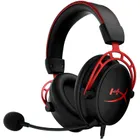
HyperX Cloud Alpha
4. Best mid-range wireless:
SteelSeries Arctis Nova 3X
5. Best audiophile:
Beyerdynamic MMX 330 Pro
6. Best wireless audiophile:
Audeze Maxwell
7. Best for streaming:
Audio-Technica ATH-M50xSTS StreamSet
8. Best noise-cancelling:
AceZone A-Spire
9. Best earbuds:
Steelseries Arctis GameBuds
A no-nonsense wireless headset with standout battery life, sharp positional audio, and punchy sound, held back slightly by a plasticky build, average mic, and just-okay comfort.

