CPU of the Year: Intel Core i5-8400
2017 was the year of the CPU, but when the dust settles, this is our favorite.
Keep up to date with the most important stories and the best deals, as picked by the PC Gamer team.
You are now subscribed
Your newsletter sign-up was successful
Want to add more newsletters?
Every Friday
GamesRadar+
Your weekly update on everything you could ever want to know about the games you already love, games we know you're going to love in the near future, and tales from the communities that surround them.
Every Thursday
GTA 6 O'clock
Our special GTA 6 newsletter, with breaking news, insider info, and rumor analysis from the award-winning GTA 6 O'clock experts.
Every Friday
Knowledge
From the creators of Edge: A weekly videogame industry newsletter with analysis from expert writers, guidance from professionals, and insight into what's on the horizon.
Every Thursday
The Setup
Hardware nerds unite, sign up to our free tech newsletter for a weekly digest of the hottest new tech, the latest gadgets on the test bench, and much more.
Every Wednesday
Switch 2 Spotlight
Sign up to our new Switch 2 newsletter, where we bring you the latest talking points on Nintendo's new console each week, bring you up to date on the news, and recommend what games to play.
Every Saturday
The Watchlist
Subscribe for a weekly digest of the movie and TV news that matters, direct to your inbox. From first-look trailers, interviews, reviews and explainers, we've got you covered.
Once a month
SFX
Get sneak previews, exclusive competitions and details of special events each month!
More cores is the easy way to improve performance, and Intel gives us exactly that with its 8th Generation Coffee Lake processors—50 percent more cores than the previous generation, to be precise. But it's not just about cores, because clockspeed and per-core performance still matter, especially for games. While the Core i5-8400 has a base clockspeed that's relatively low (2.8GHz), on all the Z370 boards I've tried the chip runs at 3.8GHz when fully loaded, and up to 4.0GHz on two cores. Even better, it costs less than $200 and doesn't need any exotic cooling.
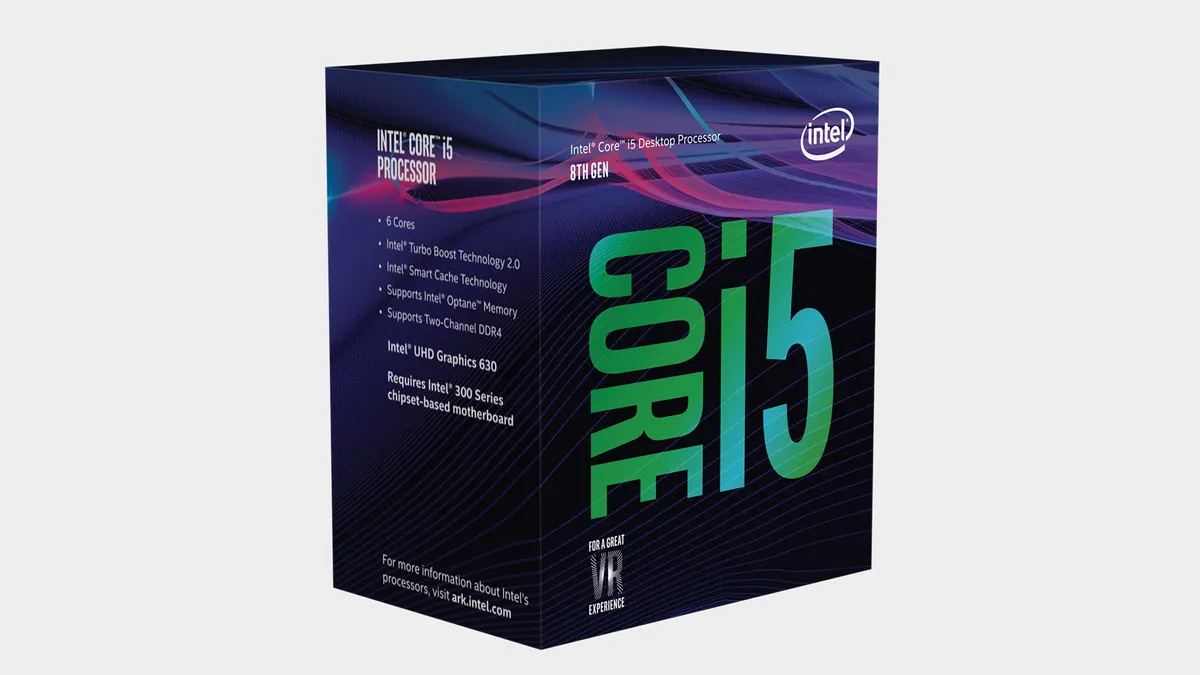
In performance tests, the i5-8400 basically matches the previous generation i7-7700K (running stock) in games and applications. It's clocked a bit lower, but the extra cores make up the difference. The only reason to go beyond the i5-8400 for a gaming PC is if you're thinking of running multiple GPUs, something we don't generally recommend, or if you like overclocking. For that, the Core i7-8700K is the way to go, but at double the price it's not something generally needed (and you'll still need to bring your own cooling solution).
Check out the complete list of all of our award winners for 2017. (The list will be updated daily as the winners are announced.)
Of course we have to give an honorable mention to AMD's Ryzen and Threadripper processors, without which we likely wouldn't have Intel's Coffee Lake or Core i9. Intel is still the best CPU choice for gaming, but the Zen architecture is a huge leap forward in AMD processor performance. 2017 was the year of the CPU, with five new platform launches and over 40 new individual CPU models—and that's not even counting mobile and specialized chips. It's the most excitement we've seen since the heady days of the race to 1GHz in 1999.
What does 2018 hold for us? There are rumors of an improved Ryzen architecture, 8-core Intel parts for the 300-series platform, and even processors with greatly improved integrated graphics. I'm not sure it can top 2017, but next year's CPUs should continue to bring more excitement to your PC's core component.
Keep up to date with the most important stories and the best deals, as picked by the PC Gamer team.
Jarred's love of computers dates back to the dark ages when his dad brought home a DOS 2.3 PC and he left his C-64 behind. He eventually built his first custom PC in 1990 with a 286 12MHz, only to discover it was already woefully outdated when Wing Commander was released a few months later. He holds a BS in Computer Science from Brigham Young University and has been working as a tech journalist since 2004, writing for AnandTech, Maximum PC, and PC Gamer. From the first S3 Virge '3D decelerators' to today's GPUs, Jarred keeps up with all the latest graphics trends and is the one to ask about game performance.