Our Verdict
Compared to cheaper RTX 5090 prebuilt gaming PCs, the updated Maingear MG-1 isn't quite offering enough to justify the exceptionally high price tag. Though this can be reduced by choosing cheaper and more sensible components, you're still paying an awful lot for a gaming PC that looks nice but feels a bit cheap. At least it's very well built.
For
- This config is outrageously powerful
- Custom front panel options
- Rock-solid GPU mount
- Very tidy cabling
Against
- Even the base config is very expensive
- Case feels cheap
- Cooler struggles with the 9950X3D2 at full load
PC Gamer's got your back Our experienced team dedicates many hours to every review, to really get to the heart of what matters most to you. Find out more about how we evaluate games and hardware.
US-based Maingear has been offering custom and prebuilt desktop PCs, laptops, and workstations for around 24 years, and most recently, it has launched an updated version of its gaming-focused MG-1. What makes this particular model stand out is that, amongst the raft of hardware configurations you can choose from, there's the option to fit the rig with AMD's latest 3D V-Cache monster: the Ryzen 9 9950X3D2 Dual Edition.
For its review sample of the new MG-1 Mk.II, Maingear sent over a build with this 192 MB L3 cache processor, mounted in an MSI MAG X870E Tomahawk Max PZ motherboard, and paired with an Nvidia GeForce RTX 5090 Founders Edition, 32 GB of Kingston DDR5-6000 CL30 memory, and a 2 TB Samsung 9100 Pro Gen5 SSD.
It also houses 120 mm Phanteks D30 RGB fans on the AIO cooler and case exhaust, with the redesigned case fielding three 140 mm fans up front. Almost everything can be tweaked with a custom MG-1, though Maingear is currently using a mixture of Team Group and Adata SSDs in the options list.

CPU: AMD Ryzen 9 9950X3D2 Dual Edition
Motherboard: MSI MAG X870E Tomahawk Max WiFi PZ
Memory: 32 GB Kingston Fury DDR5-6000 CL30
Storage: 2 TB Samsung 9100 Pro
Graphics card: Nvidia GeForce RTX 5090 Founders Edition
Cooling: Maingear Epic 360 RGB
PSU: MSI MAG A1250GL PCIE5
Front I/O: 1x USB 3.2 Gen 1 5 Gbps (Type-A), 1x USB 3.2 Gen 2 20 Gbps (Type-C), 1x 3.5mm combo jack
Rear I/O: 4x USB 2.0, 3x USB 3.2 Gen 1 5 Gbps Type-A, 2x USB 3.2 Gen 2 10 Gbps Type-A, 1x USB 3.2 Gen 2 10 Gbps Type-C, 2x USB4 40 Gbps Type-C
Networking: Realtek 8126 5G LAN, Wi-Fi 7
Dimensions: 477 x 499 x 230 mm | 18.78 x 19.65 x 9.06 in
Weight: 18.1 kg | 40 lbs
Price (as specified): $7273 (equivalent custom options) | $7,199 (Ultimate prebuilt model)
Because the review build is a little bit of a one-off, exact pricing isn't possible, but the closest configuration you can currently get that tallies with the one I've been using for a week will set you back around $7,273 (excluding shipping). That's one almighty price tag, and even the simplest of MG-1 configurations (Core Ultra 5 225F, RTX 5060, 32 GB DDR-6000, 2 TB Gen SSD) costs $2,491.
In the case of my review sample, the price is somewhat understandable. Getting hold of a Founders Edition RTX 5090 is nigh-on impossible these days, so you're looking at well over $3,500 just for the graphics card. The Ryzen 9 9950X3D2 Dual Edition has an MSRP of $899, and the DRAM kit and SSD together come to $944.
Or, to put it another way, those four components alone account for 73% of the total cost of the MG-1 Mk.II gaming PC. The memory and storage prices explain why the base configuration is so pricey, too.
There's naturally always some measure of a mark-up with prebuilt gaming PCs, custom or otherwise, though when you add in everything else (the Phanteks fans, the 1250 W power supply unit, the MSI motherboard with all its connectors on the rear, the non-generic chassis, Windows licence, etc), you'll find that Maingear isn't making a vast sum of money with each sale.
The global memory supply crisis has caused DRAM, SSD, and graphics card prices to balloon and narrow the range of different components that system vendors can choose from to help maximise profits. In Maingear's case, it had to turn to the only thing it could do for shaving pennies off the bill of materials: the PC case.
That's unfortunate because the new chassis is the primary selling point of this update. Don't get me wrong, it looks very nice and that front panel, magnetically attached to the rest of the system, lights up a treat and can be swapped for an array of different designs (though they're none-too-cheap, starting at $99). And thanks to the three 140 mm front fans, internal airflow isn't a problem.


The issue is that the rest of the case is very cheap-feeling. The metal side panel feels no different to something you'd find in a $45 case, and both sides are very fiddly to remove and reinstall. The metal pins/pins that are there to help the panels lock in place are too small, and they pop out far too easily if you install the panels incorrectly.
Although it performs admirably well enough, as we'll soon see in the benchmarks, the Maingear-branded 360 mm AIO cooler is also a little cheap-feeling. The mounting system is as basic as it gets, and the coolant pipes and radiator are somewhat on the slim side.
Fortunately, the Maingear MG-1 Mk.II is a bit of a wolf in sheep's clothing, thanks to the rest of the hardware.
Gaming performance
Gaming performance
| Product | Value |
|---|---|
| Maingear MG-1 Mk.II | RTX 5090 | 9950X3D2 | 137 Avg FPS, 77 1% Low FPS |
| NZXT Player Three Prime | RTX 5090 | 9800X3D | 146 Avg FPS, 61 1% Low FPS |
| Alienware Area-51 | RTX 5090 | 285K | 142 Avg FPS, 69 1% Low FPS |
| Corsair One | RTX 5080 | 285K | 87 Avg FPS, 37 1% Low FPS |
| Acer Predator Orion 7000 I RTX 5080 I 265KF | 102 Avg FPS, 44 1% Low FPS |

Testing the gaming performance of PCs with RTX 5080 and 5090 graphics cards at 1440p might seem a little odd, but using this resolution helps to bring the review samples' CPUs into play, and the results give a broader overview of the system's capability. Realistically, these are 4K gaming rigs, and at that resolution, the only thing that really matters is the GPU.
Taking all of the gaming performance figures into account, especially the 1% low frame rates, it's clear that the Maingear MG-1 Mk.II is the most powerful gaming PC we've tested for a very long time. Which is, of course, what you'd expect when the CPU is the most potent that AMD makes for desktop PCs, the DRAM is right at the sweet spot in terms of clock speeds and timings, and there's an RTX 5090 right next to the pair of them.
The problem for the new Maingear isn't its performance; it's the bang-for-buck. At the time of writing, you can get an RTX 5090 NZXT Player Three Prime for $5,399, and that comes with 64 GB of memory and 4 TB of storage. The Alienware Area-51 build is more expensive than NZXT at $6,280, but both are noticeably underneath the MG-1's price tag.
However, the Maingear PC is sporting faster DRAM than the NZXT, and both of these PCs have faster SSDs than that in the Alienware. Plus, there's the fact that the 9950X3D2 Dual Edition is twice as expensive as a 9800X3D, and it's not really a gaming CPU, as such.
Content creation performance
Content creation performance
| Product | Value |
|---|---|
| Maingear MG-1 Mk.II | RTX 5090 | 9950X3D2 | 143 Single core index, 2240 Multi thread index |
| NZXT Player Three Prime | RTX 5090 | 9800X3D | 129 Single core index, 1293 Multi thread index |
| Alienware Area-51 | RTX 5090 | 285K | 132 Single core index, 2182 Multi thread index |
| Corsair One | RTX 5080 | 285K | 141 Single core index, 2364 Multi thread index |
| Acer Predator Orion 7000 I RTX 5080 I 265KF | 139 Single core index, 2031 Multi thread index |
Where the MG-1 really comes to the fore is when you switch from gaming benchmarks to those that replicate the sort of workloads you get in content creation tasks, such as offline rendering, code compiling, and video encoding. Here, AMD's cached-to-the-max Ryzen really shines, though it's mostly due to it having 32 threads and high clock speeds.
However, Maingear is very much pitching the MG-1 as being a gaming PC, and if you are considering buying one just for that purpose, then I strongly suggest you don't choose the Dual Edition processor, even if you can afford one. The Ryzen 9950X3D option is $343 cheaper, but you're just going to be far better off picking the Ryzen 7 9850X3D, which knocks an enormous $630 off the price tag.
And there's another reason for choosing a different processor: the MG-1's AIO cooler isn't quite up to the job of managing the 9950X3D2's 250 W peak power consumption.
Power and thermals
Thermal performance
| Product | Value |
|---|---|
| Maingear MG-1 Mk.II | RTX 5090 | 9950X3D2 | 63 Avg CPU Temp (°C), 68 Max CPU Temp (°C), 51 Avg GPU Temp (°C), 53 Max GPU Temp (°C) |
| NZXT Player Three Prime | RTX 5090 | 9800X3D | 63 Avg CPU Temp (°C), 64 Max CPU Temp (°C), 56 Avg GPU Temp (°C), 69 Max GPU Temp (°C) |
| Alienware Area-51 | RTX 5090 | 285K | 52 Avg CPU Temp (°C), 59 Max CPU Temp (°C), 65 Avg GPU Temp (°C), 68 Max GPU Temp (°C) |
| Corsair One | RTX 5080 | 285K | 54 Avg CPU Temp (°C), 63 Max CPU Temp (°C), 60 Avg GPU Temp (°C), 46 Max GPU Temp (°C) |
| Acer Predator Orion 7000 I RTX 5080 I 265KF | 53 Avg CPU Temp (°C), 62 Max CPU Temp (°C), 64 Avg GPU Temp (°C), 48 Max GPU Temp (°C) |
To be fair to Maingear, a great many AIO coolers aren't good enough, either, but while the self-branded system is happy as a lamb in a spring field in gaming, when you bring all of AMD's threads to the battle, the processor's temperature rapidly hits 94 °C and the chip throttles its clock speeds back a little.
Realistically, this processor needs something far beefier in content creation workloads, such as an Arctic Liquid Freezer III Pro, as it has a deeper radiator, with more coolant and fin surface area to absorb and dissipate the heat. The MG-1 review sample shipped with MSI's control app installed, but without the cooling control module installed, so the system was just using the default BIOS fan settings.

I ran the tests again with every fan at 100% rpm, and that certainly helped keep the peak temperature under 90 °C, but the airflow noise was exceptionally loud, particularly that from the exhaust fan. Not painfully so, but certainly not something you could live with.
At least the RTX 5090 never got even slightly warm, even with the default fan speeds, and I carried out some heavy 4K rendering workloads to really stress the system. At no point did the graphics card get even remotely hot, and the amount of hot air being blasted out of the chassis is a testament to the chassis airflow.
Speaking of graphics cards, the MG-1 has one of the most robust GPU mounts I have ever seen in a PC. A thick arm is bolted to the motherboard tray and card itself, and it felt so stiff that you'd need a small horse standing on the card before you experienced any degree of sagging.


Leaving the price aside for a moment, the Maingear MG-1 Mk.II is one of the better pre-built gaming PCs I've used in a long time. Yes, the case panels are disappointing, but the rest is very good, and the cable routing and overall management are top-notch. I'd prefer to see Velcro strips rather than zip ties holding everything in place, though, as it makes things far easier to handle when the inevitable upgrade comes along.
✅ You want the most powerful gaming PC, regardless of the price tag: While you can buy other RTX 5090 systems for much less money, Maingear's updated MG-1 stands ahead of the crowd with the Ryzen 9 9550X3D2 Dual Edition.
❌ You want a premier-feeling gaming PC: The new MG-1 looks very nice, but the chassis itself has an air of cheapness about it. It feels distinctly out of place in a $7,000 gaming PC.
The overall performance is exactly what you'd expect with this combination of hardware, and while the cooling performance favours the graphics card rather than the CPU, that's sensible given the use of an RTX 5090.
To my eyes, the aesthetics are a nice balance of RGB bling and understated styling, though I feel that Maingear has missed a trick by not using a classier finish to the metal surfaces. The Havn BF 360 Flow, for example, feels like pure luxury, everywhere you lay your hands, and the MG-1 would benefit from a similar feel.
Even the external ports on the top of the case aren't quite what you'd expect from such a premier brand: just two USB (one Type-C, one Type-A) and an audio jack.
As it is, I'm not convinced that the modicum of RGB lighting and customisable front panel is quite enough to justify the price tag, regardless of how well the MG-1 is put together. The review sample is exceptionally expensive, mostly because of the components inside, but also demanding over $2,000 for an RTX 5060 build is certainly an eyebrow-raiser. There's an awful lot to like about the updated Maingear MG-1, but given how pricey gaming PCs have become, it really needs something extra to warrant considering it over cheaper, just as powerful alternatives.
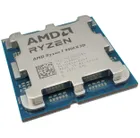
1. Best overall:
AMD Ryzen 7 9800X3D
2. Best budget:
AMD Ryzen 5 5500
3. Best mid-range:
Intel Core Ultra 5 250K Plus
4. Best high-end:
AMD Ryzen 9 9950X3D
5. Best AM4 upgrade:
AMD Ryzen 7 5700X3D
6. Best CPU graphics:
AMD Ryzen 7 8700G
Compared to cheaper RTX 5090 prebuilt gaming PCs, the updated Maingear MG-1 isn't quite offering enough to justify the exceptionally high price tag. Though this can be reduced by choosing cheaper and more sensible components, you're still paying an awful lot for a gaming PC that looks nice but feels a bit cheap. At least it's very well built.