Martin Klíma is an iconoclast. As the co-founder of Warhorse Studios, he's responsible for one of the crunchiest, most peculiar, and best RPGs of the last decade—Kingdom Come: Deliverance 2, a game few other studios would make. As a former student rabblerouser in the old eastern bloc, he's the only person I've ever spoken to for this job who can say they helped overthrow a government.
He's celebrating the Warhorse's 15th anniversary, a milestone moment in a life that has a lot of them already. "I'd swear it was just yesterday," he says, that he and his fellow co-founder—the eternally fractious Daniel Vávra—were two disaffected devs striking out on their own. But Klíma's career did not begin with the incorporation of Warhorse Studios. It began in the actually existing socialism of Czechoslovakia, in the 1980s.
History check
"I was learning English at school, but it was sort of difficult," recalls Klíma. English educational materials had to be imported from friendly countries, and the only friendly English-speaking country at the time was Ghana, whose materials were miles away from the things Klíma was actually interested in. "I mean no disrespect to the people of Ghana, but it's a bit of an unusual approach to teaching kids English, and so our vocabulary was more about combine harvesters and blast furnaces than swords and dwarves."
What Klíma wanted to read, more than anything, was The Lord of the Rings. But although The Hobbit had been officially published in Czechoslovakia, there was no such luck for LOTR. Around 1987, Klíma was able to get his hands on a copy that someone had brought back from a trip westwards, "but I didn't know enough English to read it, so I had to improve my English. One thing leads to another, and the very fact that we can talk to each other right now is because of JRR Tolkien."
The first movie adaptation of The Hobbit was, in fact, this 1967 animation produced in Prague.
Not long after, Klíma was lucky enough to obtain another imported fantasy treasure: a Dungeons & Dragons Basic Set. "I think for everybody who experiences a role-playing game for the first time, it's an amazing experience: this idea that you can pretend to be somebody else, and you can assume a role and you can live through these amazing adventures in your fantasy."
The game gave him a kind of missionary fervour, a desire to spread the good word of D&D. "I started translating it with my then-girlfriend, now wife, and we went through maybe 80% of the text." The thinking was to publish a translation of the game via Czechoslovakia's underground printing presses; "to officially translate it, officially license it… that was completely unthinkable." Klíma already had experience in this sort of thing—he ran a fanzine that quietly printed popular sci-fi by "[pretending] that they were contributions to our student magazine."
Klíma's dreams of clandestine TTRPG distribution were disrupted by the other part of his life. The group he played D&D with was, in fact, a subset of an independent student union that he and his allies were organising, Stuha. As a student at the University of Prague, Klíma had organised a petition against the demolition of campus buildings. Not, ordinarily, a revolutionary act, but to the flighty Czechoslovakian government it was a "borderline rebellion."

In decades past, people might have shied away from signing a petition like Klíma's, but things had shifted by the late '80s. "Gorbachev was in power [in the Soviet Union]. There was this talk about 'change' and 'opening' and so on, so people did sign my little petition. In the end, almost 1,000 people signed it, and this really helped me to reach other people who were interested in changing things." It was not Klíma alone—Stuha had other organisers, other borderline and not-so-borderline rebels out to overturn the system—but his was an important role.
Important enough, in fact, that he was chosen to speak for Stuha at a public demonstration on November 17, 1989—International Students' Day, an observance tied to Czech student resistance to Nazi occupation and its subsequent violent repression. Klíma summarises it like so: "There was a big demonstration against the German occupiers in 1939, and on November 17, all the Czech universities were closed [in retaliation] by the Nazi government.

"It seemed like, if you make a student demonstration on the 50th anniversary of these events, then you must be very safe, because no regime would be so stupid as to fight students, exposing itself to this very obvious comparison to Nazi Germany."
Martin Klíma
"It seemed like, if you make a student demonstration on the 50th anniversary of these events, then you must be very safe, because no regime would be so stupid as to fight students, exposing itself to this very obvious comparison to Nazi Germany."
The Czechoslovakian government, it seemed, did not see things that way. "There was this confrontation with the police, and people were badly beaten… that really radicalized the students and radicalized the rest of the country. In a week, there was a general strike, and by the end of December, Václav Havel was president of Czechoslovakia." The Velvet Revolution—Czechoslovakia's chapter in the Soviet bloc's collapse—had taken place.
Rolling dice
As capitalism took root in Czechoslovakia (and, after 1992, the Czech Republic), Klíma's sci-fi and gaming ambitions started to look less like a hobby and more like a career. Though he and his partner had been forced to set aside their translation of D&D by the Velvet Revolution, he returned to it in the aftermath. "I wrote a letter to [D&D publisher] TSR, and they never answered me… I even persuaded my relatives in the US to send them letters and faxes… but we never got any response from them. Maybe they thought it was a crazy idea. 'Why would some communist kids want to play D&D?' Maybe it felt absurd to them."
Eventually, inspired by the German TTRPG Das Schwarze Auge, and convinced no one at TSR was going to pick up the phone, Klíma decided to adapt the work he and his partner had already done into something new. "We rewrote most of the text. We created our own classes and our own races. We created our own combat system." That last bit in part because Czechoslovakia did not really possess the means to manufacture 20-sided dice in the early '90s, "so we only had a six-sided die and a 10-sided die."

The result was Dračí doupě. "It became hugely successful, because it was the first fantasy RPG [in Czechoslovakia], and it was really like when it rains in a desert and green sprouts appear… and then I've worked in the games industry ever since." It wasn't long before he moved into computer games with titles like Fish Fillets, Original War, and UFO: Aftermath, developed under the Altar Interactive brand, itself spun off from Altar Publishing, whose name was on Dračí doupě.
Klíma's experience in the games industry between the 1989 revolution and Warhorse's 2011 founding could probably fill books by itself, but a recurring theme in what he told me about those days is frustration with publishers. This came to a head in the late 2000s with an RPG called Vision, led by Czech board and videogame designer Vlaada Chvátil. "This is going to be our big break," Klíma remembers thinking at the time, "This game is going to make history."

The game's publisher, CDV Software, was not quite as bullish. "CDV asked us to do some changes, and when we did these changes, they told us that the managing director who signed the original contract with us had left, and now they were no longer interested because of these changes that we made. And then six months later, they went bankrupt as well.
"We were sort of despondent and turned over the company to Bohemia Interactive," says Klíma, with the transfer happening in September 2010. After working on games like Arma for a while, followed by a stint at Codemasters, he was approached by Operation Flashpoint lead designer Viktor Bocan (now one of Warhorse's two creative directors, alongside Prokop Jirsa).
"We were sort of despondent and turned over the company to Bohemia Interactive"
Martin Klíma
Bocan knew a guy with a vision: an achingly realistic RPG set in 15th-century Bohemia, he just needed someone "who is good with Excel, who will do this boring stuff about numbers and plans and so on." The game, of course, was Kingdom Come: Deliverance, and the guy with a vision was Daniel Vávra, its director. Bocan told Vávra to wait right there while he got Klíma on the phone. Warhorse Studios was born.
Thy will be done
One of my first questions to Klíma was, if he could travel back in time and tell his past self how KCD had panned out, would he have been surprised? His answer: the game's success wouldn't have shocked him a jot, but the fact that it actually got made and released would have amazed him.
"We were asking for quite a lot of money," Klíma recalls, and publishers, perhaps predictably, weren't champing at the bit to take a big risk on a studio making a historical RPG that had strong opinions about the order in which you equipped your armour. "It was really difficult at the time… It took us two years to find an investor."

The investor was Czech-American billionaire venture capitalist Zdeněk Bakala. Bakala's cheque gave Klíma and co the means to properly start Warhorse and begin work on KCD, but not enough to complete the game from beginning to end. "We had a really nice demo of the game. We hired an agency. We traveled the world. We talked to, I don't know, 50 different publishers on three continents. Nobody was interested."
The answer: Kickstarter, where it turned out that 35,384 backers were more willing to take a punt on Warhorse's weird medieval RPG than major publishers were. "I think [it's] the idea of a grown-up RPG," Klíma reflected. "I still am bored and tired of all the RPGs where you are this chosen one… Nobody is making a game that would say, 'Okay, this is a big RPG, and you are nobody, and you are not going to become a world saviour. This is a game about an ordinary random person that's doing ordinary, random-person stuff, and at the end, he is just moderately less of a nobody.'"
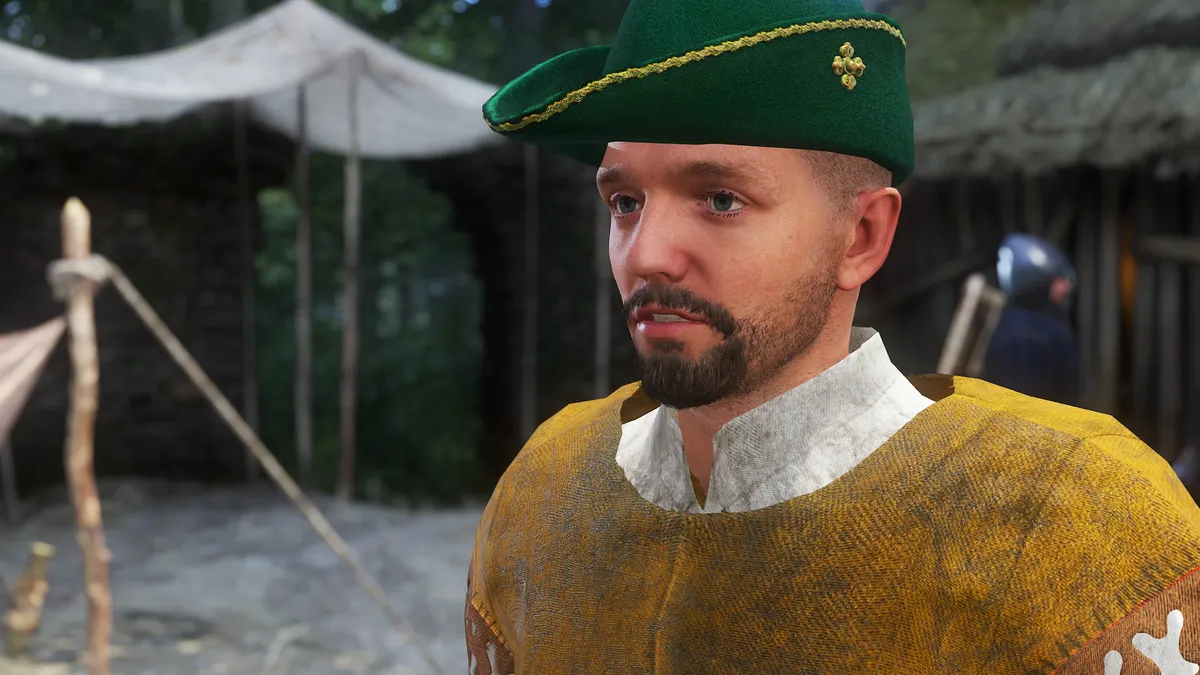
KCD scratched that itch for over 35,000 people, where "publishers, bless their hearts, are very conservative by the nature of their business… If you have this huge studio, like these established publishers do, it means that your next game is going to cost $100 million… and then you need to sell 4 or 5 million units just to break even, and that's difficult with a new IP.
"I've been in this business for 30 years now, and I only managed to sell one game to a publisher, and that was Original War back in 1997. This experience, trying to sell Kingdom Come to publishers, was really eye-opening in realizing how difficult, almost impossible it is. So it was a great relief and vindication when we saw that the players agreed with us."
All we have to decide is what to do
The first KCD did not light the world on fire—and in Klíma's estimation, is more like Kingdom Come "zero point eight" than a full realisation of the studio's ambitions (that would be KCD2)—but it hit hard enough to let Warhorse expand and to put it on the path to KCD2. "There are of course people who think that KCD1 was a better game than KCD2 and KCD2 is just a watered-down, mainstream, plays-by-itself game for the masses.
"I don't agree… but I can see why somebody thinks that. But still, I think the fact that [KCD1] crashes every three hours is not a good experience," he jokes, "even if you are the most hardcore player ever."
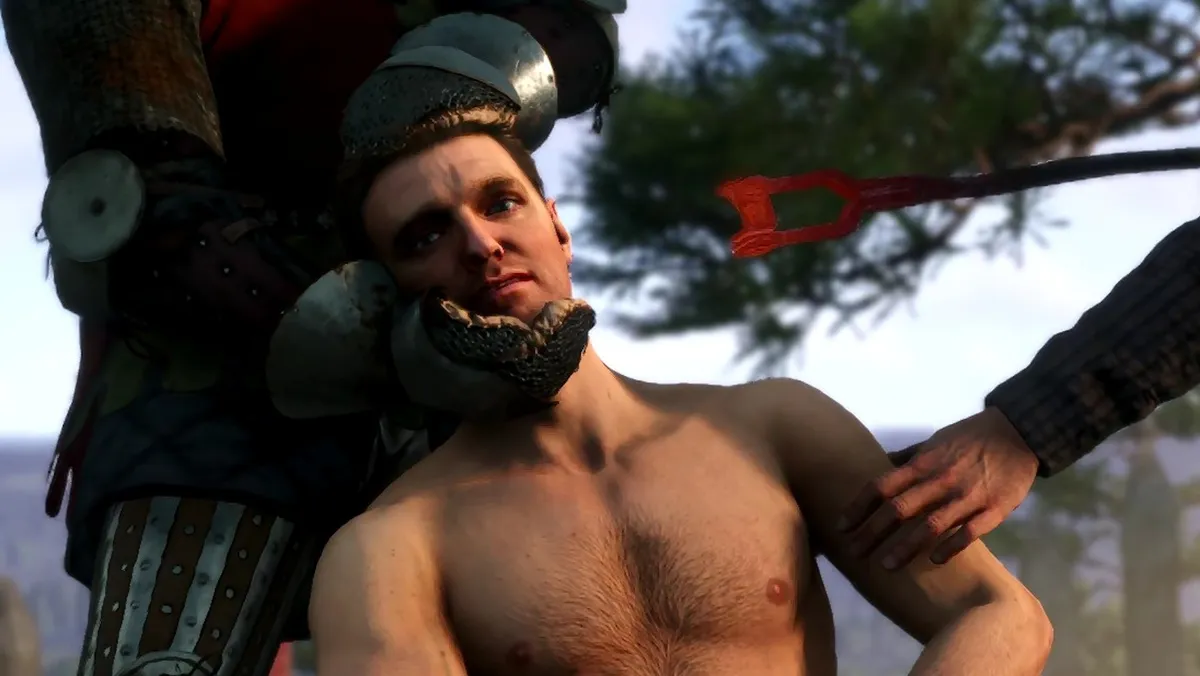
But lots of people, us included, really did like KCD2, and the game was successful enough to send Klíma full circle, from teaching himself English via LOTR books to negotiating the development of a Warhorse-driven LOTR game. "It's clear that because of the success of Kingdom Come, somebody would be willing to entrust us with this license."
Warhorse is now a two-game studio, its teams divided between its LOTR game and an upcoming Kingdom Come adventure. "Now you have people sitting in the same office that used to work together, were part of the same team even recently. And now we have to split them into two groups and focus them each on their own project, and that's quite a challenge."
"It's clear that because of the success of Kingdom Come, somebody would be willing to entrust us with [the LOTR] license."
Martin Klíma
But overall, probably one of those problems it's nice to have. So there's a little paradox: with Warhorse and its ambitions both growing, the wider games industry seems bleaker than it's been in decades, riven with layoffs and ignominious cancellations. For Klíma, it indicates one thing: the growth of videogames as a market has run into limits it can't transcend, even as the progress of technology continues to demand splashier games with bigger goals and larger teams. "You throw more people on the job, and that makes the games more expensive… If the game is more expensive, it needs to sell more units in order for this to be a viable business.

"How can you do it? The easiest [way] is you grow the market… But we reached the limit here long ago… If somebody is not playing the games, it's because they don't want to play the games, or they can't afford to play the games. So there's no way unless we teach dogs how to play games." Another way to squeeze more profit? Cut out the middlemen, but the industry's done that too: "We destroyed retail, and we took all their money," jokes Klíma.
"The last thing you can do is to increase the unit price. That would help a lot, but everybody's scared to death about it. Now, hopefully, GTA will blaze the trail…but I think we've run out of options." Meanwhile, technology keeps getting better (though it's maybe been arrested, a little, by the RAMpocalypse) and expectations keep getting higher, in Klíma's assessment.

"I don't see a way out of it other than moving the production to the countries that are cheaper… it's maybe Central and Eastern Europe, maybe China, maybe India, maybe East Asia in general." Good news, perhaps, for Czechia-based Warhorse, but a grim prognosis for North American and west-European development. "I take no pleasure in being a prophet of doom and desolation, but specifically in North America, I think it's a really, really huge problem right now."
The solution much of the executive class is keen on is, of course, AI. For Klíma, many of them have a "simplified mental model" of how it can be introduced that doesn't quite work in reality. Paraphrasing him, that model goes like this: if AI is a 5x force multiplier, he says, many people imagine you can cut a 200-person dev team down to 40. Even if each developer needs their own AI, and each AI costs the same as one dev, you can now do the work of a 200-person dev team while only paying for the cost of an 80-person team.

Even leaving aside questions of the quality of the AI's output, Klíma doesn't think it works like that. If you have 200 devs and a magical AI multiplies their output by five, players are just going to want the game that 1000-person-dev-team equivalent can make. "This is not a 'get out of jail free' card, the AI. It will not reduce the cost of the game, but it will allow us to create bigger games for the same cost."
I'm more than a little sceptical, as you might expect, but it's clearly a question Klíma, and Warhorse, has been thinking about. Will the force multiplier (as he describes it) of AI play a role in Warhorse's future games? For the first time in our long chat, Klíma demurs at the question. "I can't talk about it," he says. Something for us to find out, I suppose, on our next visit to Middle-earth or Bohemia.