

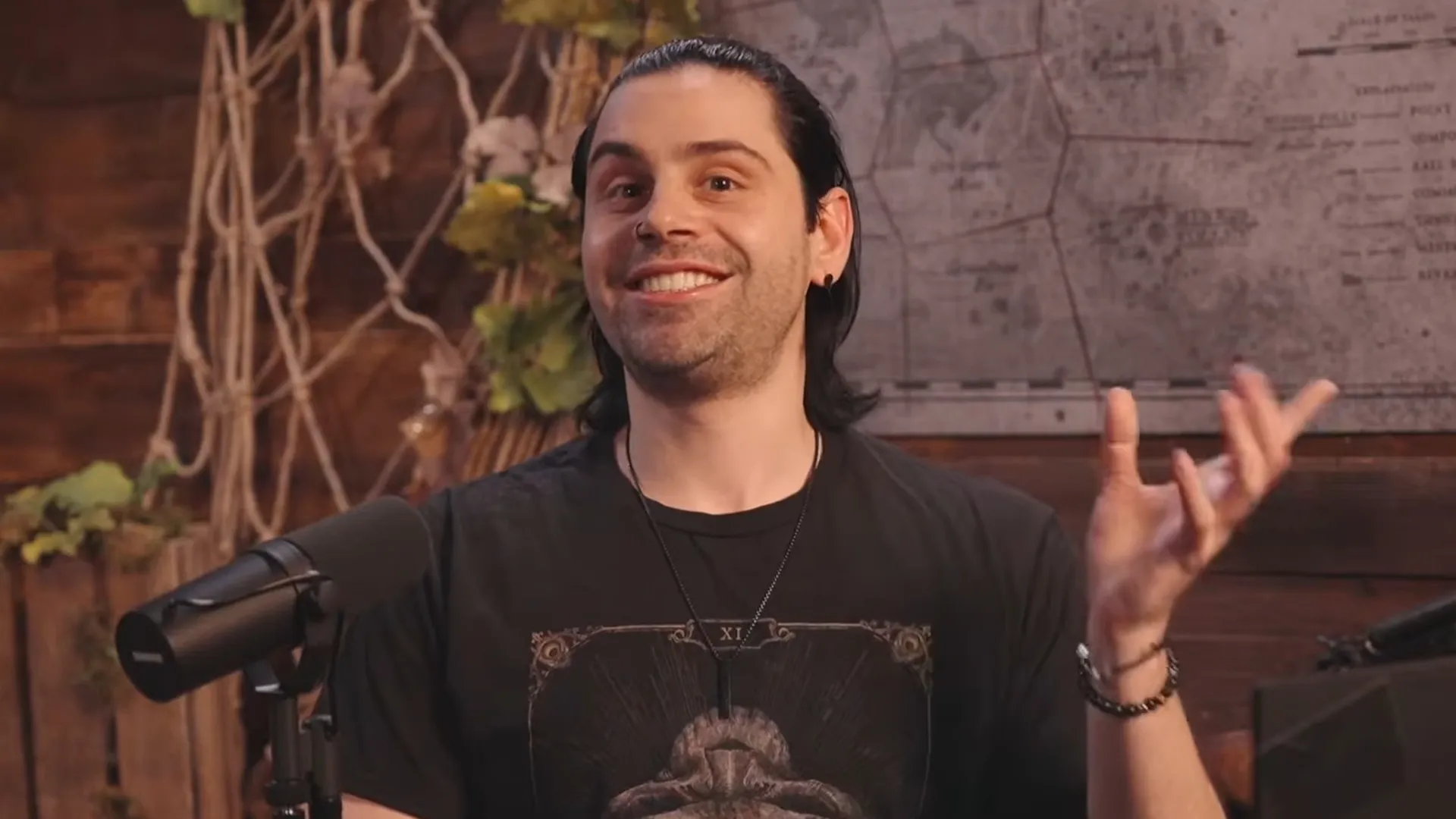

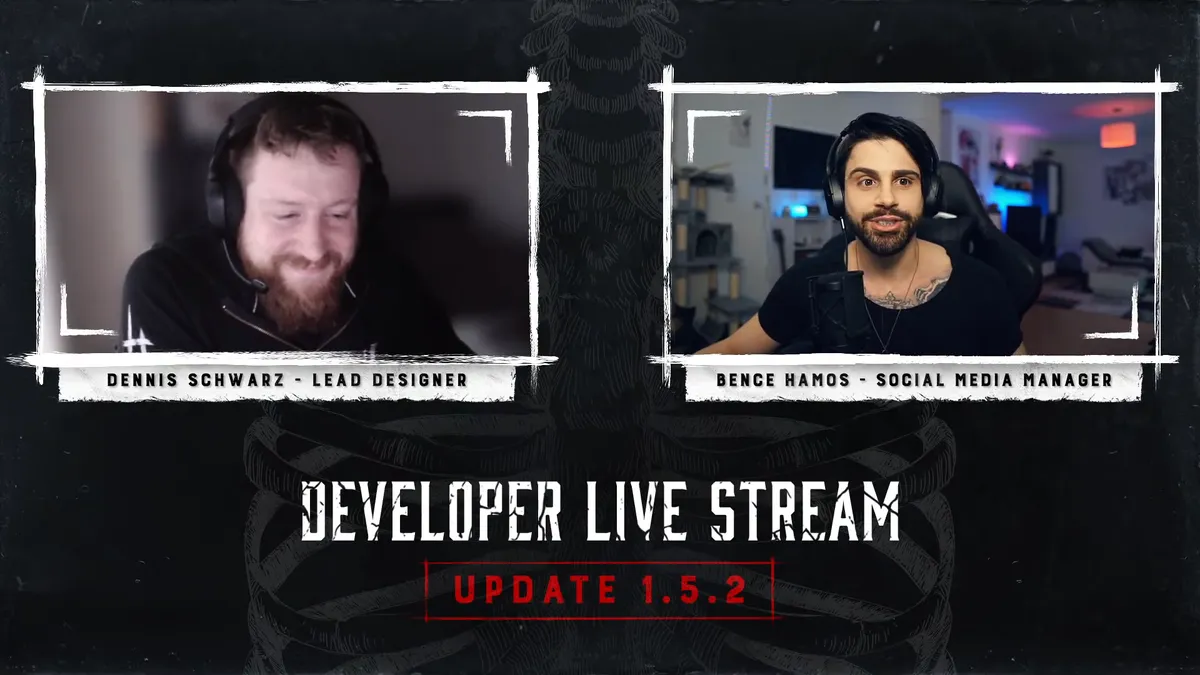
The Hunt: Showdown community received a sucker punch in September when it learned that Bence "Beadyboy" Hamos, a beloved community-facing figure for the long-running extraction shooter, was unceremoniously let go in a wave of Crytek layoffs that affected at least 30 people.
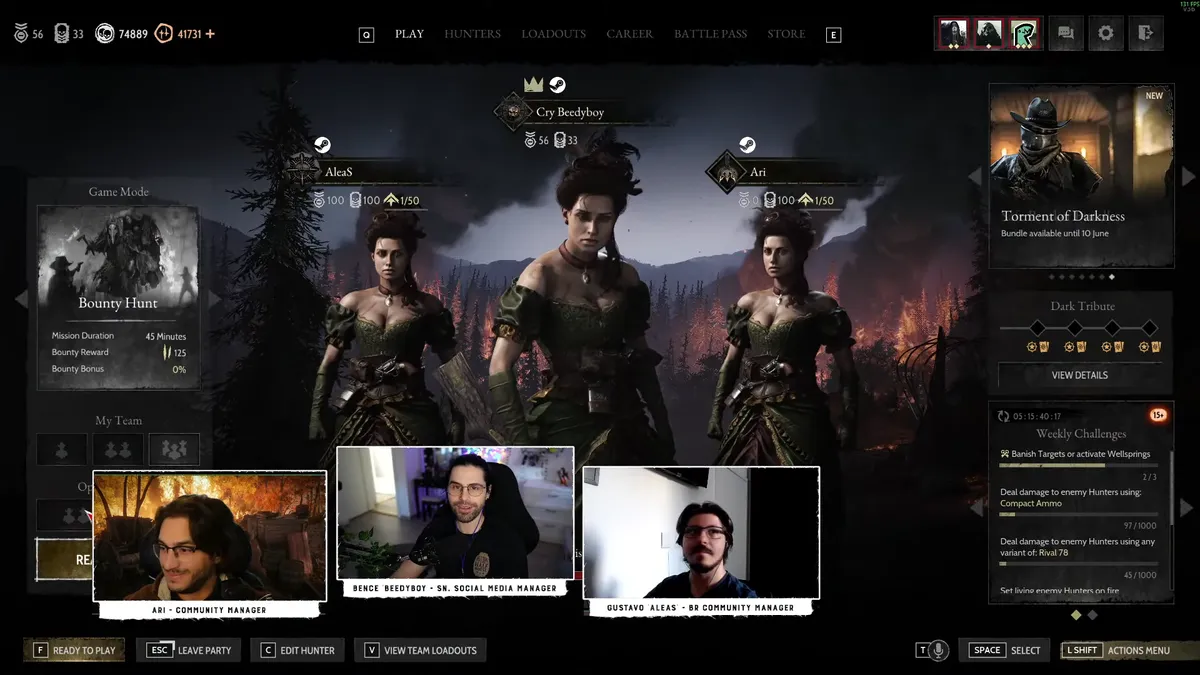
For years Hamos was one of the faces of Hunt: Showdown, hosting livestreams, vlogs, and social media videos that kept players abreast of their favorite game's happenings. Through the highs and lows of Hunt's updates, events, and occasional controversies, he was a steady presence—calm, exuberant, and in touch with the experience of average players.
Hamos began at Crytek in 2018 in a social media role, eventually climbing to senior broadcast manager. As someone who absorbs the work of community managers constantly for work, I believe Hamos was particularly good at it—which is why his sudden departure hit Hunt's most dedicated players hard.

Hamos grew up in Budapest, Hungary. He'd looked up to Crytek since he was a teenager playing Crysis with his brother. He moved to Germany to find work and jumped at a job posting at the famed studio in 2018. He worked there for nearly nine years, focused entirely on Hunt: Showdown.
I caught up with Hamos last month, soon after his last day at Crytek, to learn what it was like to cultivate Hunt's community over nine years and talk about his unexpected departure.
"I really looked up to Crytek," Hamos told me. "[Getting hired] was such an unbelievable moment in my life, which obviously completely changed my whole career. It was nothing I never imagined I'd do. I was super happy."
Hamos said he had never worked in games when he interviewed at Crytek, but managed to charm the studio with his experience managing his rock band's social media, interacting with its community, and running livestreams on Ustream.
"It was right before the launch of Hunt, so in 2018," Hamos, who had recently moved to Germany from his home in Budapest to look for work, recounted. "I saw an opportunity at Crytek for a very entry-level social media position, and they really needed something.
"Somehow, by huge luck, I got hired in two weeks."
When Hamos arrived at Crytek in early 2018, the industry was in the middle of a major shift toward live service games. Fortnite had yet to become the biggest game in the world, battle passes didn't exist outside mobile and MOBAs, and Crytek was taking a big chance on an FPS format so early in its infancy that it didn't have an established name yet: the extraction shooter. There was no playbook for communications in a game that's always changing, so Hamos did what came naturally.
On communication
To deal with a community and manage a community, you have to be part of a community
Bence Hamos
"I always had this principle that to deal with a community and manage a community, you have to be part of a community. So that's why I played a bunch of Hunt," he said. "I played over 2,000 or 3,000 hours just in my personal account, not even my testing account. I streamed it in my personal time.
"I think it's super important in a position like that to not just understand what the company wants, and the vision for the company, but also the other side of the equation—what players are feeling. I would understand their frustration. I would see the issues firsthand."
Hamos says his extensive hours in Hunt put him in a sometimes "weird" position of representing the interests of both the players and devs, which did not always align.
"You're the voice of the community, and you have to push that to the dev team and let them know about feedback and issues people are talking about. But at the same time, you also push the vision of the team and answers to the community from the dev side. It's a weird mixture."
I was curious what that process actually looked like, behind the scenes. How would a community manager package up player sentiment and deliver it to devs who aren't as deeply embedded in Reddit or YouTube?
"So we would collect reports on a weekly or bi-weekly basis, depending on the time period, and we would have to actually measure and collect it. Like, 'Hey, this many players are positive about this subject. These are the mixed ones. These are the negative ones.' And we list them out and say '200 people are saying this is bad.' That's a high priority from the community side, and you want to look at different platforms too, like socials, Steam, Reddit, Discord, and even your personal DMs, because not everyone has an X or BlueSky account. Those are all counted in, but it has to be accurate."
On balance
Hamos also explained how being the go-between for players and devs sometimes means taking a popular idea to the team and getting a no.
"There may be things that the community is really asking for, but the team is definitely saying no to. Whatever the reason: It may be not in line with the vision of the game or simply technical reasons, it may take too much time, and you really have to prioritize things because live service games always need updates, and people always want the big shiny things," he said. "When that happens, you just have to be transparent with the community and not ignore it."
The other side of that coin is calibrating feedback (especially balance feedback) from platforms that are prone to hyperbole.
"When you talk about a game like Hunt, you have to understand that the vocal part of the community may be veteran players that have been playing for a long time, and may be the highest-skill six star players, but that's actually a minority of all players. So you cannot necessarily balance the game around 1% or even less than 1% of the player base when your numbers show that it's not actually a problem for the community," he said.
"If you're talking about balancing a weapon [for example], designers look at the percentage of people using it in every skill level. Sometimes it may look very loud on Reddit that, say, the weapon is way too overpowered, but when you look at the data, it may be actually a super low percentage of people using it. They would then decide to make a small change or even show the data to players.
You cannot necessarily balance the game around 1% or even less than 1% of the player base...
Bence Hamos
"It has happened before where we said, 'Hey guys, here's the usage rate, this is why we are not planning on changing it, and it's not actually as big of a deal as you may perceive it," he said. "I think the community appreciates it when they can see the numbers behind things."
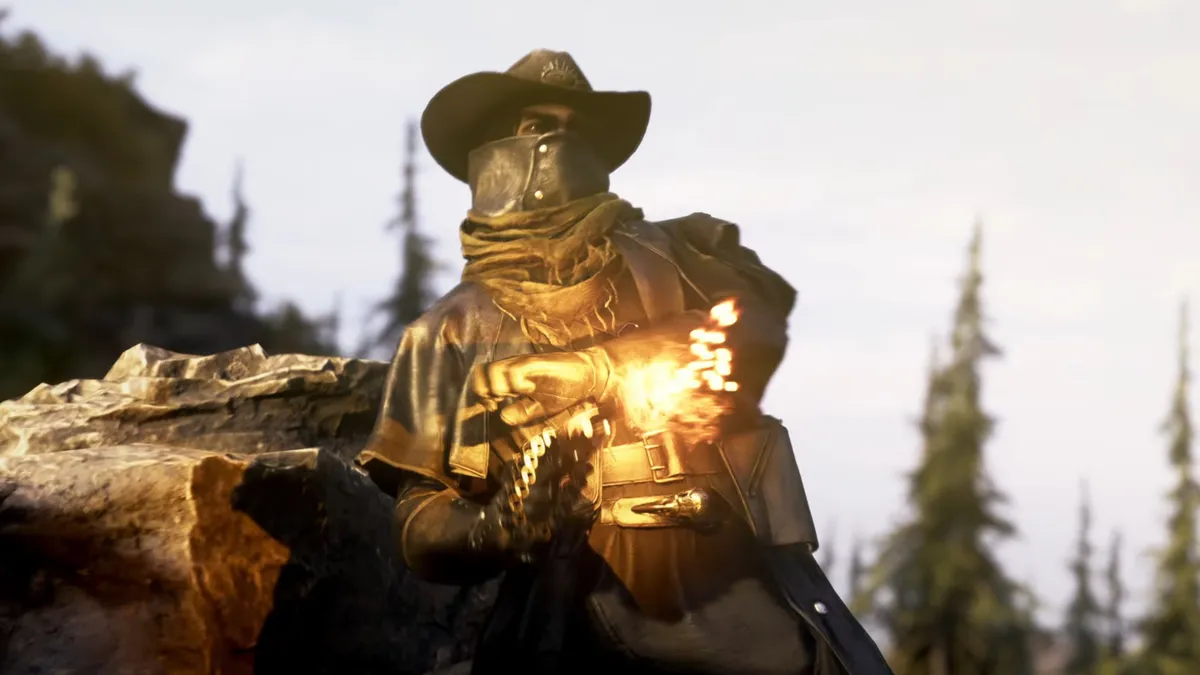
But Hamos also offered an example of an adjustment made with high-skill players in mind that didn't really affect the rest of the community: Making Spitzer ammo, a special bullet type that increases bullet velocity, a scarce lootable item instead of something you can buy from the store whenever.
"Today, Hunt has so many layers and so much depth that you can really make small adjustments that may not affect lower-skill players," he said. " I always had a lot of trust and respect for the designers. They really know what they are doing, so I think Hunt and the community are in good hands in this regard."
On the layoff
Hamos had nothing but amazing things to say about his coworkers and experience working at Crytek, even if the way he left was, in his words, shocking and sad.
"It came out of nowhere. And after nine years, I did feel like a part of my soul was ripped out because it was my day-to-day. I kind of lived and breathed the game. I would wake up and think about Hunt and work on Hunt. It has been a part of my entire adult life, basically," he said. "So I was shocked and sad, and I'm still sad. I still get a bit emotional about it because it's painful, but I don't have any hard feelings."
His firing was part of a wider round of layoffs at Crytek, the second the studio has been through since February 2025. Hamos understands that the game industry is a "pretty rough space" right now, with tens of thousands of developers displaced in the last three years, and showed no sign of bitterness—in keeping with this jolly demeanor in countless Hunt update videos. On his last official day, Hamos posted a farewell message on the official Hunt subreddit—it quickly became the top post on the page with thousands of upvotes and hundreds of supportive comments. The response was "really special," as he recalled.
"To get faced with the fact that your work meant so much to people is something really special. I'm trying not to get emotional here, but when you work day-to-day, you don't really feel that. But now when it's over, it is kind of a payoff for all of that, which really hits like a truck," he said. "It's not something that I expected or maybe even deserved, but something that meant a lot to me."
Unlike countless colleagues now left in the lurch by layoffs, Hamos was fortunate enough to quickly land a new gig, thanks in large part to his recognizable community work on Hunt. In October, he became head of community and social at Good Fun Corporation, a studio formed by former Hell Let Loose developers. They're making Hunger: an old-timey extraction game with distinct similarities to Hunt.
It came out of nowhere. And after nine years, I did feel like a part of my soul was ripped out because it was my day-to-day. I kind of lived and breathed the game.
Bence Hamos
"Of course there are similar vibes to Hunt in Hunger, though it's an extraction RPG, which is very different. It has a lot of MMO elements to it and progression and questing, which appeals to me a lot."
Hamos is starting over from scratch, and his highest hope is to cultivate a community as friendly, passionate, and sturdy as Hunt: Showdown.
"I think [Hunt] is one of the least toxic communities. Of course there's some toxicity, but the people are more mature and understanding compared to most. And since it's a bit smaller overall, you also have this little family kind of vibe where we're talking to people who also understand the game and live the same hunter life."
Hamos told me the end of his time at Crytek doesn't mean the end of his own Hunt career. He still loves the game and believes its best days are ahead.
"Many games enter with a bang and then fade out quickly with fewer players unless they have a major update. Hunt, especially among live service shooters, is really an exception to the rule. You see growth forever—like it's still going," he said.
"I just wish the best for Hunt and hope it will stay for another 10 years at least."