


"Not since the infamous debut of Daikatana has the release of a single game generated so much incensed indignation from early buyers." Our review of Pool of Radiance: Ruins of Myth Drannor didn't hold back. The 2001 dungeon crawler contained, our review said, "A multitude of outrageous bugs," including ones that corrupted saves, made quest items disappear, and most infamously deleted system files when you uninstalled the game.
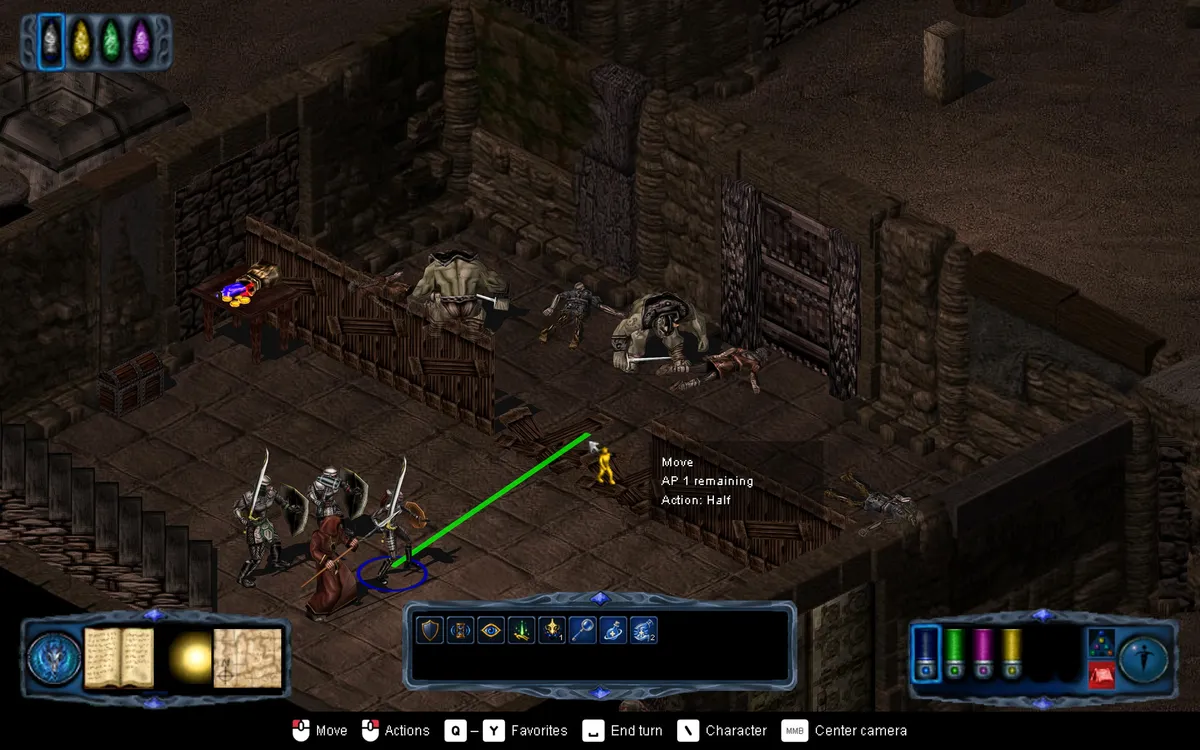
SNEG's rerelease, available now on Steam and GOG, doesn't have those issues. It adds widescreen, controller support, adjustable combat speed, tooltips, an action bar, and sharpened visuals. If, like me, you skipped this one back in the day because of its reputation for being a hassle to play—even with the eventual patches and community fixes—now it's smooth and problem-free. I've played the opening hours without a single key item vanishing or save file going corrupt.
Don't get the wrong idea, though. Ruins of Myth Drannor isn't Vampire: The Masquerade – Bloodlines. This isn't an RPG masterpiece held back by its buggy release. It's a simplistic turn-based dungeon crawl that's mostly notable for being a spiritual successor to the first Gold Box D&D game, Pool of Radiance, and for adapting the then-new third edition of D&D's rules.
The 3.0 rules were a huge step forward at the time. Any character could choose any class, and Armor Class went up instead of down—you can't imagine how much of a drag it was explaining to new players that lower AC was better than high AC, and ideally you wanted a negative number. It also formalized the central mechanic of rolling a d20 and adding a number to beat a difficulty score. If you've played 5th edition, you'll recognize a lot of its DNA here.
Which is why it's a shame Ruins of Myth Drannor isn't a complete adaptation of those rules. You can't play a wizard—sorcerer is the only option for arcane casters—or a halfling or a gnome. You choose which class to improve when you advance a level, but don't get to decide where your skill points go or what feats to take. A couple of years later, The Temple of Elemental Evil would adapt the 3.5 rules update much more fully. Ruins of Myth Drannor feels rudimentary by comparison.
It's also not much of a story. Set 10 years after the events of Pool of Radiance, a new magical pool has opened in the ruined elven city of Myth Drannor so the evil sorceress and dracolich on the box art can get up to some shenanigans, and Elminster has sent a party of adventurers in to stop them. There's one fun twist to this otherwise bog-standard plot, and it's that you're not that first party of adventurers. You're the B-team sent as backup, but a magic portal mishap means you arrive too late to save the A-team and have to take on their quest.
Which explains why four level-one nobodies now have to clear out hundreds of orcs and skeletons from samey dungeon rooms. It's a slow-paced slog, especially in Myth Drannor's main halls, earning a drip-feed of experience points and gold coins from zombies and ghouls, hoping an orc doesn't score a crit and drop one of your party members in a single blow.
There are plenty of reasons not to like Ruins of Myth Drannor, but I've been enjoying it in spite of them. It's an undemanding RPG that offers simple pleasures. I get ambushed by skeletons, then realize my cleric is perfectly positioned to hit them all with Turn Undead. I meet a weird slug monster, try talking to him and find out he's friendly. I block doors to protect my sorcerer, while rushing enemy spellcasters before they get their big area-of-effect blast off.
It's junk food D&D, but then I mostly play D&D at a table covered in pizza and beer anyway. Between more demanding games, this is an ideal low-stakes guilty pleasure and I'm glad it's finally back.