


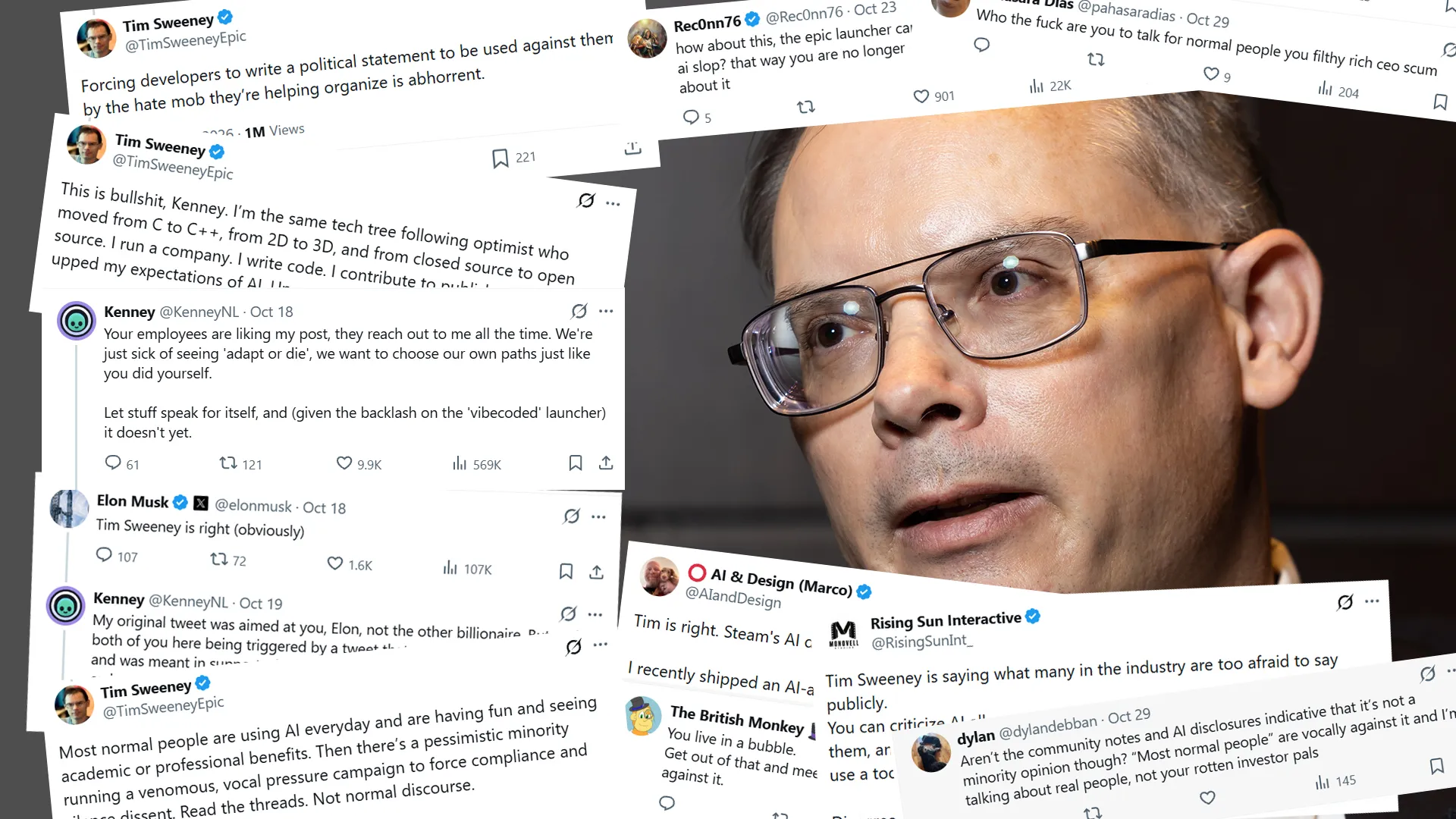
Kenney, an artist known for giving away thousands of free game assets, did not expect to wind up directly arguing with specific billionaires after telling off billionaires in general in a recent X post. But a few hours after he encouraged other artists not to give in to pressure to use generative AI, Epic Games CEO Tim Sweeney was in his replies.
"This is bullshit, Kenney," Sweeney told the artist, concluding his rebuttal with a cute double entendre: "I've upped my expectations of AI. Up yours!"
Richest-person-in-the-world Elon Musk also chimed in to back up Sweeney. Hundreds of other comments on the exchange inevitably followed, spanning the full spectrum of AI opinions.
Kenney's contentious post was: "Don't let billionaires convince you slop is the future. They're used to managing & directing, not making things themselves. Of course they can't see the difference. They don't understand your love for the craft. Keep making personal, beautiful games. You've got my support 💖"
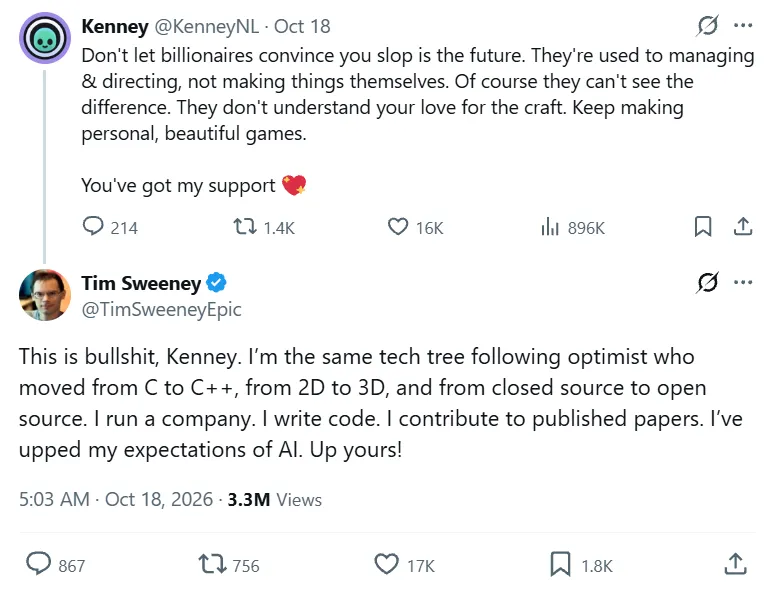
The artist had not had Sweeney in mind when he wrote the post; it was a response to something Musk had said. Kenney expected it to be read by other artists who may feel pressured to use generative AI despite objecting to it.
"I think AI has some benefit but there's just too many problems with it that I find it immoral to use in its current state," Kenney told PC Gamer in a chat after that exchange. "Whether it's the environmental issues, data centers, theft during training, or the negative impact it has on pretty much every industry."
The AI defensive
Sweeney is not known to keep his opinions to himself, but the Epic CEO has been particularly active in his defense of generative AI on X recently.
As a provider of technology to the whole industry, I see it as Epic's job and my job to make the positive case for it.
Tim Sweeney
While some companies use AI but stay quiet about it—Baldur's Gate 3 developer Larian received substantial pushback for discussing limited AI use last year, as an example of how the conversation can go—Epic has made its support for AI tools unambiguous. The company is going "all-in" on AI-assisted game development with its next Unreal Engine release, proudly calls the new version of its Epic Games Store launcher "vibe coded," and recently announced an AI-focused game jam.
Meanwhile, Sweeney has joined likeminded X users in battling what they see as online persecution from an anti-AI "hate mob."
"Because speaking in favor of AI draws such harsh criticism, there is great reluctance among most professional AI adopters in gaming to speak up," the Epic CEO told PC Gamer this week. "As a provider of technology to the whole industry, I see it as Epic's job and my job to make the positive case for it."
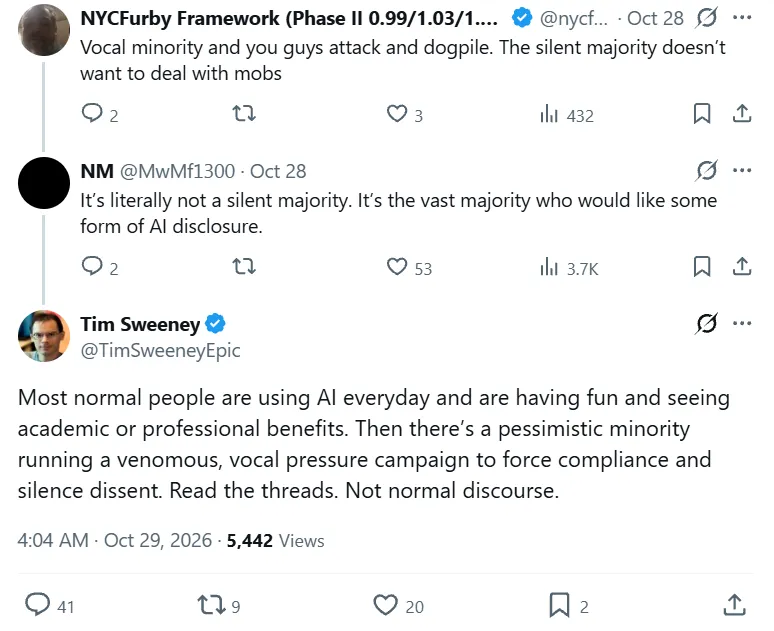
According to Sweeney, opposition to AI in games is not a popular view. He has described the anti-AI crowd as "a pessimistic minority running a venomous, vocal pressure campaign to force compliance and silence dissent," and claimed this week that most opposition to AI comes from "astroturfed anti-AI influence campaigns."
PC Gamer has not seen any evidence for that last claim, but it is the case that "AI slop" accusations on social media have not been matched by a massive rejection of AI from the broader gaming audience.
The generative AI use in Arc Raiders led to a 2/5 review in Eurogamer, but the extraction shooter nevertheless sold over 16 million copies. Several games on Steam's current top sellers list also disclose AI use, including Call of Duty: Modern Warfare 4, Aion 4, MapleStory, and indie game Moon Sweepers, which just announced 600,000 sales.
A recent survey of Steam users by GameDiscoverCo found that the majority, about 69%, are either "neutral," "fine with," or "have absolutely no problem with" buying games that disclose the use of AI in their development, something Steam requires for certain applications of AI.
However, the survey found that the disclosures themselves are popular. According to its results, most Steam users check them before buying a game, and over 55% of respondents think Steam should have even stricter AI disclosure rules.
Sweeney is staunchly against Steam's disclosure requirement, calling it "abhorrent" and claiming that it forces developers to make a political statement that incites "cancel campaigns and public struggle sessions" against them.
The anti-AI camp
Kenney's read on the situation is the opposite of Sweeney's: that a minority which includes billionaire tech executives is pushing hard to normalize generative AI tools and get everyone hooked on them despite resistance from a public that wants to see "soul and love put into games."
"If it were true and AI has had mass adoption, why even bother going after me or trying to convince me to start using it?" Kenney asks.

"I'd rather leave the industry someday when I'm old(...er) and have everyone remember me for the good stuff I did and the many people I've helped, rather than for lining my own pockets.
Kenney
Some gamers do support the use of AI—or, as established, are at least willing to accept the use of generative AI tools—but even as OpenAI boasts over a billion monthly active users, it's easy to find people who share Kenney's total distaste of AI, and the conversation is not limited to mean X posts.
As of the most recent Game Developers Conference survey, over 50% of devs think AI is bad for the industry. Wariness of data centers crosses party lines in the US, as we just saw in the midterm elections. A large survey of PC Gamer readers recently came back strongly against generative AI in games.
One developer went so far as to cancel their Epic Games Store release in support of Kenney. "We just don't wanna be associated with such an embarrassing platform," said the studio, Dead Teapot.
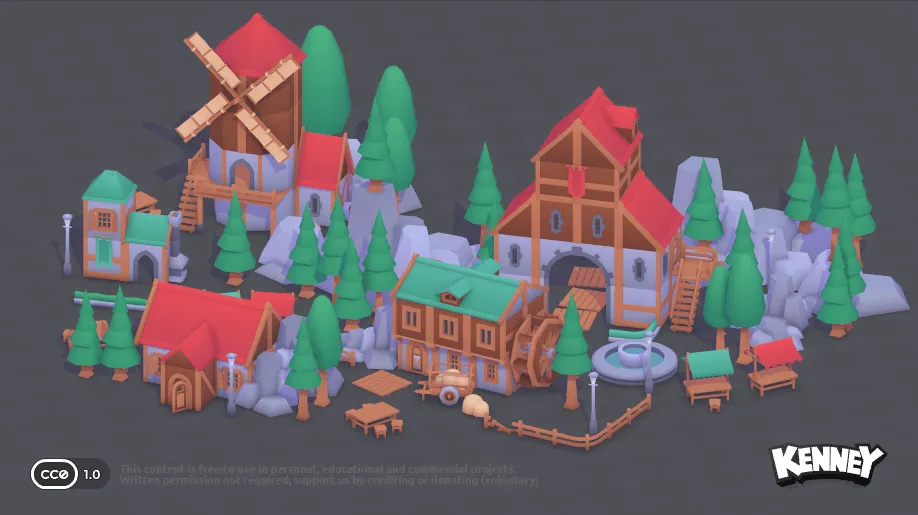
Kenney is a particularly appropriate figure for the anti-AI game development crowd to rally around, embodying the communal, cooperative artmaking spirit that big AI is seen to threaten. For over a decade, Kenney has been releasing free assets for game developers. It started with leftover art from abandoned Flash game projects, and now the artist makes a living from donations, as well as sales of a $20 bundle that packages all 60,000 assets into one download.
"It isn't a lot, which isn't too surprising if you give nearly everything away for free, but it's enough to [get] by," says Kenney. "I'd rather leave the industry someday when I'm old(...er) and have everyone remember me for the good stuff I did and the many people I've helped, rather than for lining my own pockets."
The great impasse
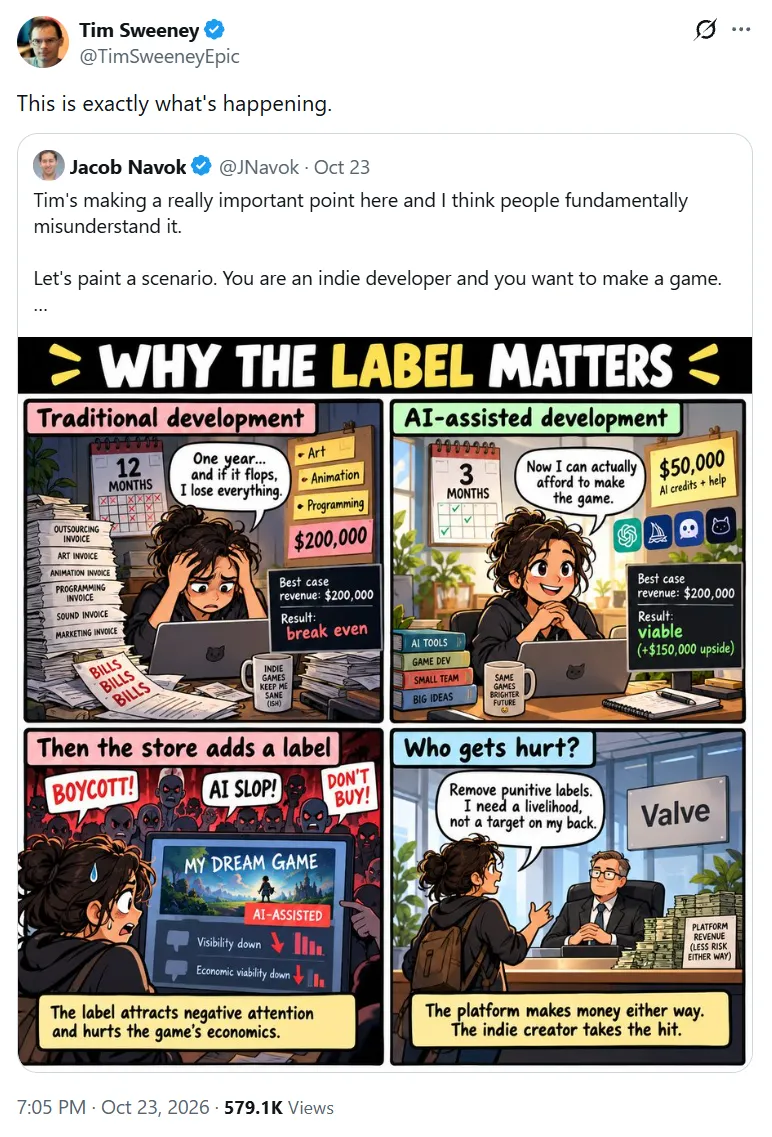
Meanwhile, Sweeney argues that generative AI is the only way to make game development economically viable today. He recently reposted an AI-generated cartoon depicting a dev's game launch being ruined by an angry anti-AI mob after they used AI to cut their costs, claiming: "This is exactly what's happening."
I'm worried that the part of the industry I love is going to disappear or be taken over by people who aren't in it for the love of the craft, but rather for the grift.
Kenney
In the back-and-forth that followed Sweeney's rebuttal to Kenney's "don't let billionaires convince you slop is the future" post, the Epic CEO told Kenney that his reason for pushing back is that "there's risk that convincing devs to abstain from the new way leaves them behind."
"I'm concerned that development studios swept up in these anti-AI campaigns will make decisions that render themselves uncompetitive in the global market for games," Sweeney told PC Gamer this week. He predicts that studios will see "productivity gains of at least 2x to 4x" with AI tools, and says that "all developers need to be prepared for this."
For Kenney and likeminded developers and players, however, a game development scene that's all-in on generative AI would not be a more efficient continuation of the same scene they helped build, but a betrayal of it—something they fundamentally don't want to be a part of.
"I'm not worried about myself or my own studio," says Kenney. "I'm worried that the part of the industry I love is going to disappear or be taken over by people who aren't in it for the love of the craft, but rather for the grift."
And regarding the concern that developers who don't embrace AI will be left behind: "Please, leave me behind," says Kenney. "I'm pretty happy here."