


US Congress has passed the CHIPS and Science act. The package, worth $280 billion, includes $52 billion in subsidies to entice companies to manufacture semiconductors in the United States. It also includes a whopping $200 billion for research into cutting edge scientific fields, including quantum computing, AI, and robotics.
The bill passed with bipartisan support in the Senate with a vote of 64 to 33, and was approved by the House with a vote of 243 to 187. Its ultimate goal is to restore American technological leadership, not just for commercial reasons, but also broader strategic reasons including reduced reliance on manufacturing in Asia.
Make no mistake, advanced chipmaking technology is an arms race. The US maintains an advantage over China when it comes to chip-making technology, and this bill aims to keep it that way. Military applications will be at the forefront of the US government's mind. Things like missiles, drones, signal intelligence and communications all rely on advanced chipmaking tech, and countries obviously want to keep their tech secrets in-house.
Two companies with US-based facilities include Intel and Micron. Micron previously announced plans to invest $150 billion into US-based research, development, and manufacturing. It's been lobbying Congress to pass the bill so it can forge ahead with its plans.
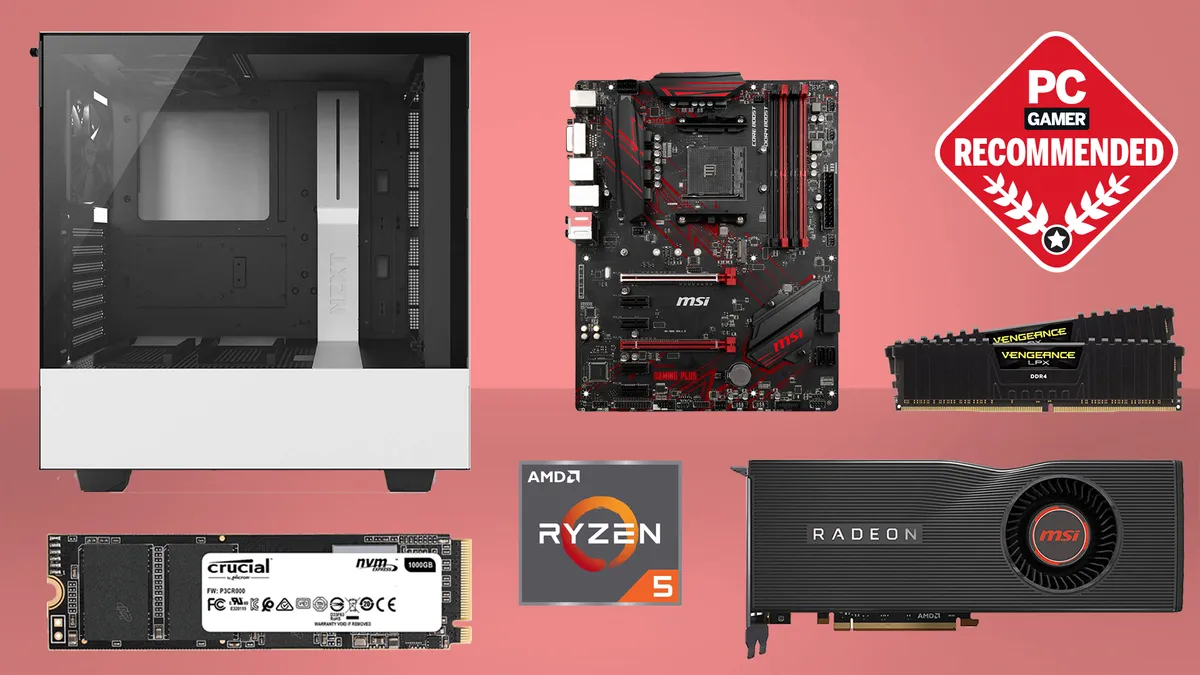
Best CPU for gaming: The top chips from Intel and AMD
Best gaming motherboard: The right boards
Best graphics card: Your perfect pixel-pusher awaits
Best SSD for gaming: Get into the game ahead of the rest
This injection of funds will come at a good time for Intel. Last week the company reported a 17% revenue drop year on year, resulting in a rare loss. While some of that is due to the wider economic downturn and excess inventory, it's been spending a lot too. Intel's capital spending spree was aimed at expanding its production capacity, including a plan to build two new factories in Ohio. Doubtless, it will be aiming to use some of that $52 billion to accelerate that plan.
What does all this mean for us? In the short term, not a lot. It takes years to go from planning to breaking ground, tool outfitting, production, and finally to products on shelves. We all know how supply issues created ridiculous GPU prices and consoles remain difficult to buy. Those fundamental issues will remain in the short-to-medium term.
In the years ahead, more diverse manufacturing with more capacity should alleviate these issues. The likes of Samsung and TSMC are also building new facilities around the world, including in the US. Might we actually see oversupply in the years ahead?
Semiconductor supply issues look set to remain, especially if relations between China and Taiwan deteriorate further. A halt in Taiwanese manufacturing would be catastrophic for the world economy. There are inflation issues to worry about and the disruption caused by the war in Ukraine too.
The CHIPS act won't change the status quo overnight but it's an important step on the path to a more diverse global semiconductor industry. TSMC might make some good chips, but strategically it's in an untenable position. Will the CHIPS act help to reduce reliance on Asia-based manufacturing? Or is it little more than a corporate handout? Only time will tell.

