

Our Verdict
Ashes of the Singularity 2 has some neat ideas for army management, but a poor campaign, an underwhelming new faction, and obtrusive generative AI use undermines the enterprise
PC Gamer's got your back Our experienced team dedicates many hours to every review, to really get to the heart of what matters most to you. Find out more about how we evaluate games and hardware.
What is it? RTS sequel in the lineage of Supreme Commander
Expect to pay: £32.50/$39
Developer: Oxide Games
Publisher: Stardock
Reviewed On: AMD Ryzen 5 3600, Nvidia 2080 Super, 32 GB RAM, Windows 10.
Multiplayer? Yes
Steam Deck? Unsupported
Link: Official site
Ashes of the Singularity 2 can't be faulted for scale. Much like its predecessor, the RTS sequel delivers on the promise of letting players control truly colossal armies. Rolling up huge globs of units and tossing them at your enemy lines in a giant, explosion-riddled mud fight is never subtle and only occasionally clever. But for any veteran RTS player, watching miles-long lines of armies clash is inevitably going to stir the soul.
Unfortunately, scale is also the sum of what Ashes of the Singularity 2 offers. As a sequel, it does little to build on the strengths of the original, while largely failing to address that first game's weaknesses. The campaign is terrible, the story borderline incomprehensible, and the whole experience is overshadowed by the spectre of generative AI.
Click rate
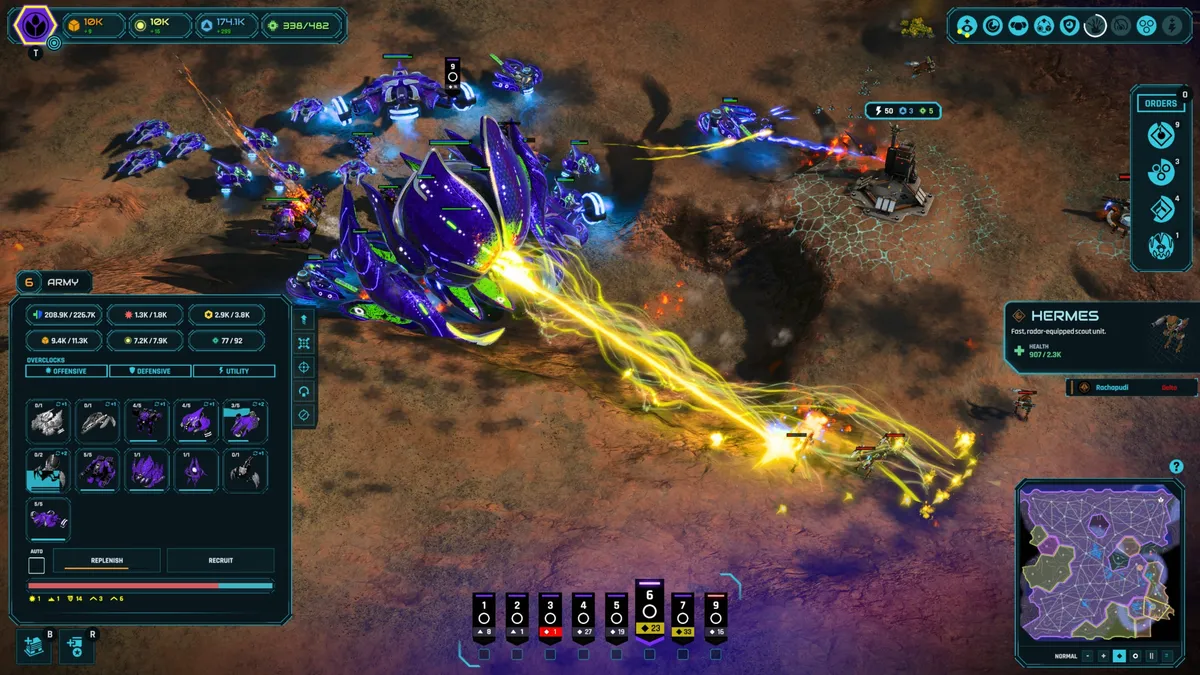
Before we get into Ashes 2's numerous problems, I do want to give Oxide Games credit for one thing: for a game of this scale, Ashes of the Singularity 2 is remarkably easy to control. In terms of base-building, Ashes of the Singularity 2 is a largely familiar RTS affair. You build your production buildings, your resource harvesters, your defensive structures, and that's more or less it.
When it comes to unit recruitment, however, Ashes 2 is much more interesting. While units are still recruited individually, they're also automatically assigned into armies at the recruitment phase. You build a new army by queueing up all the units you want, and then when you're done, you assign a rally point for the army on the map, and all the units will just assemble there.
Once recruited, armies can be selected with the number keys and controlled like a single unit, and they tend to move and attack pretty intuitively, although pathfinding does struggle with narrow passes or rough terrain (which, to be fair are both things that real armies struggle with). This makes it very easy to oversee multiple armies at once.
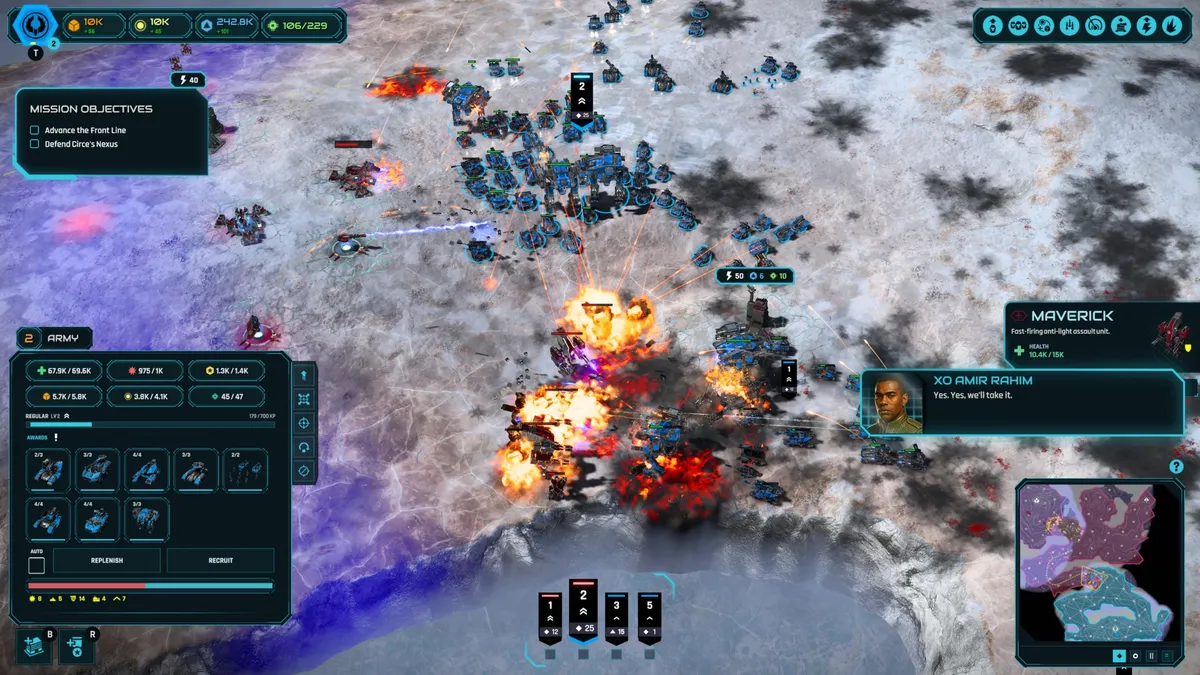
In addition, when in battle, you can replenish destroyed units at the press of a button, or simply set the army to reinforce automatically. It's another convenient touch, and encourages you to support your forces by constructing new production buildings close to the frontline.
It's not the only area where Ashes 2 displays an intuitive flourish. Alongside selecting the relevant structure from the menu, you can also construct harvester buildings directly from the resource node, while upgradeable buildings will often display an upgrade button over them that you can click. In terms of UI/UX design, Ashes 2 successfully minimises rooting through menus. Everything is accessible through shortcuts, directly on the screen, or a single menu layer.
This system does come at the cost of some finer control. Unit recruitment is bottlenecked to one unit per production building type, no matter how many buildings of that type you have. This means building an army composed of specific units (such as aerial units) takes longer, so armies tend to take a similar shape. On the subject of aerial units, they are a bit of a weak point for Ashes 2. Not only are they easily countered by AA units and emplacements, they also don't match the speed of ground units when in a mixed army, with a tendency to fly off and get themselves obliterated. Regardless, army control is by far the best thing about Ashes 2.
Mission slog
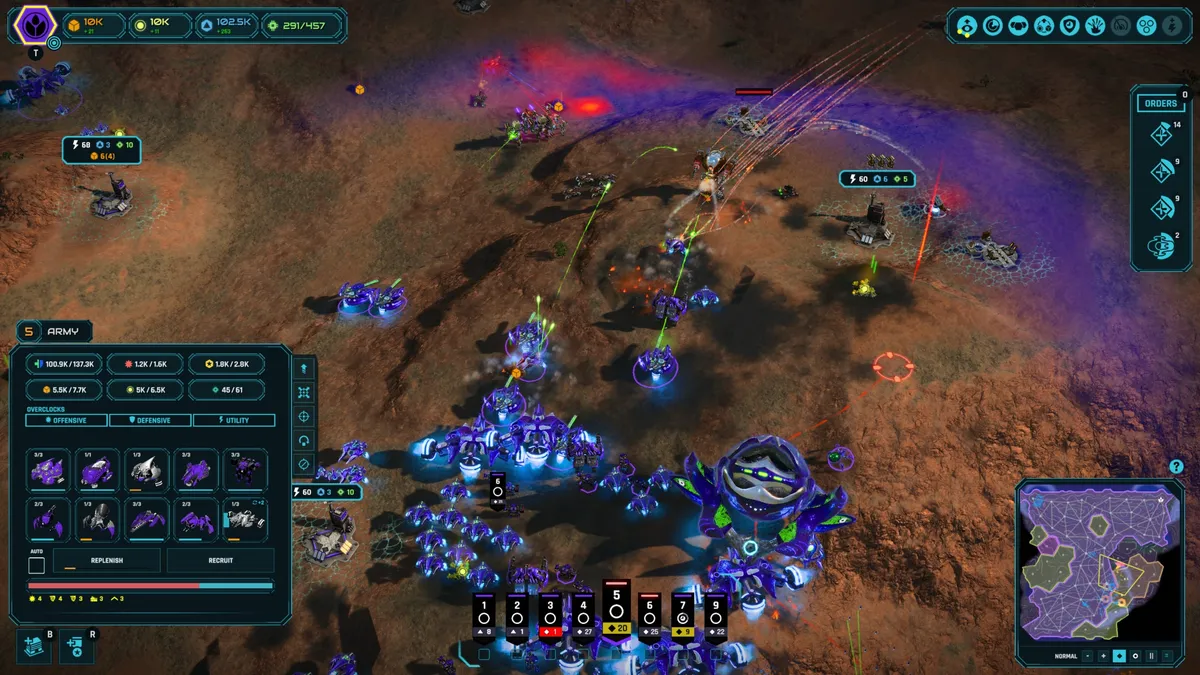
The sequel does introduce some other new features, such as a new faction, the United Earth Forces; unfortunately it's the least interesting faction in the game.
The UEF is a deeply vanilla sci-fi army, composed of tanks, jets and human soldiers so tiny they get instantly lost once the match scales up. It's way less compelling than the many mechs of the Post-Human Coalition, or the robotic insects of the AI Substrate. Where the Substrate's dreadnought units include a giant squid that fires laser beams and a blimp that shoots swarms, the UEF gets a big tank and a knockoff Megazord. Granted, the tank functions as a mobile base. That's useful, but it isn't fun.
The UEF is also the sole focus of Ashes 2's campaign. This is disappointing, but it's also the least of the campaign's problems. It's composed of 10 missions, roughly half of which are rigid tutorials with passive AI that offers virtually no challenge whatsoever.
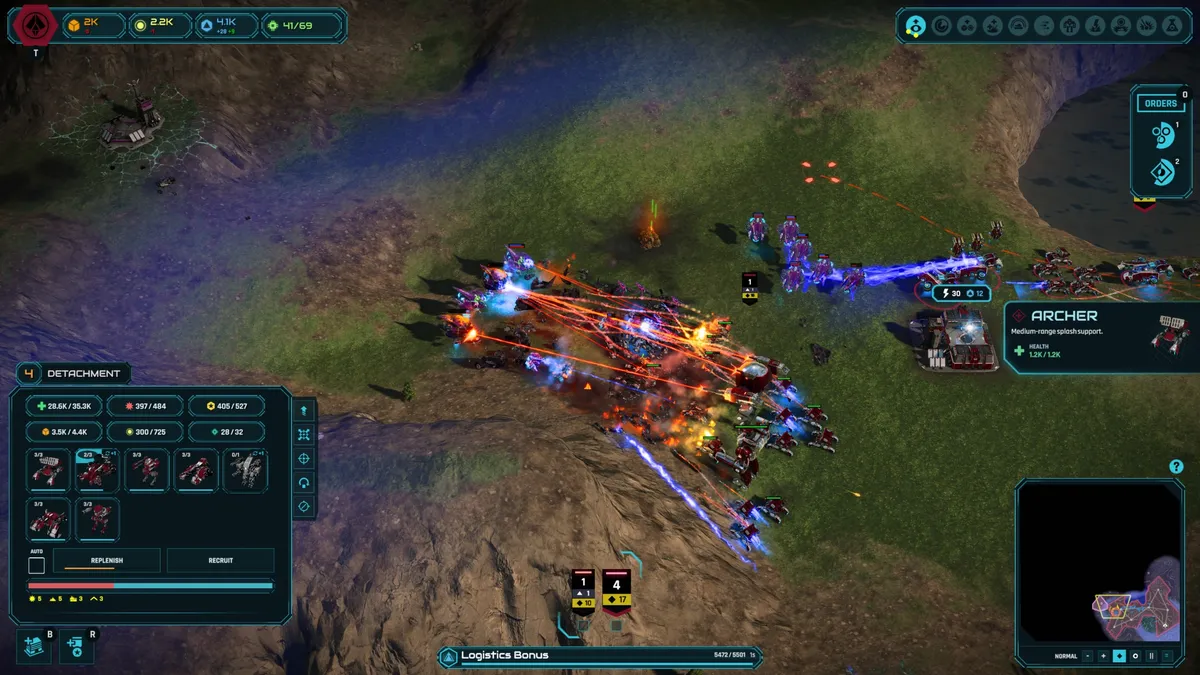
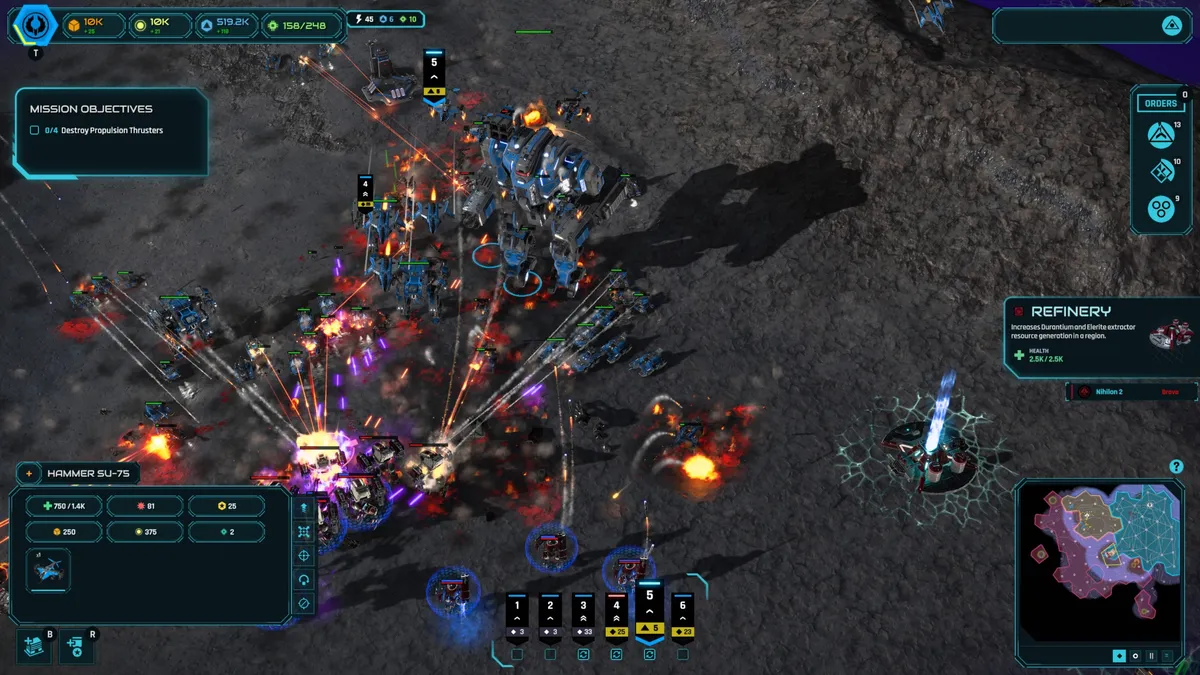
The second half, which takes place in locations across the solar system, is better. The missions actually play with Ashes 2's scale and gradually let the AI off the leash. Indeed, the final two missions offer some pretty fierce resistance. But despite being set in locations like the Moon and on a weaponised asteroid bound for earth, they're also unambitious, meat and potatoes scenarios with no real twists or turns.
The result is four, maybe five hours of half-decent campaigning, which just isn't good enough in 2026.
The result is four, maybe five hours of half-decent campaigning, which just isn't good enough in 2026. It highlights how generous and meticulous Tempest Rising's campaigns were, built around thrilling, rapidly changing scenarios that sought to stretch the player's skills.
It doesn't help that the story is dreadful—a three way philosophy and ethics lecture between humans, AI, and uploaded post-human personality constructs. It's a parade of characters you never actually see babbling endlessly about the vague machinations of AI threats and whether or not post-humans are still the same people they were when they were bags of flesh and juice.
AI spy
Ironically, the story is also where Oxide's use of generative AI is most evident. According to Ashes 2's Steam AI disclosure, Oxide used AI to "provide post processing effects and animation to art created by human Stardock artists for some of the campaign cutscenes" while "some cutscenes use Stardock human artist-made 3D assets with AI to composite the final shot." Finally, "some in-game unit barks, notifications, and a few minor characters use pre-generated ElevenLabs stock voices".
Frankly, I'm skeptical that this represents the limit of Oxide's AI use. All the character portraits look straight up AI generated to me, and the voice lines sound similarly infected. AI or not, it's something of a moot point because, either way, they're both awful. The portraits have that horrible, plasticky AI sheen to them, while the acting is often weirdly intoned in a way that does not help the narrative's bamboozling quality.
What bugs me most about Ashes 2's AI use, though, is that the RTS genre has such a rich heritage in cinematic storytelling. Warcraft 3, StarCraft 2 and Homeworld all successfully balanced their sci-fi grandeur with intimately human tales. Command & Conquer, meanwhile, was one of the earliest PC games to directly put a human face on videogame storytelling. From Kane to Tanya to Tim Curry escaping to the one place that hasn't been corrupted by capitalism, C&C's FMVs are often the thing that players most fondly remember.
I understand that Oxide Games probably doesn't have a Tim Curry budget. But it also doesn't need it. C&C's FMVs aren't remembered because they're expensive, or even especially great storytelling. They're remembered because they're fun, silly, intensely human creations. You don't need a massive budget to replicate that. If Oxide Games stuck a beret on a programmer and had them ham it up in front of the camera, the result would be infinitely preferable to Ashes 2's airy, inhuman waffle.
With the campaign a write-off, you're left with multiplayer and skirmish mode. Skirmish is arguably where Ashes of the Singularity has always been at its strongest, and playing against the AI here is certainly better than the campaign, offering a wide range of difficulty levels that lets you find your own sweet-spot. Putting together a four-way grudge match, watching the scale of the conflict slowly build-out, commanding multiple armies on multiple fronts, you get a sense of what Ashes 2 could be.
None of the maps particularly spark joy.
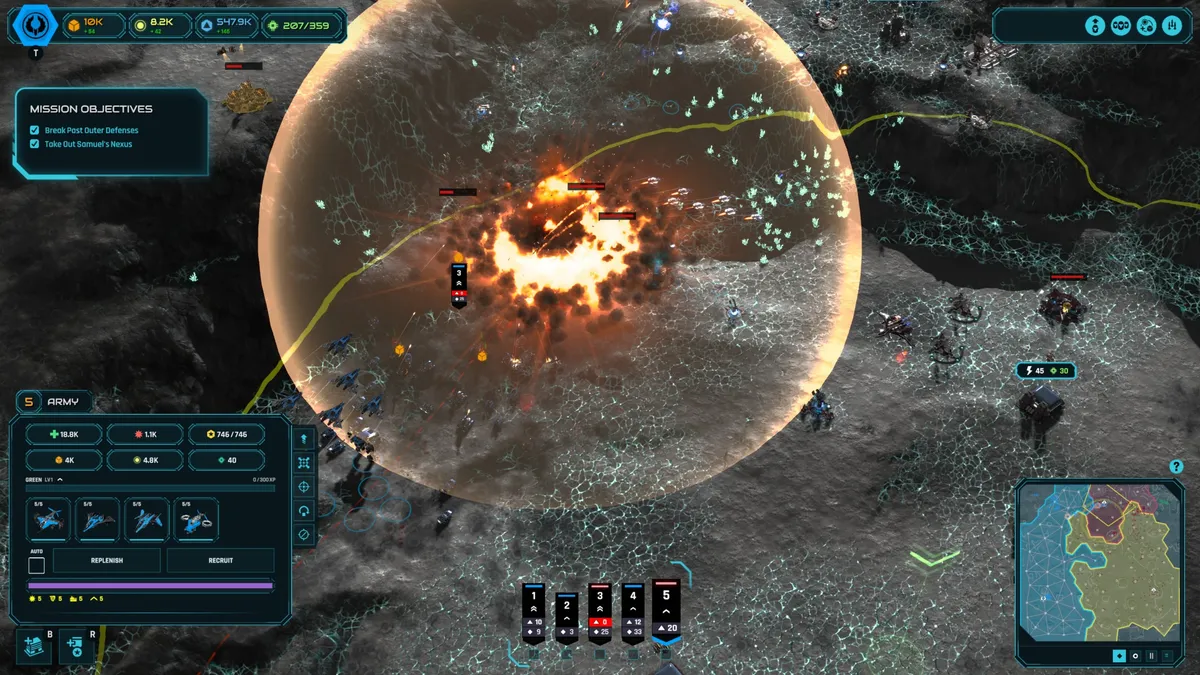
Yet here too, there are problems. None of the maps particularly spark joy. It's a roster of generic biomes and moonscapes that offer little in the way of personality or artistic direction. Also—and this is a broader complaint—while I appreciate that Ashes 2 is meant to be a slow-burn affair, I think it is a little too slow overall. In particular, battles are too attrition-heavy, and beneath the visual fireworks, you don't necessarily feel the punch of your units in combat. When Dreadnought units clash, it should feel like two gods have descended from the heavens. Instead, it feels more like two giant snails squabbling over a particularly large leaf.
It's a shame, because the work Oxide has done to make such an unwieldy concept so, well, wieldy is impressive. Given more care and time (and less generative AI), I think this could have been a great RTS. But with the campaign such a bust, what you're paying for here is one new faction, a skirmish mode and multiplayer, and after 10 years, I just don't think that's sufficient for a sequel.

Ashes of the Singularity 2 has some neat ideas for army management, but a poor campaign, an underwhelming new faction, and obtrusive generative AI use undermines the enterprise