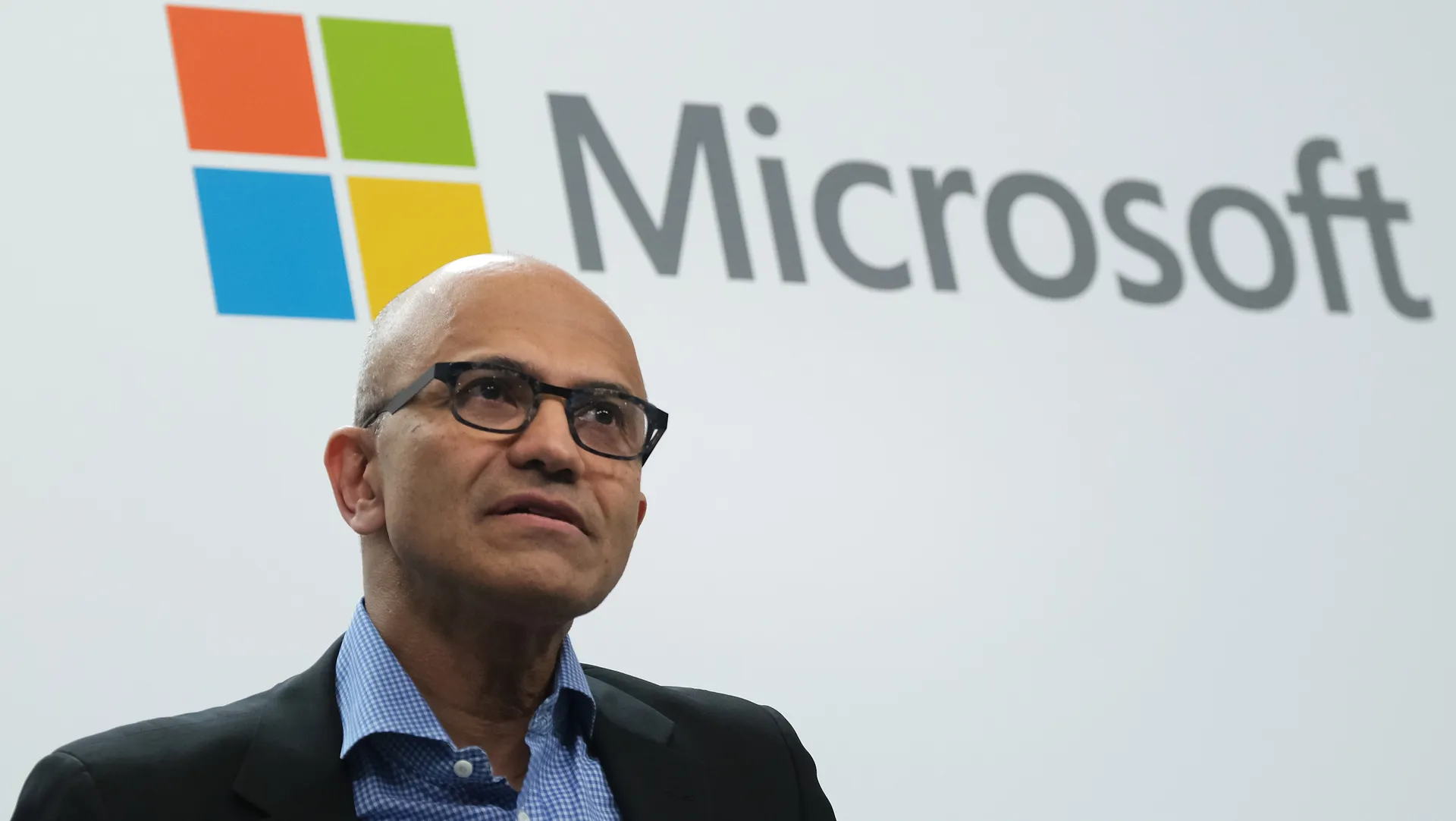
Remember when OpenAI created a bot that could beat humans at Dota 2? As PCG reported last week, that was because Elon Musk had personally called Microsoft CEO Satya Nadella to secure a massive discount on access to Azure, the company's cloud computing platform. Now a new document released thanks to the ongoing Musk vs Altman legal spat has revealed just how big that discount was: and how nervy Microsoft execs were about the whole deal, and OpenAI generally.
Our story begins after OpenAI had succeeded in its Dota 2 mission, with Nadella emailing Sam Altman on 11 August 2017: "Just wanted to pass on my Congrats on the win today!" A few weeks later Altman emails Nadella, saying:
"Would you be up for a big partnership on the next phase of this (teams of 5 vs 5)? I think it will lead to major new breakthroughs in Al but will require huge amounts of compute, probably something like $300M at Azure list prices. We could figure out how to fund some of it but not that much [...] Would love to make it a joint team. I think it will be the most impressive thing yet in the history of Al."
Nadella then emails some of his fellow Microsoft execs: Brett Tanzer, Jason Zander, Eric Horvitz and Jason Graefe. "I know we have been on this road before," writes Nadella, referring to Microsoft's previous sweetheart deal. "Wondering how to reply to this…"
Thanks to this we get a breakdown of what OpenAI actually got from Microsoft in 2016 and, surprise surprise, it was an absolutely eye-watering discount. The list price for Azure was $1.15 per GPU hour, and OpenAI paid $0.24 per GPU hour. Obviously the list price is not the cost price to Microsoft, but the execs are soon fretting about the money.
"The 2016 deal, where they agreed to pay $10M for $60M in Azure services was projected at a $15M loss over three years, given assumed usage profile," writes Tanzer. "They'll have consumed all the usage in 1/2 that time."
Essentially OpenAI got $60 million worth of compute for $10 million, Microsoft had to take the hit on that, and then OpenAI asked for even more. Things get a little more interesting than the numbers when the suits start talking about the kind of AI Microsoft should be supporting.
"PR/Marketing have taken your previous guidance to mean clearly that we don't want 'machines beating humans' and are not supportive of any push on this," writes Microsoft's Jason Zander, adding he's got a cost analysis in the works. "Basically if we are [Gross Margin] neutral or if the negative GM is reasonable to think of as a marketing expense I still want to proceed. There certainly is some nuance in the 'machines vs humans' thing but I worry we are being overly literal and I do believe the pop from someone like Sam and Elon will help build momentum for Azure [...] But I won't take a complete bath to do it."
That cost analysis? It wasn't good.
"I reviewed the GM with the team and this deal would cost us ~-$150M over the current contract which frankly makes it a non-starter," writes Zander a few days later. "[Tanzer] is going to let [Altman] know we are having a hard time getting the numbers to make sense given they are huge even for Microsoft."
"After communicating the [above] to Sam Altman, he came back with an alternate proposal to create a partnership with Xbox around Gaming," writes Tanzer, "and an open offer to share their technology and IP in exchange for expanded sponsorship for their Dota research. His hope was that together we could accelerate the adoption of Reinforcement Learning in our game platform as a differentiation play for Microsoft."
The Xbox team was interested in this idea, but not interested enough to cover the additional $35-50 million dollars in Azure credits that OpenAI was asking for.
On January 10, 2018, Nadella writes: "From what Elon is telling everyone... he feels Open Al is at verge of some big AGI breakthroughs. They clearly are pushing Al at a level none of our first party or third parties are [but] right now we are just renting/discounting HW and there is no real learning/feedback cycle back to our work."
Microsoft's Kevin Scott is having none of the AGI chat. "I'm highly skeptical of an imminent breakthrough in AGI. On the incremental investment, I'm not sure what Microsoft is going to get out of it. It doesn't feel to me like we've earned much branding or marketing benefit from the collaboration with them so far. IMO, they're treating us like a bucket of undifferentiated GPUs, which isn't interesting for us at all."

Scott goes on to list various "what-if" scenarios that could change his mind but doesn't consider any of them likely. He is, however, concerned about "the PR downside of us not funding them, and having them storm off to Amazon in a huff and shit-talk us and Azure on the way out."
"I agree with Kevin and Brett/Jason that it does not make financial sense to keep doing this undifferentiated GPU deal," writes Harry Shum, who's also dubious about the AGI claims. "They worked on two main streams: gaming like Dota 2, and learning from observation with robots. Sam is all about gaming and beating human champions perhaps motivated by DeepMind."
"My worst case scenario is having them ditch Azure for AWS, as Kevin says bad-mouth us on the way over, and then land with some big new innovation that is shared with our competition," writes Zander in a follow-up. "To walk away from the deal altogether, I think we have to be convinced that there is no unique / valuable IP that they are going to generate which offers unique advantage to their cloud partner."
Eric Horvitz suggests the possibility of "angling some of their work (even in Dota) toward our interest in human-Al collaborations, centering on extending human intellect with Al-versus beating human [...] I had the feeling that the two phases of Dota work are motivated by a need to show how Al can crush humans, as part of Elon Musk's interest in demonstrating why we should all be concerned about the power of Al."
Bear in mind that these are conversations from late 2017/early 2018, and Microsoft's scepticism wouldn't last. It invested $1 billion in the company in 2019, and a further $10 billion in January 2023, eventually taking a 27% stake in the now for-profit company.
But perhaps what's more interesting is that line Microsoft drew internally between AI that extends human capabilities, as opposed to AI that can "crush humans" at things like Dota 2. Musk has indeed made repeated dire warnings about what could happen with AI, which is arguably one rationale for why OpenAI would have pursued the latter goal (in limited contexts, admittedly), but it's hard not to feel that, for once, Microsoft were actually the good guys in this scenario.
1. Best overall: AMD Radeon RX 9070
2. Best value: AMD Radeon RX 9060 XT 16 GB
3. Best budget: Nvidia RTX 5050
4. Best mid-range: Nvidia GeForce RTX 5070 Ti
5. Best high-end: Nvidia GeForce RTX 5090