June 26, 2026: I've just checked, and you can still scoop this SSD for comfortably under $200 from Newegg. The 2 TB capacity isn't bad, but I wish it was a speedier drive...
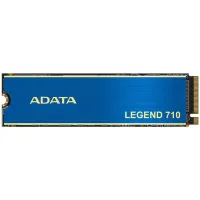
These are strange days for hardware, with the memory supply crisis encouraging me to acquaint myself with some Amazon Prime Day SSD deals that I wouldn't have spared a second glance at the end of last year. As someone with many terabytes of personal photos, home videos, and game screen shots, every little scrap of system storage helps.
That brings me to a drive I can only recommend with some fairly large caveats. For a start, the Adata Legend 710 is slooow by PC gamers' standards, enjoying downright leisurely read/write speeds of 2,400MB/s/1,800MB/s. I would not recommend gaming on this PCIe 3.0 drive… but I can't dismiss it outright when it's offering 2 TB of space for only $190 from Newegg.
That works out to about 9 cents per Gigabyte, and with that maths in mind I can definitely think of another use for this drive. As I said before, I'm holding on to an expansive photographical record of nearly my entire life. That's a lot of files I don't need on the regular, nor at a pace above a leisurely stroll down memory lane. As such, the Adata Legend 710 might make a fine 'cold storage' drive for all of digital memories.
I really must stress this SSD is best suited to files that aren't 'high traffic,' as the Adata Legend 710 only has an endurance rating of up to 520 TBW. That means, if you were to use this as a gaming drive, you'd potentially have to replace it far sooner than you like. Limiting how many times you're writing to this drive really is the way to go.
By a similar logic, if you're currently storing everything—games and precious photos—on one hardworking SSD, shuffling a few files off onto the Legend 710 should give your main internal SSD some much needed room to breathe.
I'd recommend keeping your most important, non-game files in more than one place on external storage media too—just in case the worst does happen. I'm still rocking two external HDDs for all of my photos, but the Adata Legend 710 makes a strong case for upgrading to solid state storage.
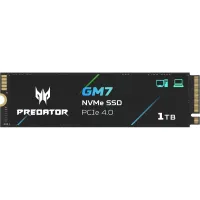
To reiterate, if you're on the hunt for a faster drive for gaming specifically, you're better off looking elsewhere. Thankfully, I have a couple of suggestions for nippier PCIe 4.0 SSDs. The Biwin Black Opal NV7400 is the best budget gaming SSD—though the 1 TB version has been enjoying the best discounts during the Amazon Prime Day sales. After the Adata Legend 710, the most affordable 2 TB out there is the Acer Predator GM7 for $246. With a read/write of 7,400 MB/s/6,500 MB/s, it's decently speedy for gaming too.
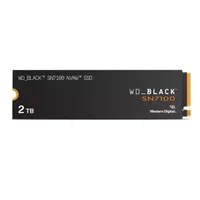
If you can push the budget boat out just a little bit further, there's also the WD_Black SN7100 which just happens to be the SSD we recommend overall for gaming. The 2 TB version will set you back $284 from Newegg, though with a read/write of 7,250 MB/s/6,900 MB/s, it doesn't completely outclass the aforementioned Acer drive. May the memory supply crisis have mercy on all of our wallets…
Some speedier alternatives...

👉Check out all of Newegg's SSD deals👈
1. Best overall:
WD_Black SN7100
2. Best budget:
Biwin Black Opal NV7400
3. Best PCIe 5.0:
WD_Black SN8100
4. Best budget PCIe 5.0:
Crucial P510
5. Best 4 TB:
TeamGroup MP44
6. Best 8 TB:
WD_Black SN850X
7. Best M.2 2230:
Lexar Play 2230
8. Best for PS5:
Silicon Power XS70