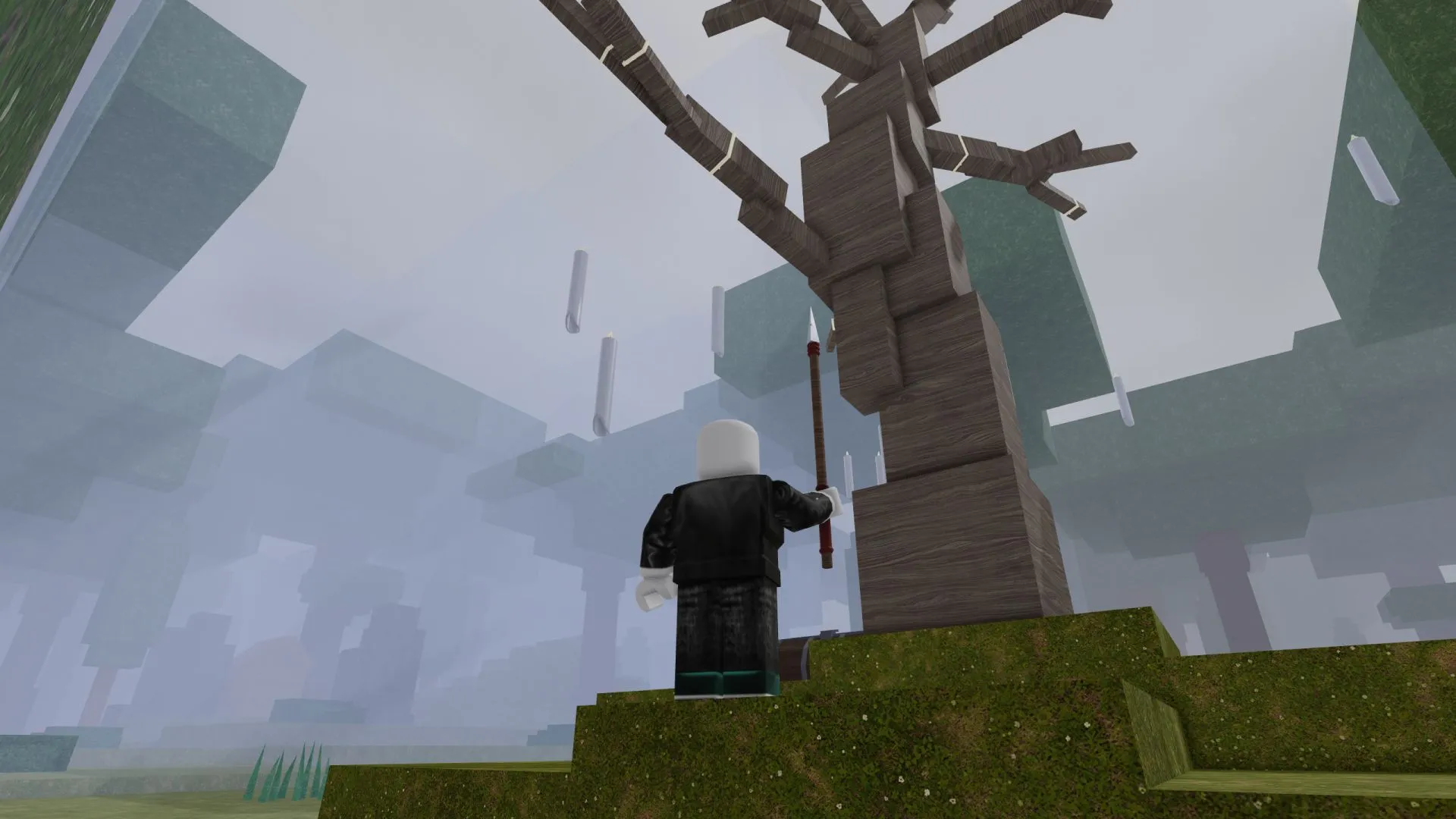
When I was a kid I might get a videogame for Christmas and another for my birthday, but in between it was free games that filled my time. First shareware, then Flash games. If you were a kid after 2006 though, the free games that defined your childhood probably involved Roblox. In 2025, players spent more than 10 billion hours playing Roblox every month, more hours than they spent on Steam, PlayStation, and Fortnite put together.
One of the big Roblox hits of 2025 was 99 Nights in the Forest, a survival-crafting game that peaked at 14.2 million concurrent players. Which is 2.7 times the population of New Zealand, where its creators Grandma's Favourite Games are based.
Developer Alec Kieft, AKA Cracky4, also grew up on Flash games, but got into Roblox for the multiplayer. A well-meaning math teacher thought it would be more educational than it turned out to actually be. "There were not a lot of experiences on Roblox that you could argue were like learning experiences or educational in any way," Kieft says. "They were mostly zombie shooters and things like that. I guess there was the physics sandbox element of it that made her think that this could be an educational experience. So we would sit there basically shooting zombies in maths class."
Though it wasn't educational in the traditional sense, it did lead to Kieft's interest in game development. When you install Roblox you get both the game-playing and game-making software, icons for Roblox Player and Roblox Studio sitting side by side on your desktop. It's a smooth path from one to the other.
"My first game was me learning to program," Kieft says. "It was called Defenders of Roblox, and it was based on Roblox games that were based on Left 4 Dead. I'd never played Left 4 Dead. I didn't know what it was. But I got to experience the sort of cruddy 2014 Roblox remakes of it, and I loved them."
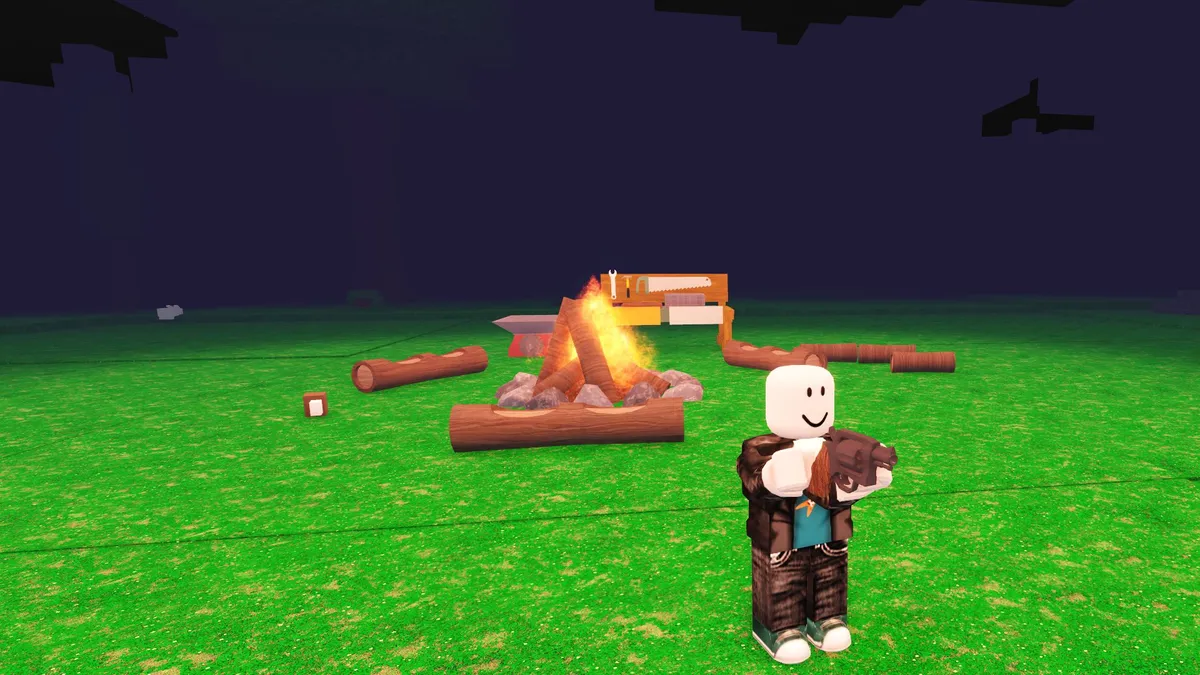
He also got involved in war clans, one of the early trends in Roblox—groups that would design maps and bases then raid each other in organized battles. "You would roleplay as soldiers," as Kieft puts it. "It was a very small, contained community, but that's how I met my two co-creators of 99 Nights in the Forest, it was through that. We would do training, like military training, and you'd raid other war groups and everyone would have laser guns. That was what really got me into Roblox at a deeper level."
Roblox has been around long enough to have its own subgenres and subcultures live and die. Players who are now old enough to drink reminisce about the good old days of war clans, and bemoan the current popularity of brainrot games, which seem designed so nobody over the age of 25 can understand them. When 99 Night in the Forest came out the popular genres were tycoon games, which have nothing to do with management sims, and simulators, which also have nothing to do with the wider category of sims. Both are basically idle games, variations on the incremental number-go-up experience of Cookie Clicker.
These trends were unified in Grow a Garden, a game that boasted more players than Fortnite. "You're wanting to watch the number go up, you're waiting for your plants to grow," as Kieft summarizes it. "There's a lot of waiting for your farm to do its thing, whereas our game is a very active experience, it's a very collaborative experience. Even now, it thrives on the weekends where people have a bit more free time to get a group of friends together and try to get as far as they can."
In 99 Nights in the Forest you spend your days braving wolves and other threats to gather wood and scrap and hunt for items, as well as the four missing children lost in the woods who provide it with its main goal. At night you're safest around the campfire—you can grab your torches and brave the darkness if you want, but you might be eaten by the Deer, a goggle-eyed upright-walking cartoon monstrosity.
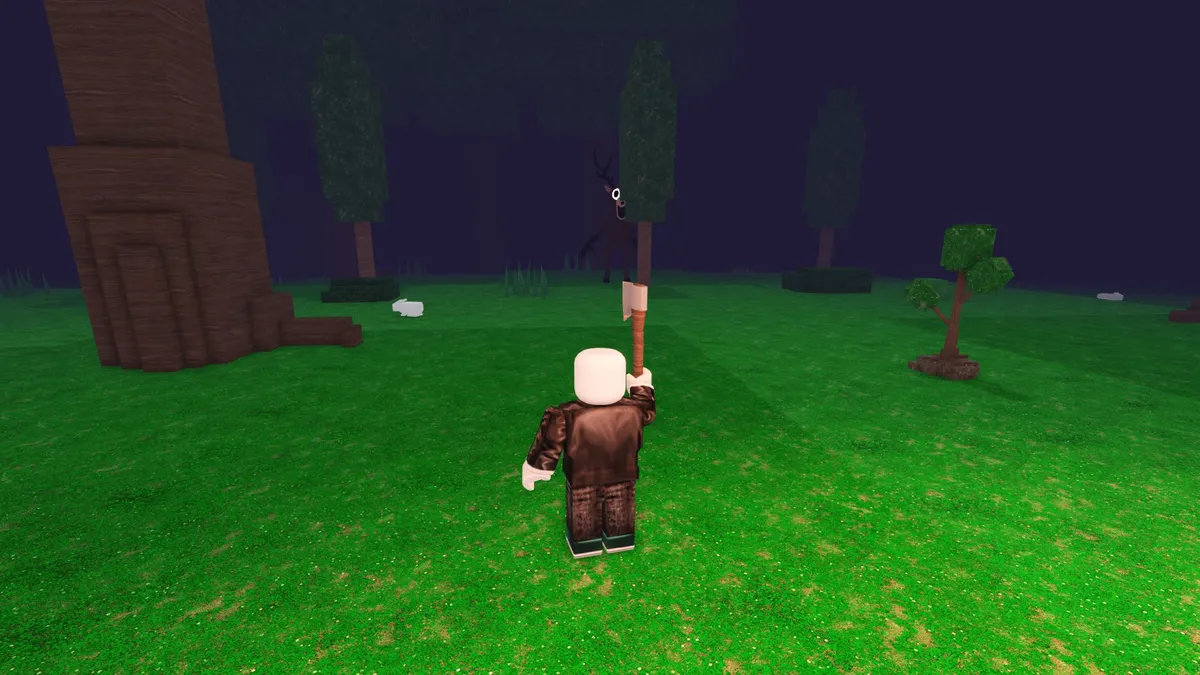
Though there's more game in 99 Nights in the Forest than there is in the kind of Roblox experiences designed to give kids something to do while they catch up over Discord, there's still enough downtime in the tree-chopping/base-building phase to allow for socializing. "I don't think survival games are too far removed from the friendslop genre," says Kieft, "which I think is my favorite genre to have emerged recently. Despite the name being a little bit derogatory."
But where a game like Peak or RV There Yet? has to win the Steam lottery to luck into a significant audience, Roblox has a locked-in playerbase of millions of young people who just want novel multiplayer games. "This is something about Roblox maybe that is underrated," says Kieft, "but it is ubiquitous, and it is where culture is happening right now. Kids are on Roblox, and that's where the players are. To find these behemoth player bases you need to be on a platform like Roblox."
The main cost of being on the platform is that developers feel a need to constantly add to their games to keep them fresh. Kieft and his colleagues at Grandma's Favorite Games initially stuck to a stringent weekly update cadence for 99 Nights in the Forest. However, a couple of weeks into a break that's been the first time 99 Nights in the Forest has gone without constant updates, it's still high in the charts.
"We've been pleasantly surprised to see that the game hasn't fallen off a cliff as soon as we stopped doing those updates," Kieft says. "That was a fear that we had, that as soon as players sense there's no one at the wheel right now, they'll just move on to something else. But no, we're still I think number three by daily active users on the platform, despite having not updated now in two weeks. That's a huge relief."
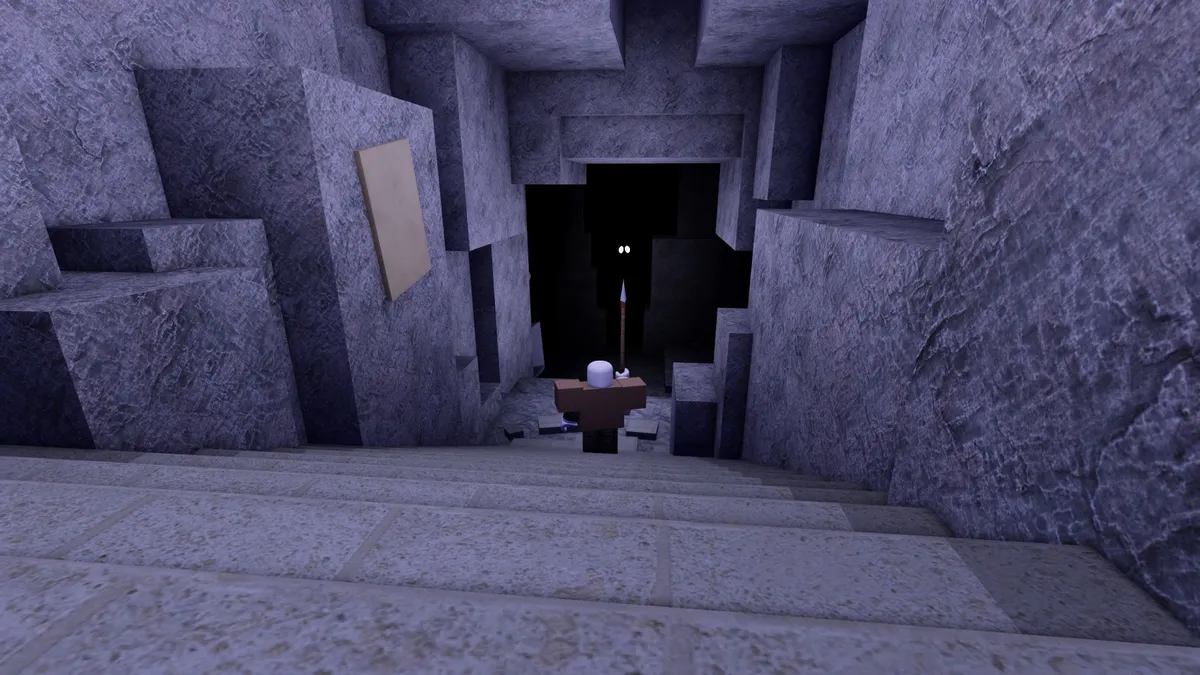
Though they do have plans to expand the late-game and fill various gaps when they return, it's been a relief to realize they can spend time away without losing all their players. Kieft puts it down to the fact 99 Nights in the Forest is more substantial than some of the other games on Roblox, and that most of its players aren't rushing through everything it has to offer quite as fast. It might also have something to do with appealing to a slightly older audience than the brainrot games.
As Kieft puts it, "When we were kids playing Flash games, I'm not sitting there talking to the Bloons Monkey people being like, 'Why have you not given us a new map this week? Where's the new map?' You didn't even think about that, you just jump on and you play. It's funny how the culture now has shifted, and the kids—I think it is the younger audiences, especially, I don't think the older players are like this—but there's an expectation that you're going to be back next week, there's going to be something new to do."