Have you ever watched a YouTube video and immediately screwed up your face in an attempt to discern whether it's real or AI-generated? Welcome to a daily part of my life. The good news is that YouTube has listened to user feedback, and as a result is moving AI disclosure labels for photorealistic and "meaningfully AI altered or generated" content to a "more prominent" position.
The bad news is, the labels look pretty tiny in the promo video. The AI warnings will now sit directly below the video player for long-form AI-generated videos, above the description. For short form, it's an actual overlay on the video itself. Which is indeed, a prominent position.
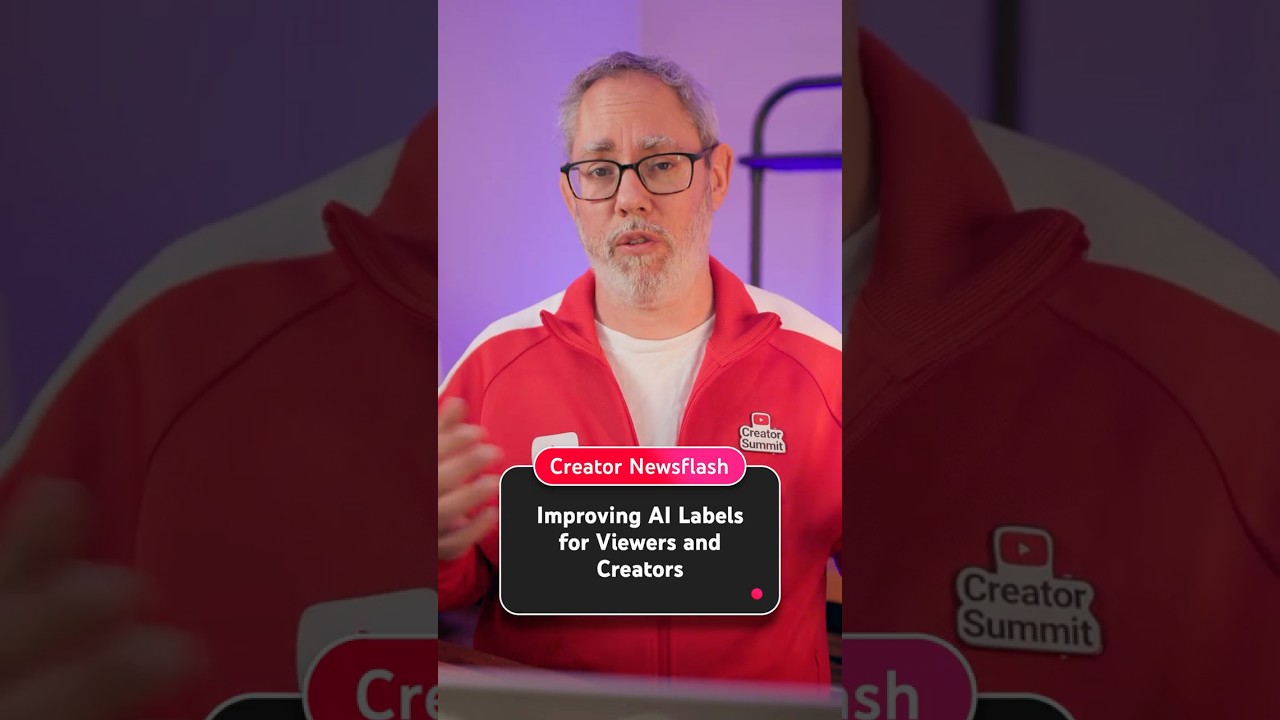
But yes, both versions still look like they'd be easy to miss. I suppose a big honking "THIS VIDEO IS BULL****" with red flashing warning signals on either side would be a bit much, but I'm not sure it does much to assuage fears that AI-generated videos are becoming harder to spot.
What might help a little more in this regard, though, is YouTube's other announcement—that "new internal signals" will be used to help identify AI-generated content.
YouTube creators are required to manually disclose when they use realistic AI, but I'm guessing that a fair few of them... don't. With the introduction of this tech, though, the platform says it will be able to automatically apply a label to anything with "significant photorealistic AI use."
"As this technology continues to improve, creators remain in control," says YouTube. "If a creator thinks their content was incorrectly identified as AI-generated, they can update the disclosure status in YouTube Studio.
"However, disclosures will remain permanent in a handful of cases, including: Content created using YouTube's own AI tools, like Veo or Dream Screen [and] content containing C2PA metadata indicating they were fully generative AI."
"Our goal is simple," the blog post continues. "Make it as easy as possible for creators and viewers to have the right information."
A noble goal, to be sure. However, in a world where YouTube dominates the online video market (and amid real concerns about the level of AI slop on the platform), this new labelling system feels like small potatoes. Very small potatoes indeed, come to think of it.
1. Best gaming laptop: Razer Blade 16
2. Best gaming PC: HP Omen 35L
3. Best handheld gaming PC: Lenovo Legion Go S SteamOS ed.
4. Best mini PC: Minisforum AtomMan G7 PT
5. Best VR headset: Meta Quest 3