Last October, Intel launched its Panther Lake mobile processor architecture, and when we got our hands on a Core Ultra Series 3 CPU several months later, we were greatly impressed by its gaming chops. Now it's back again with Wildcat Lake: all the best parts of Panther Lake, but cut down to a kitten-sized little chip.
Officially called Core Series 3 (no Ultra here), the new processors utilise the same Cougar Cove P-cores and Darkmont E-cores as in Panther Lake (PTL), but there are considerably fewer of them, even in the top-end model. For example, the Core 7 360 sports just two P-cores and four E-cores, for a total of six threads.

By contrast, the PTL-powered Core Ultra X7 358H houses four P-cores, eight E-cores, and four Low Power E-cores, which adds up to a total of 16 threads. However, Wildcat Lake (WCL) chips are aimed at a rather different market than PTL ones.
While they're both purely for laptops (though we'd love to see a handheld gaming PC with a beefy PTL chip), the Core Series 3 range is aimed directly at the entry-level/budget market of notebooks. This is why the integrated GPU in WCL is very small: just two Xe cores at most.
That's actually half the number of cores you'll find in a Core Ultra 7 270K Plus, and with only six PCIe lanes in WTL's controller tile, you're unlikely to see the chip used in a laptop with a discrete GPU. So you're really not going to be doing any graphics-focused gaming with a Wildcat Lake laptop.
Instead, Intel says what you will be doing is enjoying "all day battery life and everyday productivity, with up to 2.1x faster creation and productivity, up to 64% lower processor power, and up to 2.7X AI GPU performance versus previous generation Intel Core 7 150U processors."
While I have no doubt that Core Series 3 chips are very capable little things, given what I've seen with Panther Lake, I do wonder just how many businesses, organisations, and other sectors will be upgrading to new WCL laptops.
All laptops have risen in price due to supply issues with DRAM and flash memory, and the multi-tiled nature of Intel's latest processors does mean that they're more expensive to manufacture than AMD and Qualcomm's monolithic chips. Intel doesn't list market prices for its mobile processors, since you can't buy them directly, but every PTL laptop I've seen so far has been anything but cheap.


It will also be interesting to see how a Wildcat Lake laptop fares against the MacBook Neo. They're unlikely to compete on price (the Neo starts at just $599), but if the chip is considerably superior in terms of performance and battery life, it might go some way to helping customers see past the higher price tags.
Then again, every cent counts in business, and in these RAMpocalypse-trying times, Intel's little chip could be left out in the wild.
1. Best overall:
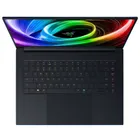
Razer Blade 16 (2025)
2. Best budget:
Lenovo LOQ 15 Gen 10
3. Best 14-inch:
Razer Blade 14 (2025)
4. Best mid-range:
MSI Vector 16 HX AI
5. Best high-performance:
Lenovo Legion Pro 7i Gen 10
6. Best 18-inch:
Alienware 18 Area-51