You don't need me to tell you that the exponential rise of AI servers has made PC enthusiasts think twice about buying a new upgrade, because one look at the current prices of graphics cards, DRAM kits, and SSDs tells you everything you need to know about the RAMpocalypse. But while things might seem to have calmed down a bit, one of the world's biggest suppliers of memory and storage has warned that certain components are still going to rise in price.
Hermitage Akihabara recently interviewed the CEO of Team Group, Gerry Chen, and opened with a simple question as to what his outlook was for the immediate future. "Currently, AI-related demand is very high in the overall memory market, accounting for 40-50% of the total supply. We expect this demand to continue to increase, and the majority of memory produced between 2026 and 2027 already has its customers," he began.
"The supply shortage is not limited to DRAM. NAND flash memory is also experiencing a similar supply shortage, resulting in a tight supply-demand situation across the entire market. Therefore, we believe that the overall memory market is likely to continue experiencing supply shortages until 2028."
It's worth noting that Team Group doesn't manufacture DRAM and NAND flash; instead, it buys modules in bulk from SK hynix, Micron, and Samsung. It then takes those chips to make its own DDR5 memory kits and SSDs.
That means the company is first in line to suffer the effects of limited supply, and since the process of turning raw modules into finished products isn't 100% perfect, Team Group's output will be even more limited.

When the interview turned to the question of prices for PCs and their components, Chen didn't have any good news. "I believe prices will rise further. While server product prices have already increased significantly, the general PC market is still relatively low at the moment.
"However, demand for AI servers and general-purpose servers is very strong, and prices are actually rising at a rate of about 30% per quarter. This trend is likely to continue for some time. The current general PC market is facing a very challenging situation in terms of pricing, but if server market prices continue to rise, we believe there is a high probability that the prices of PC products as a whole will follow suit."
Let me just paraphrase what Team Group said: The price rises we have already seen for entire PCs, as well as the parts inside them, have been much lower than those for servers. But if that sector continues to get worse, more of the raw component supply will be switched to the server market, leaving even less for the general consumer.

If that comes to pass, then the parts that are in the highest demand will see much bigger price hikes, and that unfortunately means DDR5 and SSDs. So if the thought of paying over $160 for a 1 TB NVMe drive leaves you cold, you'll be freezing to death by this time next year.
Ordinarily, I'd scoff at any company suggesting you should buy its products right now because the price will go up soon, as it's clearly a self-serving suggestion. But in this instance, I have to say that unless you're willing to wait until well into 2028 for an upgrade, you'd better bite the bullet now before things get even worse.
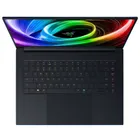
1. Best gaming laptop: Razer Blade 16
2. Best gaming PC: HP Omen 35L
3. Best handheld gaming PC: Lenovo Legion Go S SteamOS ed.
4. Best mini PC: Minisforum AtomMan G7 PT
5. Best VR headset: Meta Quest 3