





Our Verdict
The TUF A16 is a remarkably well rounded gaming laptop, with an exceptional compliment of hardware at a well adjusted price point. With a crisp, clean, high refresh screen and a svelte style, for those looking for a budget(ish) laptop that can handle everything you can throw at it look no further.
For
- Delightful IPS-level display
- Impressive performance for an RTX 5050
- Clean design chops that aren't too gamery
Against
- Marginally expensive for an RTX 5050
- Model variance per region a very minor pain
PC Gamer's got your back Our experienced team dedicates many hours to every review, to really get to the heart of what matters most to you. Find out more about how we evaluate games and hardware.
The ask this month was a simple one. Take a trio of mid-range(ish) laptops, the Asus TUF Gaming A16, the Lenovo Legion 5, and the MSI Katana 15 HX. Benchmark the crap out of them, run them as a daily driver for a spell, research the bejesus out of them, and then see which one croaks under the pressure. A, dare I say, qualitative and quantitative group test of sorts, split across three separate reviews. Akin to the old printed tech mag days of yore.
It's been fun, inciteful, and frustrating at times, and as this is the last review of the bunch, let me tell you, if this was Maximum PC or PC Format, it's here that I'd be waxing lyrical about how the winner of this month's arduous journey, is, without even a modicum of doubt, the Asus TUF Gaming A16.
Truly, its implementation is a thing of beauty. It's an expertly balanced laptop that satisfies not only the needs of the professional, but that of the gamer as well. Its blend of hardware, style and pricing has put the TUF on the right path to claim its very own slot in our best gaming laptops buying guide, and with good reason.
That's not to say it's perfect, I have my quibbles with it, don't get me wrong, but what Asus has managed to achieve here, on a budget is nigh impressive. The form factor, the design, the performance, the screen, the ports, all of it hits the marks that matter, and smooth over the wrinkles that the others introduce.
It's a thing of beauty, again all for a price that slides under what you'd expect Asus would charge for something like this. If you're after a new laptop and find this thing on sale during Black Friday and the next few months, and it sits in your price bracket, I'd highly recommend it.
Buy if...
✅ You want a well rounded gaming laptop: Everything on the TUF A16 is remarkably well balanced, the hardware spec blended with that 1920x1200 screen is an absolute treat. If you want to game, or work on it, present or stream, you can do it all without fear.
Do not buy if...
❌ You're looking at a futureproof purchase: Although it's good today, 16 GB of DDR5 and an RTX 5050 err on the conservative side. If you're looking to keep this running long into the future, frame rates may begin to stutter as you approach the three to four year mark.

The TUF A16 is a remarkably well rounded gaming laptop, with an exceptional compliment of hardware at a well adjusted price point. With a crisp, clean, high refresh screen and a svelte style, for those looking for a budget(ish) laptop that can handle everything you can throw at it look no further.
Asus TUF Gaming A16 - Features

Processor |
AMD Ryzen 7 260 PNG |
Cores |
8 |
Threads |
16 |
Boost clock speed |
5.1 GHz |
Graphics |
Nvidia GeForce RTX 5050 8 GB |
RAM |
16GB (2x8GB) DDR5-5600 MT/s |
Storage |
1 TB Sandisk WD PC SN5000S SDEQNSJ-1T00-1002 - PCIe 4.0 |
Display |
16.1-inch IPS level |
Resolution |
1920 x 1200 |
Refresh |
165 Hz |
Battery |
90 Whr |
Power brick |
240 W |
Weight |
2.2 kg |
Dimensions |
354.0 x 269.0 x 25.7 mm |
Price |
£1,260 / $1,550 (US model features 512GB SSD, higher res) |
Asus TUF Gaming A16 - Value


The top line specs here don't exactly shout "premium" from the rooftops, I get that. RTX 5050 and an AMD Ryzen 7 260 are hardly ground breaking, but it's how Asus has integrated the cooling and power delivery into this mixture that really breathes life into the thing. So many manufacturers skimp out on that latter part, and leave consumers with RTX 5070 and 5080s choked on low TGPs and it severely impacts market credibility. Asus has done the opposite here, and allowing that RTX 5050 to run at full tilt under a 115 W TGP delivers some exceptional performance without necessarily breaking the bank.
The CPU ain't half bad either. Although like most of the laptops we have under review currently, it's a little long in the tooth, AMD's Ryzen 7 260, is an eight-core, 16-thread beastie, that produces some respectable numbers under load, all while keeping the heat down in the process.
It also comes with 16 GB (2x 8GB) of DDR5 at a comfortable 5,600 MT/s. Although it's not exactly insanely high-end by modern standards it does mean you can swap that out at a later date with a higher capacity kit without much worry. And, for once, we're not looking at a single-channel memory setup that some manufacturers (ahem… Lenovo…) like to proclaim as "consumer friendly".

The rest of the spec list equally fails to disappoint. That RTX 5050's been matched with a 1920x1200 "IPS-level" 16-inch display fluttering along at a smooth 165 Hz, and it's a beaut too. Brightness is great, the colours really pop, and there's minimal ghosting or latency issues here as well. Is it as vibrant or as high refresh as an OLED model? Well, no, but for those after a versatile screen that gets the job done well, it's more than good enough. Pixel density too, isn't half bad either, just a fraction above that of a 32-inch 4K desktop panel, and the reduced pixel count significantly helps that RTX 5050 hold its own at native.
On the connectivity front, aside from WiFi 6E and Bluetooth 5.4, the TUF also comes 3x USB Type-A, 2x USB Type-C, a 3.5mm audio jack, HDMI out, and full ethernet as well, along with a dedicated power port too. Oh and there's a 1080p webcam, but that's fairly standard affair at this point.
The keyboard's not exactly anything to write home about, it's just a standard chiclet RGB affair, but it'll do, and the sizable trackpad lends itself well to light desktop work (I did once know a guy who used to raid in WoW Cataclysm with a trackpad, and it still makes me shudder to this day).
All told, it's a reasonable spec. But in all honesty, while it is a well put together system, that $1,500 price tag is too much, and it's going to need some hefty discounting to make it a genuinely budget-friendly machine.
Asus TUF Gaming A16 - Sound

Let's talk audio quick before we get onto the good stuff (performance), because for once, I'm actually excited to talk about laptop speakers. Because these things absolutely slap.
At max volume there's minimal distortion, and a healthy chunking of bass reverberating along underneath. Watching Sung Jin-woo slap the metaphorical crud out of Beru in Solo Levelling, as Howl plays in the background is as epic as it can ever be. Treble's smooth, mids are there too in abundance, and honestly I was genuinely impressed. In heavier bass moments in certain music genres there's fractional disturbance and vibration, but the moments are fleeting.
Fan noise on the other hand is chonky. Not quite as potent as the Lenovo Legion 5, but notably sitting in between it and the MSI Katana (which is arguably too quiet, and hamstringing its own cooling as a result).
Asus TUF Gaming A16 - Performance

Okay, on to the good stuff, and there's an interesting tale here with performance. I've already alluded to it heavily with the MSI Katana 15 HX review, but its a tale of the plucky little RTX 5050 that could, that's what I'll say.
1080p gaming performance
Running games at a normalised resolution to compare frame rates at the same level
| Product | Value |
|---|---|
| Asus TUF Gaming A16 | RTX 5050 115 W | Ryzen 7 260 | 31 Avg FPS, 21 1% Low FPS |
| Lenovo Legion 5 | RTX 5060 115 W | i7 13650HX | 29 Avg FPS, 15 1% Low FPS |
| MSI Katana 15 HX | RTX 5060 115 W | i7 14650HX | 32 Avg FPS, 21 1% Low FPS |

Let's just compare the top-line real quick. Because between this and the MSI, it's a real showcase as to what good cooling in laptops can do. So, Asus: RTX 5050, 115 W TGP. MSI: RTX 5060, 115 W TGP. Average GPU temp for Asus: 60; average GPU temp for MSI: 77. Average clock speed for Asus: 2,680 MHz at 75 W; MSI: 2,305 MHz at 68W.
The reason that matters is that in every single benchmark I ran these two laptops at, both running at 1080p on Ultra, the Asus was either close, or significantly beat its red dragon shaped counterpart. It lost out in Metro Exodus by 6 fps, F1 by 6 fps, Cyberpunk by 1 fps, but beat it in Baldur's Gate 3 by 13 fps, and Black Myth Wukong by 2 fps.
Creator and system performance
Testing the non-gaming performance of the laptops.
| Product | Value |
|---|---|
| Asus TUF Gaming A16 | RTX 5050 115 W | Ryzen 7 260 | 82.31 Compressing (GIPS), 119.91 Decompressing (GIPS) |
| Lenovo Legion 5 | RTX 5060 115 W | i7 13650HX | 66.83 Compressing (GIPS), 113 Decompressing (GIPS) |
| MSI Katana 15 HX | RTX 5060 115 W | i7 14650HX | 100.46 Compressing (GIPS), 105.57 Decompressing (GIPS) |
CPU performance too demolished the Katana in multi-threaded Cinebench scoring 920 versus 832, and only coming second due to the Lenovo Legion 5's impressive 956 figure on that front. That further tells us that whatever MSI's doing in its cooling profile, it's not enough and its causing both its CPU and GPU to throttle. Just goes to show folks, you can have a shiny chip on paper that's theoretically better than the competition, but if it ain't cooled right, it's just a name.
Overall, in isolation, the TUF does well across the board. Particularly when taking advantage of DLSS and frame-gen. 82 fps in Cyberpunk at Native, 66 fps in BG3, 68 in Black Myth Wukong, 116 in F1. All comfortable numbers and then some. Dial the settings in a bit more and you'll likely hit that sweet 165 fps spot too with a bit of effort.
System performance
Testing power and thermal performance of the laptops.
| Product | Value |
|---|---|
| Asus TUF Gaming A16 | RTX 5050 115 W | Ryzen 7 260 | 71 Avg CPU (°C), 87 Max CPU (°C), 60 Avg GPU (°C), 85 Max GPU (°C) |
| Lenovo Legion 5 | RTX 5060 115 W | i7 13650HX | 76 Avg CPU (°C), 91 Max CPU (°C), 81 Avg GPU (°C), 85 Max GPU (°C) |
| MSI Katana 15 HX | RTX 5060 115 W | i7 14650HX | 77 Avg CPU (°C), 95 Max CPU (°C), 77 Avg GPU (°C), 82 Max GPU (°C) |
Asus TUF Gaming A16 - Aesthetics


From a visual perspective, the TUF A16 is positively dull. But it's a good thing. It's crisp, clean, squared off. There are no odd shapes, or weird bevels, or obscene logos and RGB littering everything. It's subdued, understated, a true sleeper machine. The only inkling it might even be slightly "gamery" comes in the form of the TUF logo and shield etched into the lid, and even then you can't really see it unless the light hits it just right.
The bezels are thin, and it just looks and feels great, with a soft-touch satin finish. Like all of these laptops I've tested recently, it's a bit of a fingerprint magnet, but aside from that, there's little to complain about. Perhaps the keyboard could be a bit more mature, but it's nowhere near the Katana's level of "trust me bro, I'm a gamer".
Asus TUF Gaming A16 - Software
Armoury crate… eugh… I still don't like it. It's there, you can use it. It has profiles, for extra performance, or battery saving (all our results are based on the high-performance mode, which does add a significant performance boost to the overall figures), but it's clunky to install, and load, and about the only downside to this beautiful machine.
As with all of these three laptops, there's pre-installed Mal… I mean aftermarket antivirus. Highly recommend you uninstall that pronto, and dodge the free trial expiry that comes along with it. Windows Defender will comfortably handle all of your AV needs.
Asus TUF Gaming A16 - Battery life

As for the battery life it's one of the best I've seen at this price. 112 minutes puts the other two to shame, nearly doubling what the Lenovo Legion 5 managed. But then that's to be expected really, particularly given it's got a 90 WHr battery under the hood, and it charges rapidly too, with an included 240 W battery bank.
Battery life
Testing the long term gaming life of the laptops using the industry standard PCMark 10 gaming test.
PCMark 10 Gaming test
| Product | Value |
|---|---|
| Asus TUF Gaming A16 | 112 |
| Lenovo Legion 5 | 64 |
| MSI Katana 15 HX | 71 |
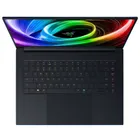
1. Best overall:
Razer Blade 16 (2025)
2. Best budget:
Lenovo LOQ 15 Gen 10
3. Best 14-inch:
Razer Blade 14 (2025)
4. Best mid-range:
MSI Vector 16 HX AI
5. Best high-performance:
Lenovo Legion Pro 7i Gen 10
6. Best 18-inch:
Alienware 18 Area-51
The TUF A16 is a remarkably well rounded gaming laptop, with an exceptional compliment of hardware at a well adjusted price point. With a crisp, clean, high refresh screen and a svelte style, for those looking for a budget(ish) laptop that can handle everything you can throw at it look no further.

