The web is awash with coverage of Apple's latest iPhone, with the addition of USB-C grabbing most of the headlines. We've touched on the handset's new graphical prowess, too, with the inclusion of ray tracing and upscaling making for quite the Nvidia-ish feature set.
But for PC gaming, there's something else inside the new headset that's far more important. The iPhone 15 Pro is the first device in the world to get TSMC's new 3nm silicon which is almost certain to be used for AMD and Nvidia's next-gen GPUs. And if the A17 Pro chip is anything to go by, the new TSMC N3 node, as it's known, isn't not looking great.
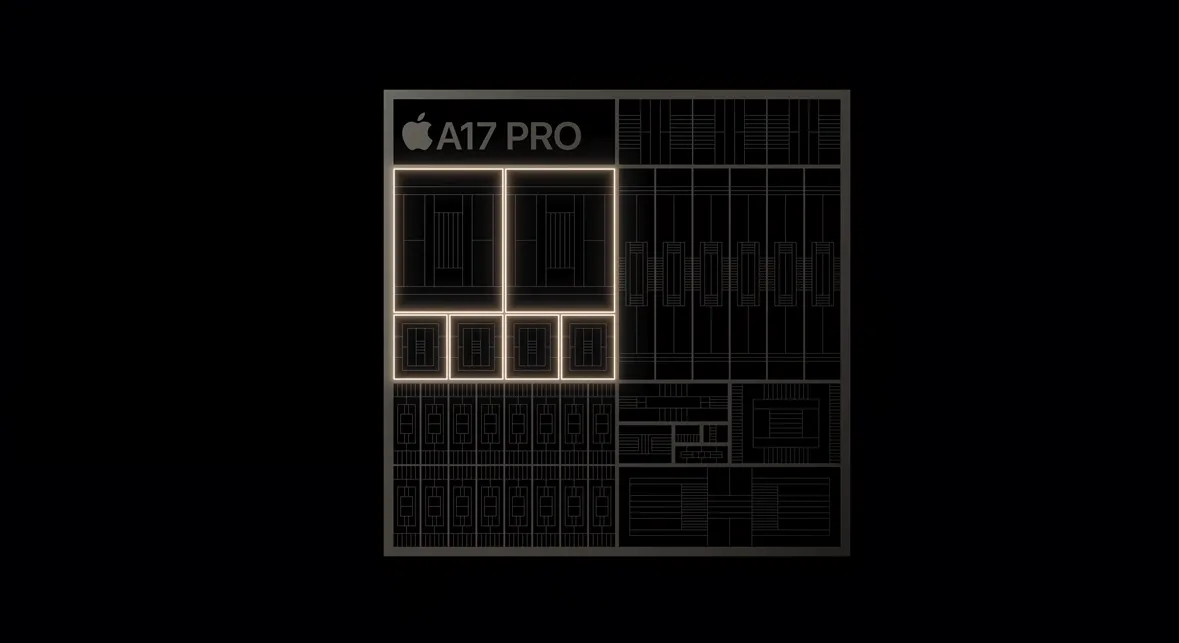
For starters, the A17 Pro's transistor count bump over its A16 Bionic predecessor is pretty modest. It clocks in at 19 billion where the A16 had 16 billion.
OK, maybe Apple didn't want to push the boat out on transistor count this time and wanted to keep costs in check. But the modest uplift in transistors means the CPU core count hasn't changed. The A17 Pro has two performance and four efficiency cores, just like the A16.
What's more, Apple is only claiming 10% performance uplift from the new CPU. That's super disappointing from an SoC on a brand new production node. What's more, that 10% increase includes both the benefits of the TSMC N3 silicon and what Apple says are revised cores with wider decode and execution units.

TSMC itself says the N3 silicon should be good for 10% more performance alone. So you really would think the new node plus revised cores would add up to more than 10% overall.
Then there's power efficiency. Normally you'd expect a new node to offer lower power consumption for the same performance.

Best CPU for gaming: The top chips from Intel and AMD
Best gaming motherboard: The right boards
Best graphics card: Your perfect pixel-pusher awaits
Best SSD for gaming: Get into the game ahead of the rest
Despite all that, Apple isn't making any claims for improved battery life over the outgoing iPhone 14 Pro. The battery life rating of the 15 Pro is exactly the same as before.
Taken altogether, it's hard to see where the benefits of the new 3nm silicon are kicking in. The new SoC doesn't get a big uptick in transistor count. It's not enabling a major performance bump. And it doesn't seem to be much more efficient.
We can't be sure what benefits the TSMC N3 node will bring to PC components, most importantly GPUs from AMD and Nvidia, until they arrive. At the earliest, the first graphics cards with TSMC N3 silicon won't go on sale until at least the second half of 2024. But if the Apple A17 Pro SoC is anything to go by, it's not looking great.