As an atheist, you won't see me at Mass, but I'll gladly welcome the Pope as another AI-sceptic ally. Pope Leo XIV has just issued his first encyclical letter since being elected in 2025, calling for a 'safeguarding of the human person in the time of artificial intelligence'.
Titled 'Magnifica Humanitas' ('magnificent humanity' in Latin), the letter calls for the AI industry to slow down and break fewer things, repeatedly denouncing the "culture of power" driving deregulation efforts. "Technology is never neutral, because it takes on the characteristics of those who devise, finance, regulate and use it," the Pope writes.
Through this open letter, the Pope once again calls for greater AI regulation and further urges the industry to work towards the common good rather than the "idolatry of profit that sacrifices the weak."
This is far from the first time the Pope has criticised AI technologies for threatening people's livelihoods; back in January, Leo XIV said that AI-generated slop risks dismantling human creative industries and "turning people into passive consumers of unthought thoughts and anonymous products without ownership or love."
Furthermore, the Pope chose his papal name as a callback to a predecessor who led the church during the Industrial Revolution, drawing a parallel to recent developments in the field of AI. On top of that, Leo XIV signed this first encyclical on May 15, the 135th anniversary of Leo XIII’s Rerum novarum, itself an open letter calling for better conditions for workers (via Vatican News).

Magnifica Humanitas also levels specific criticism at the use of AI technology in remote warfare. Pope Leo XIV writes, "While AI can enhance the defense and protection of civilians, it can also lower the threshold for the use of force, shield people from responsibility and foster a culture in which the enemy is reduced to a statistic and the victim to 'collateral damage.'"
On AI morality and 'alignment', the pope writes, "[Without greater oversight] those who control AI will impose their own moral vision, which will become the invisible infrastructure of these systems. A more moral AI is not enough if that morality is determined by a few."
It's worth noting that the open letter also shares thoughts on the subject of AI 'consciousness'. The pope warns that, just because an LLM can produce intelligible text that looks a lot like something a human could write, we must not mistake this imitation for wisdom.
"So-called artificial intelligences do not undergo experiences, do not possess a body, do not feel joy or pain, do not mature through relationships and do not know from within what love, work, friendship or responsibility mean," he writes. "Nor do they have a moral conscience, since they do not judge good and evil, grasp the ultimate meaning of situations, or bear responsibility for consequences."

He continues, "They may imitate language, behavior and analytical skills, or even simulate empathy and understanding, but they do not understand what they produce, for they lack the affective, relational and spiritual perspective through which human beings grow in wisdom."
Though I'm sure our philosopher-in-residence Jacob would have thoughts to share on the Pope's experiential definition of consciousness, it's worth comparing and contrasting the leader of the Catholic church's refusal to be taken in by AI's hallucination of consciousness to evolutionary biologist Richard Dawkins' insistence that Claude 'bloody well' is conscious. Our Jacob criticised Dawkins' argument for its lack of philosophical rigour, and did not mince words in his response: "You're wrong, Dawkins: AI bots bloody well are not conscious."
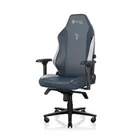
1. Best gaming chair: Secretlab Titan Evo
2. Best gaming desk: Secretlab Magnus Pro XL
3. Best gaming headset: Razer BlackShark V3
4. Best gaming keyboard: Asus ROG Strix Scope II 96 Wireless
5. Best gaming mouse: Razer Viper V4 Pro
6. Best PC controller: GameSir G7 Pro
7. Best steering wheel: Logitech G Pro Racing Wheel
8. Best microphone: Shure MV6 USB Gaming Microphone
9. Best webcam: Elgato Facecam MK.2