

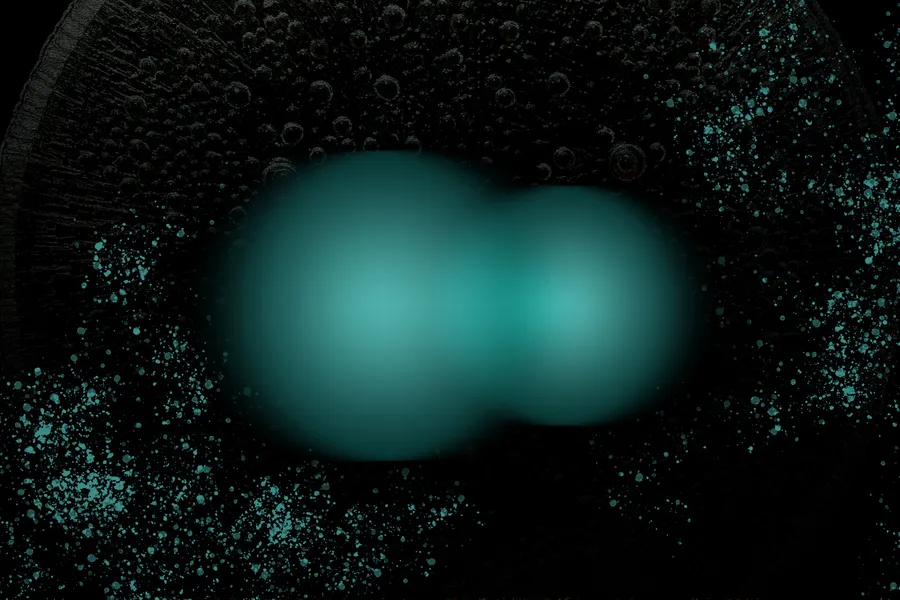
New hybrid particle could lead to smaller magnetic semiconductors
Best of all, it's called NiPS3.
Keep up to date with the most important stories and the best deals, as picked by the PC Gamer team.
You are now subscribed
Your newsletter sign-up was successful
Want to add more newsletters?
Every Friday
GamesRadar+
Your weekly update on everything you could ever want to know about the games you already love, games we know you're going to love in the near future, and tales from the communities that surround them.
Every Thursday
GTA 6 O'clock
Our special GTA 6 newsletter, with breaking news, insider info, and rumor analysis from the award-winning GTA 6 O'clock experts.
Every Friday
Knowledge
From the creators of Edge: A weekly videogame industry newsletter with analysis from expert writers, guidance from professionals, and insight into what's on the horizon.
Every Thursday
The Setup
Hardware nerds unite, sign up to our free tech newsletter for a weekly digest of the hottest new tech, the latest gadgets on the test bench, and much more.
Every Wednesday
Switch 2 Spotlight
Sign up to our new Switch 2 newsletter, where we bring you the latest talking points on Nintendo's new console each week, bring you up to date on the news, and recommend what games to play.
Every Saturday
The Watchlist
Subscribe for a weekly digest of the movie and TV news that matters, direct to your inbox. From first-look trailers, interviews, reviews and explainers, we've got you covered.
Once a month
SFX
Get sneak previews, exclusive competitions and details of special events each month!
We’ve been seeing a lot of innovations in tiny tech recently. Little PCs are all the rage, and advancement in storage among other things is bringing real potential to portable PC gaming. New mobile chips are capable of ray tracing and variable rate shading. Serious electronics are getting seriously small. The tinification of tech products is sure to continue but a hybrid particle discovered by a team of physicists from MIT might offer a healthy boost in the process.

Best CPU for gaming: the top chips from Intel and AMD
Best graphics card: your perfect pixel-pusher awaits
Best SSD for gaming: get into the game ahead of the rest
A news post out of MIT explains that the hybrid particle can be found in the two-dimensional material nickel phosphorus trisulfide (NiPS3) a bit like the nanomaterial that’s always popping up in modern tech aspirations, graphene. NiPS3 is a hybrid between an electron, and a phonon. It’s the magnetic characteristics which makes NiPS3 so interesting to researchers, as the bond between the electron and phonon – which is a quasiparticle or collective excitations formed by specific vibrations – is ten times stronger than what was expected.
This bond proposes that the electron and phonon might be linked in such a way that changes to one might also have effects on the other. This means altering the electron with voltage or light will also change the phonon. They refer to this as being ‘tuned in tandem’ and scientists believe they could use this to control the magnetism, allowing for a brand new form of magnetic semiconductors.
"Imagine if we could stimulate an electron, and have magnetism respond," says Nuh Gedik, professor of physics at MIT. "Then you could make devices very different from how they work today.”
Of course this is all prefaced with plenty of ‘one day’ and ‘maybe’ but there’s the potential for this tech to lead to smaller more powerful devices that also have increased energy efficiency. Whether or not we’ll see it come to gaming devices within our lifetime remains anyone's guess.
Keep up to date with the most important stories and the best deals, as picked by the PC Gamer team.

Hope’s been writing about games for about a decade, starting out way back when on the Australian Nintendo fan site Vooks.net. Since then, she’s talked far too much about games and tech for publications such as Techlife, Byteside, IGN, and GameSpot. Of course there’s also here at PC Gamer, where she gets to indulge her inner hardware nerd with news and reviews. You can usually find Hope fawning over some art, tech, or likely a wonderful combination of them both and where relevant she’ll share them with you here. When she’s not writing about the amazing creations of others, she’s working on what she hopes will one day be her own. You can find her fictional chill out ambient far future sci-fi radio show/album/listening experience podcast right here.
No, she’s not kidding.

