As we reported last month, AMD is working on a low-power, compact range of Zen 6 CPUs, which should be perfect for inclusion in laptops and gaming handhelds. If you're wondering how it plans on doing that, it seems the answer is a collage of different Zen architectures from Zen 2 upwards combined.
As spotted by industry analyst InstLatX64 (via Wccftech), a Linux kernel patch from Vishal Badole, a member of AMD staff, notes that the low-power core is marked in CPUID. This designation, distinct from a regular Zen 'C' core, is necessary for the following reasons, according to the patch:
- "user space exposure via /sys/kernel/debug/x86/topo/cpus/*, which today reports cpu_type "unknown" for low-power cores
- amd_get_boost_ratio_numerator(): on every X86_FEATURE_AMD_HTR_CORES-capable AMD/Hygon part, low-power cores must scale by amd_get_highest_perf() rather than the fixed CPPC_HIGHEST_PERF_PERFORMANCE ceiling, matching the existing efficiency-core path"
According to InstLatX64, the low-power core is a "collage CPU", made up of a Zen 6 ISA, Zen 5 uArch [microarchitecture], Zen 4 FPU, Zen 3 L2 and a Zen 2 L3 cache. Leaker Gotou_3rd recently tweeted "Zen 6 LP => Zen 5 LP", which could be read as saying that Zen 6 LP outperforms Zen 5 C (as no Zen 5 LP exists). However, they clarified in a follow-up tweet, saying it was "just a naming switch."
This new low-power core type is there alongside AMD's Performance and Efficiency cores (not to be confused with Intel's Performance and Efficiency cores, which mean something different). The Performance cores are AMD's regular Zen cores, and they have the highest boost clocks. The Efficiency cores are a more compact type, with lower boost clocks, and (traditionally) less L3 cache. The new LP cores from AMD will be more similar in what Intel calls its 'Low Power Efficiency (LPE)' cores.
AMD's new LP cores could lead to a scenario where some gaming devices can work away with just a handful of watts, which would find a great purpose in gaming laptops. In particular, that could leave room for much better battery efficiency, especially with some smart software to best handle core priority.
#AMD #Zen6LP is a collage CPU:ISA: #Zen6uArch: #Zen5 [2] FPU: #Zen4 (256b)L2: #Zen3 (512KB) [1]L3: #Zen2/#Mendocino (1MB/core) [1]1/2 https://t.co/2v1Pem2Ex8July 29, 2026
Ultimately, the biggest test of these cores will be efficiency, power draw, and performance, all of which we don't have much information on right now. We have seen AMD Zen 6 server CPUs launch this month, and we are still expecting to see Zen 6 desktop chips launch this year, but the memory crisis naturally puts a big question mark over all major hardware releases.
Both AMD and Intel's next chips will be launching in a market with PC shipments on a decline, and that's naturally going to suck some of the wind out of the launch, even if they perform excellently. And that goes doubly so for laptops and gaming handhelds, both of which tend to require replacing the entire device to upgrade the CPU. Well, that's unless you're Framework.
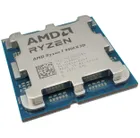
1. Best overall:
AMD Ryzen 7 9800X3D
2. Best budget:
AMD Ryzen 5 5500
3. Best mid-range:
Intel Core Ultra 5 250K Plus
4. Best high-end:
AMD Ryzen 9 9950X3D
5. Best AM4 upgrade:
AMD Ryzen 7 5700X3D
6. Best CPU graphics:
AMD Ryzen 7 8700G