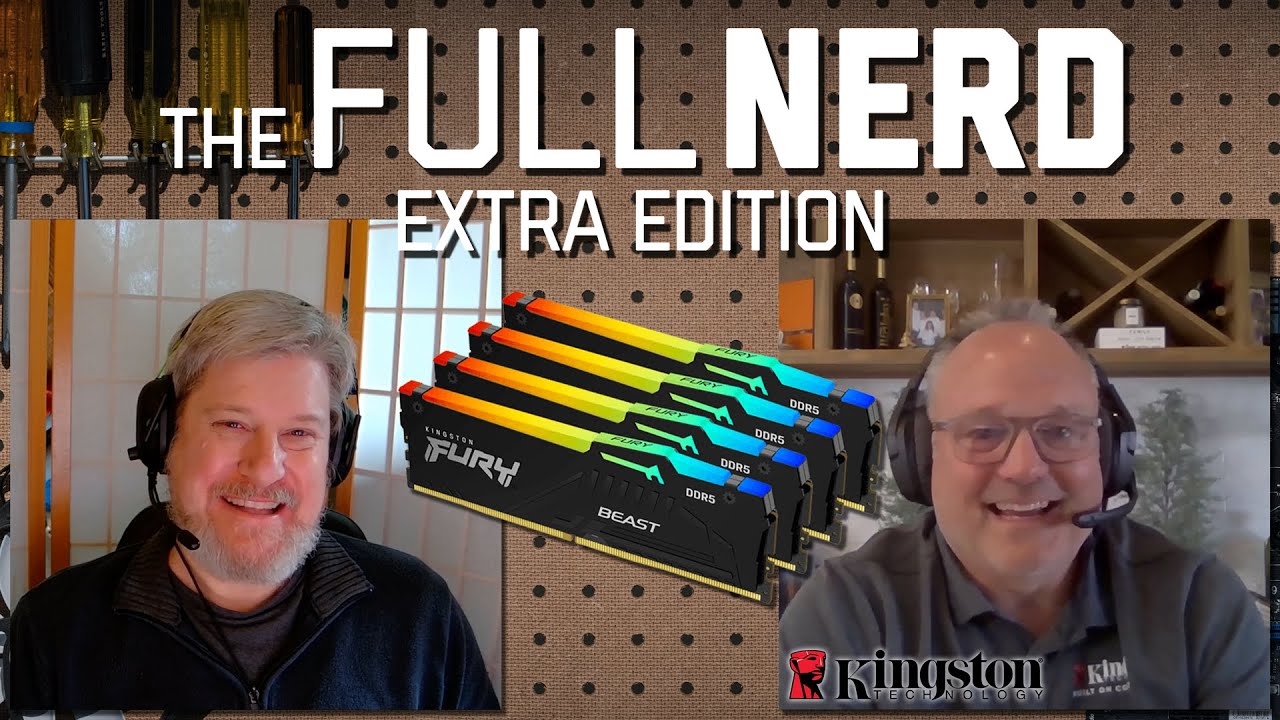
As if skyrocketing RAM prices wasn't enough, Kingston's Datacentre SSD Business Manager Cameron Crandall says to expect rising SSD costs throughout 2026, confirming what we already feared. Why? Crandall, who has worked at Kingston for 29 years, says the company is experiencing NAND wafer price spikes the likes of which have never been seen before.
In conversation with Mark Hachman on The Full Nerd Network podcast, Crandall got specific, saying there's been "a 246% increase in NAND pricing as compared to Q1 of 2025." He later goes on to elaborate, "We just recently saw a 70% increase in NAND costs over… I think it was a 60-day period. So, that 250% I mentioned earlier—70% of that was increased within the last 60 days."
As NAND flash chips make up about 90% of a single SSD's Bill of Materials cost, that's an especially eye-watering uptick for both businesses and general consumers alike. As such, Crandall offers a word of advice to anyone considering upgrading their rig's storage: "Do it now and [don't] wait, because prices are going to continue to go up."
In other words, we've yet to see just how high SSD prices can go. Crandall goes on to say, "[If you want to pick up] an alternative storage solution [like an external SSD], you know, yeah, you might be able to reduce some cost. But if you want to have a native SSD plugged into your M.2 socket, my advice today would be to not hold off on that purchase because it will be more expensive 30 days from now, and more than likely it'll be more expensive 30 days after that."
We already know that memory pricing is dire, with Framework, Acer, Asus, Lenovo, HP, and Dell all either having raised their prices or looking to do so very soon. Research also points towards both RAM and SSDs spiking in price next year. Crandall's comments simply further confirm that 2026 will likely be a very expensive year. Panic-buying in what remains of 2025 probably isn't the best strategy, though.

Crandall sums up how we got here succinctly, too, saying, "Big data centres don't want to get caught without resources to be able to offer to their customer base to run AI workloads. So, there's been a big pull in of high-capacity SSDs, lots of DRAM, in order to support that. And what that has caused is a worldwide shortage in other markets and even hyper-scale. But it's a trickle-down effect into the B2B and consumer space." Couldn't have said it better ourselves.
But besides hoovering up all the system memory and storage it can, AI could cause yet another turn in the market for manufacturers and distributors to weather. Crandall posits, "I hate to call it a bubble, but if there is an AI bubble and we go into a massive oversupply…it's not impossible to have a situation where spending stops, consumption stops, and now there's a flood of DRAM and NAND in the marketplace.
"Maybe a company like Kingston is sitting now on very, very expensive inventory that we bought up right [before] a turn in the market. So, we've got to be very cautious in how we manage inventory in times like this."
As for Kingston itself in the here and now, the company isn't going to do a Micron, with Crandall stating, "We have no plans to exit the client market." Kingston is also apparently not one of the many sources "feeding hyperscale data centres with SSDs," not that that will count for much—the memory apocalypse will spare no one.
1. Best gaming chair: Secretlab Titan Evo
2. Best gaming desk: Secretlab Magnus Pro XL
3. Best gaming headset: Razer BlackShark V3
4. Best gaming keyboard: Asus ROG Strix Scope II 96 Wireless
5. Best gaming mouse: Razer DeathAdder V4 Pro
6. Best PC controller: GameSir G7 Pro
7. Best steering wheel: Logitech G Pro Racing Wheel
8. Best microphone: Shure MV6 USB Gaming Microphone
9. Best webcam: Elgato Facecam MK.2