Back in November of last year, rumours were abounding that Nvidia had cancelled the expected Super refresh of its RTX 50-series of graphics cards, though at the time, I thought the whole thing was nonsense. However, six months on, and there's still no sign of them thanks to the RAMpocalypse, but it might not be totally game over, if one person is to be believed.
This is all according to MEGAsizeGPU on X, who has a pretty decent track record of dropping hints and tidbits that eventually come true. "RTX 50 Super is back on track," they write, before adding something extra. "This time includes 5060 12G (or maybe it will have a new name as 5060 super)."
RTX 50 Super is back on track. This time includes 5060 12G ( or maybe it will have a new name as 5060 super )June 5, 2026
Nvidia has done two lots of RTX Super refresh in the past, starting with the RTX 20-series (2080, 2070, 2060 Supers) and then again with the RTX 40-series (4080, 4070 Ti, 4070 Supers). In all cases, the Super variant of a given RTX graphics card sported a GPU that had more shader units than the original model, either by using a complete version of the same processor die or a more heavily cut-down chip from the next tier up.
For example, the GeForce RTX 4070 Ti uses a full AD104 die with 7680, whereas the RTX 4070 Ti Super sports an AD103 chip with 8448 shaders. The full version of that GPU, with 10240 shaders, is used in the RTX 4080 Super.
Nvidia will have lots of Blackwell dies sitting in its inventory that just can't be used in any current product, because they just don't have sufficient functional parts and/or operating clock speeds to meet an SKU's requirements. Hence, the need for a Super refresh, in which they can be used.
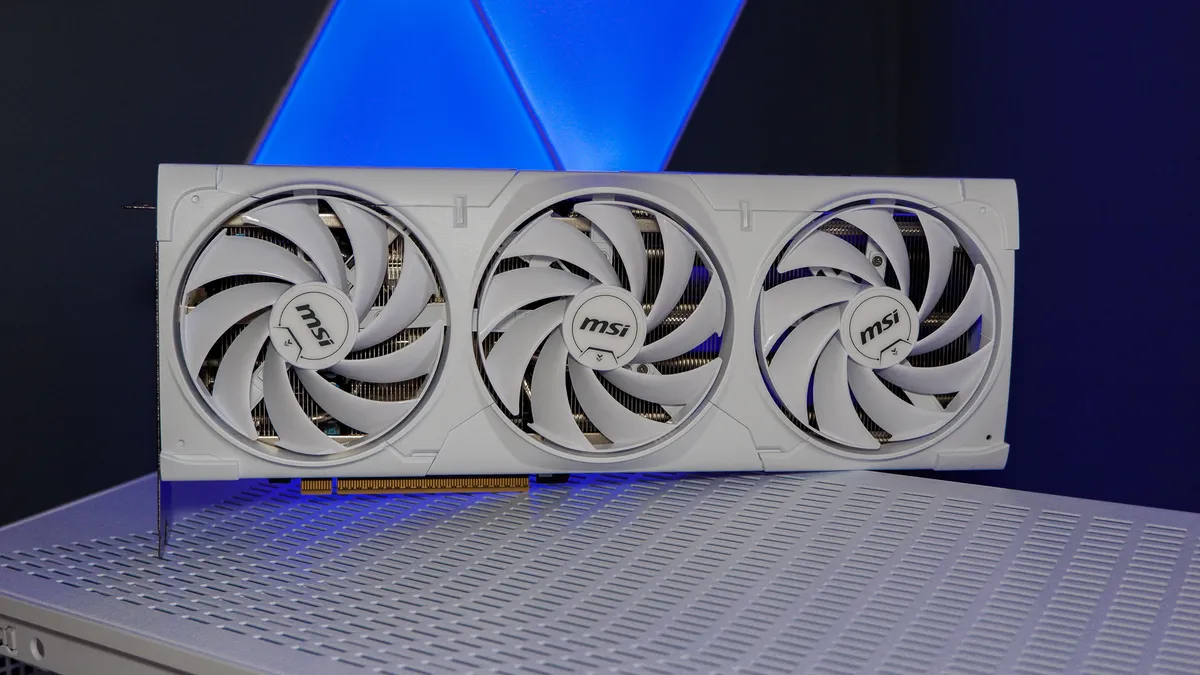
The exception to this is the GB203 in the RTX 5080, which is already a full die, but the main point of interest for the RTX 50 Supers isn't so much the shader count as how much VRAM will be on the graphics cards. Current Blackwell gaming cards use 2 GB GDDR7 modules, but it's generally expected that the Supers will use 3 GB ones. So instead of having 16 GB, the RTX 5080 Super would have 24 GB.
This is where MEGAsizeGPU's RTX 5060 claim comes in. At the moment, this is an 8 GB graphics card, using four 2 GB modules. However, with 3 GB chips, the total amount of VRAM would increase to 12 GB, putting it on par with the much-loved RTX 3060 (and the RTX 4070 and 5070).
I still believe that Nvidia will release an RTX 50 Super refresh at some point in the near future, pushing the RTX 60-series further down the road until the gaming PC market is in a better position to switch to a newer GPU. As to exactly what those Supers will be like, here's my current thinking:
- RTX 5080 Super - 10240 shaders, 2.7 GHz boost clock, 24 GB VRAM
- RTX 5070 Ti Super - 9718 shaders, 2.6 GHz boost clock, 16 GB VRAM
- RTX 5070 Super - 6272 shaders, 2.5 GHz boost clock, 16 GB VRAM
- RTX 5060 Super - 3840 shaders, 2.5 GHz boost clock, 12 GB VRAM

Why do I think the 5070 and 5070 Ti Supers won't have more VRAM than this? The answer is the RAMpocalypse and the limited supply of GDDR7. No company other than Nvidia is using it, but DRAM manufacturers are favouring memory production for the AI market, not gaming, so rather than using six modules on the 5070 Super's 192-bit memory bus, it'll be reduced to 128-bits in size so that four 3 GB modules can be used.
In the case of the RTX 5070 Ti, I reckon that Nvidia won't change the VRAM count at all, again for supply reasons.
Of course, one person saying the Super series is back on and me slapping down a handful of considered GPU specs means very little in the grand scheme of things, so we'll just have to wait and see if the refresh actually appears. And even if it does, will it be this year or early 2027? Assuming PC gaming hasn't been DRAM-priced out of existence by then.
1. Best overall: AMD Radeon RX 9070
2. Best value: AMD Radeon RX 9060 XT 16 GB
3. Best budget: Nvidia RTX 5050
4. Best mid-range: AMD Radeon RX 9070 XT
5. Best high-end: Nvidia GeForce RTX 5090