Our Verdict
Not everyone is convinced by mini-LED monitors with full-array dimming. But, remarkably, this budget-priced 1440p panel from KTC does it better than many far more expensive gaming monitors and delivers excellent HDR performance.
For
- Incredibly bright
- Excellent dimming algorithm
- Good response for an IPS panel
Against
- No USB hub
- Lighting not as precise as OLED
PC Gamer's got your back Our experienced team dedicates many hours to every review, to really get to the heart of what matters most to you. Find out more about how we evaluate games and hardware.
First, a confession. I'm not much of a mini-LED fan. You might even call me a dimming-zone snob. I've never found LCD panels with full-array local dimming terribly convincing, and of late it's been hard to argue with the latest OLED gaming monitors. So, it's definitely a surprise to discover that one of, if not the best mini-LED monitors I've yet seen is this new budget-priced model, the KTC M27T6S.
Am I giving away too much, too soon? Perhaps. But the fact that I came into this review pretty sceptical of LCD monitors with local dimming hopefully means that when I say I was impressed by the KTC M27T6S, it carries a bit more weight. This monitor does the local dimming thing remarkably well. Does it do it well enough to convert me to mini-LED technology? Now there's a question.
We'll answer that momentarily, but first let's cover the basics. This is a 27-inch model with a 2,560 by 1,440 native resolution. For gaming, that's just great. 4K is dandy in theory, but at just $290, this is not a premium-priced monitor and it's implausible to think the KTC M27T6S will be paired with the kind of $1,000 GPU you need to really make the most of 4K.
Screen size |
27-inch |
Resolution |
2,560 x 1,440 |
Brightness |
1,000 nits |
Response time |
1 ms MPRT |
Refresh rate |
200 Hz |
HDR |
DisplayHDR 1000, 1,152 zones |
Features |
IPS panel, adaptive sync, 2x HDMI 2.0, DisplayPort 1.4 |
Price |
$289.99 | £275 (estimated) |
✅ You want sizzling HDR performance: Rated at 1,000 nits and configured with 1,152 dimming zones, the KTC M27T6S packs quite the visual punch.
❌ You're very sensitive to black levels and light bleed: While the KTC M27T6S has an excellent dimming algorithm, its lighting still isn't as precise as OLED.
As for refresh, we're talking 200 Hz with an optional, and rather pointless ability to "overclock" to 210 Hz, plus pixel response of 1 ms (by the MPRT metric). The panel type is, as you would expect, IPS.
Of course, the whole point of LCD panels with full-array local dimming is to enable improved HDR performance. The KTC M27T6S duly has VESA DisplayHDR 1000 certification and can do fully 1,000 nits courtesy of 1,152 dimming zones. Youch.
Then again, so can plenty of other LCDs with local dimming, and I haven't liked many of those.

Rounding out the details are a stand that adjusts every which way, including pivot into portrait mode, plus DisplayPort and HDMI connectivity. The HDMI ports will only hit 144 Hz, for the record, and there's no USB-C for single-cable connectivity, nor a USB hub. That's probably not a surprise given the competitive price point.
Still, it's pretty nicely put together monitor, albeit largely from plastic, and the design is certainly slick with slim bezels and a mix of black and pale grey plastics from which many more expensive gaming monitors could learn quite a bit. It doesn't look or feel cheap.


Perhaps more importantly, they could learn a lot from its image quality, too. As an SDR monitor, the KTC M27T6S is impressive enough. It's awfully bright, cranked right up, and the basic calibration is pretty nice in sRGB or DCI-P3 modes, although for those who are particular about such things, the calibration of SDR content in HDR mode is a bit off with clearly over-saturated SDR colours.
It's fast, too, subjectively on a par with any remotely comparable IPS monitor. You'll need to be running something with ultra-high refresh and black-frame insertion, or similar, to experience a substantially better experience in terms of pixel response from an LCD monitor.
Where the KTC M27T6S really delivers is with HDR content.
But where the KTC M27T6S really delivers is with HDR content. There are all kinds of drawbacks to local dimming technology applied to LCD panels. You get blooming around bright objects, dimming zones visibly popping on and off, the inability to light up smaller bright objects on a dark background, weird brightness gradients across the screen, and so on.
The KTC M27T6S doesn't solve or avoid all of those issues. But the algorithm KTC has come up with to control the zones does it as well, or better than any other monitor with a full-array mini-LED backlight that I've yet seen. At this price point, that's remarkable.


First off, there's no "zone popping" at all. That's a term I just made up and it concerns the really obvious switching on and off of individual backlight zones. You can induce it in many full-array dimming monitors by displaying a star field panning across the screen. And it can look absolutely awful as you track the zones popping on and off as stars pass across the screen.
The KTC M27T6S doesn't do that at all. It also handles a particular 4K HDR video of fireworks on a night sky—which I use as a mini-LED torture test—better than I've seen before on this class of display. It's not perfect. There's still some light bleed and some blooming. But the brighter explosions really light up your retinas. It's very impressive.


In-game is where I was really blown away, however. The brighter desert scenes in CyberPunk 2077 tend to find the weaknesses of OLED monitors; they simply can't handle how much of the panel needs to be driven hard to render the desert sun really well and so tend to look a bit dull.
But this dirt cheap KTC monitor absolutely smashes it. The sun is so bright, it almost hurts your eyes. This is a genuine HDR experience and a level of realism that's completely different from your usual entry-level HDR 400 monitor.
The dimming zones are handled deftly, but you can still ultimately see where the zones are firing hard and where they are not.
That said, if brighter scenes are where this monitor both literally and figuratively shines, it's after dark in Night City where things don't work quite so well. This is ultimately a backlit IPS panel and there's no avoiding light bleed and a bit of glow behind darker scenes and textures that also have some small, bright objects.
The dimming zones are handled deftly, but you can still ultimately see where the zones are firing hard and where they are not. The subjective black levels also aren't helped by the fairly coarse matte anti-glare coating, which tends to make everything look just a little grey.

There's actually an interesting comparison to be made here between this remarkably affordable mini-LED monitor and Alienware's budget QD-OLED offering, the AW2726DM. Okay, at $350 the Alienware is still more expensive, but it's not a huge chasm, price-wise, to this $290-ish monitor. So, it's plausible to think people might cross-shop. But which should they buy?
The full-screen brightness from this KTC is on another planet, and one awfully near its host star. But then the black levels from the OLED and the lighting precision and overall sense of balance and naturalness are far superior, there's none of the slight weirdness where you can see the backlight working harder in some areas of the panel than others.
The full-screen brightness from this KTC is on another planet, and one awfully near its host star.
That said, speed-wise, the subjective difference is remarkably small versus that cheap OLED. It's definitely lighting precision, not pixel response, that is the most telling difference. You also have to factor in superior font rendering on this LCD panel. There are now OLED monitors with conventional RGB-stripe subpixel structure that will render text as well as any LCD, but they are new and more expensive models, for now.


Ultimately, I'd still go with the OLED option; it does the things I care about most better. But I can absolutely understand why someone else might prefer this mini-LED option. It's really very good. It also solves a conundrum that's been bothering me for a while.
I have never understood why local dimming has historically added so much to the price of a monitor. This KTC confirms that not only that it needn't, but also there's no reason why affordable local dimming can't also be very good local dimming. At the price point KTC has hit, this is a pretty incredible monitor.
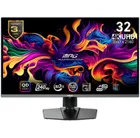
1. Best overall / 4K:
MSI MPG 321URX
2. Best budget 4K:
Asus ROG Strix XG27UCG
3. Best 1440p:
MSI MPG 271QRX
4. Best budget 1440p:
KTC H27T22C-3
5. Best 1080p:
AOC Gaming C27G4ZXE
6. Best Ultrawide:
Gigabyte MO34WQC2
7. Best budget ultrawide:
Xiaomi G34WQi
8. Best 32:9:
Samsung Odyssey OLED G9
9. Best dual-mode:
Alienware AW2725QF
Not everyone is convinced by mini-LED monitors with full-array dimming. But, remarkably, this budget-priced 1440p panel from KTC does it better than many far more expensive gaming monitors and delivers excellent HDR performance.