Have you heard of the simulation hypothesis? It's the idea that the universe, as we perceive it, is essentially a form of simulated reality and it's been explored in genuine scientific research, philosophical texts, and major plot devices in numerous films. Well, a new physics research paper on the nature of information claims that if its findings were to be empirically validated, it would be a major piece of evidence for the notion that we're all living in the grandest giant 4X strategy game of all time.
News of the paper's release (via MSN) has been understandably popular in general science reporting. The researcher in question, Dr Melvin Vopson, has spent a good portion of his career in physics investigating information theory, going as far as to propose a universal law called the second law of information dynamics, based on an earlier theory of his called the mass-energy-information equivalence principle.
The gist of that is information is the same as energy, and thus has mass; Dr Vopson has suggested that this could be explored in an experiment by which information is removed from a storage device, which is recorded for any changes in mass.


Dr Vopson is convinced, as one would expect, that his findings have significant implications (for example, the 'missing mass' problem in cosmology is apparently solved by his theory), not least being the suggestion that, should his work be validated, then it would go a long way to showing that the simulation hypothesis is more than a mere idea.
"The second law of infodynamics appears to be manifesting universally and is, in fact, a cosmological necessity, we could conclude that this points to the fact that the entire universe appears to be a simulated construct," he writes.
"A super complex universe like ours, if it were a simulation, would require a built-in data optimization and compression mechanism in order to reduce the computational power and the data storage requirements."
Dr Vopson doesn't exactly present an overwhelming amount of evidence to back up the latter—his suggestion that the prevalence of symmetry in nature is essentially tantamount to a compression algorithm is about the size of it—but his work certainly makes one ponder just exactly what would a computer running the universe be like.
The CPU alone would need quite a few cores and the clock speed would be pretty high too, as processes in the sub-atomic world take place over such short periods that anything running in the GHz region would be millions of orders too slow.
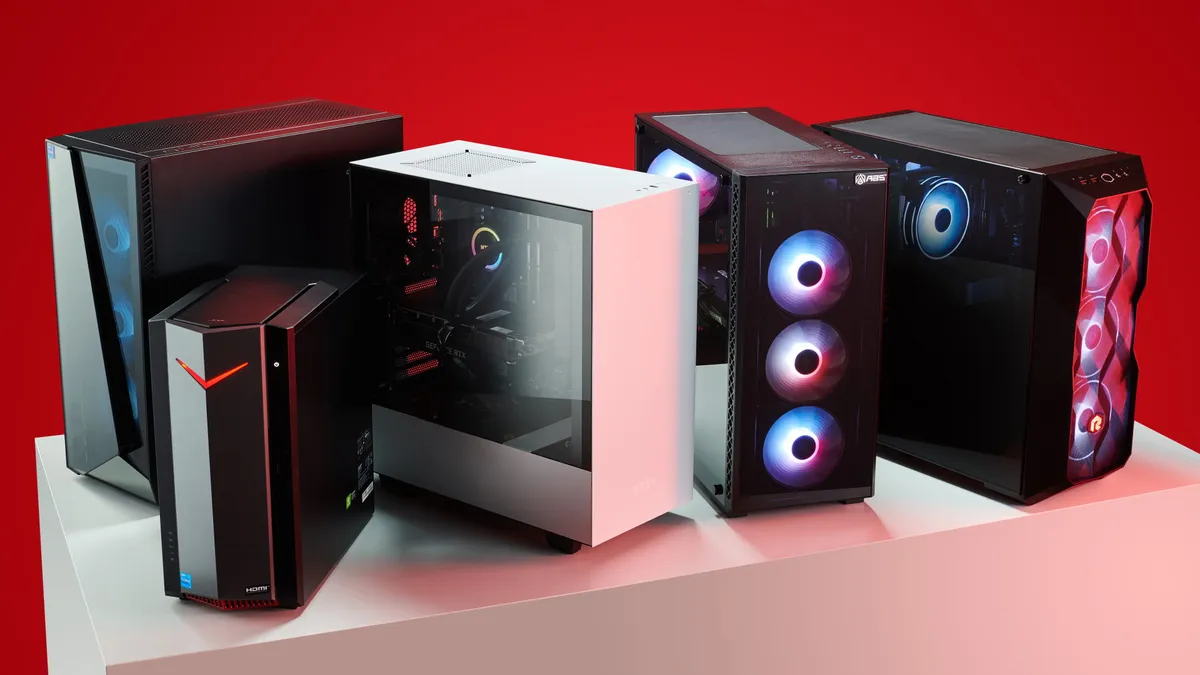
Best gaming PC: The top pre-built machines.
Best gaming laptop: Great devices for mobile gaming.
Then there's the sheer amount of memory, RAM or non-volatile storage, required to keep track of every single particle in the whole universe. And imagine how much energy would be used to run it? It'd make a 1000 W superchip look absolutely lightweight, in comparison.
But is the universe really a simulation or a computer game, played by an errant mega-being or two in another dimension? If it's the latter, my money's on it being a 4X strategy game, like an ultimate version of Civilization 6.
Then again, I wouldn't be in the least bit surprised if it turns out the universe is actually just an extremely grindy MMORPG and humanity is still a couple of billions of years away from accumulating enough experience points to hit the next level.