Join The Club





Google has removed Doki Doki Literature Club from its Google Play Store due to perceived violations of its Terms of Service. The cult visual novel surprise-released on the storefront in December following its initial PC release in 2017. It's since been ported to Nintendo Switch, PlayStation and iOS.
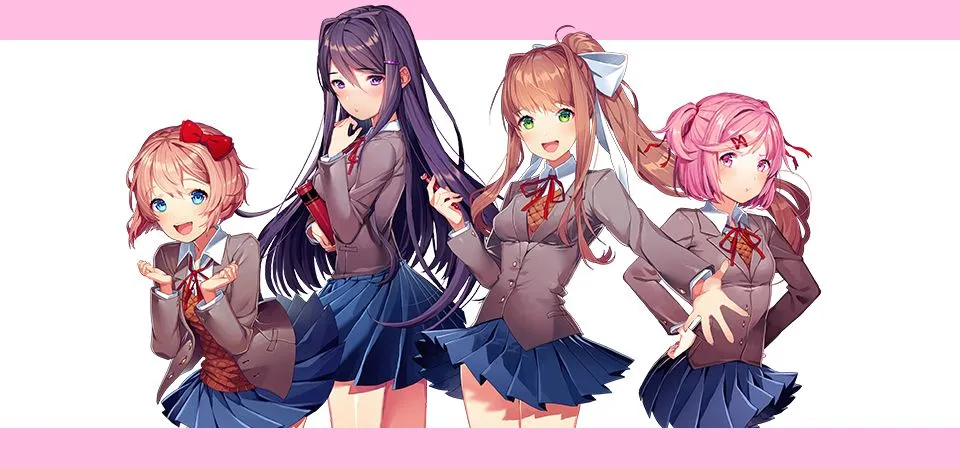
Doki Doki Literature Club was a phenomenon on its release nine years ago. By all appearances it's a run-of-the-mill Japanese visual novel about a teenage boy who joins a high school literature club "full of cute girls", as per the Steam description.
At first the game progresses just as you'd expect: the protagonist interacts with the fawning members of the literature club, many confiding conversations are had, and there's a minigame involving the composition of overwrought high school poetry.


Necessary spoilers follow: things gradually take a darker turn when one of the club members falls head-over-heels for the protagonist. The tone continues to sour and the cliche visual novel trappings gradually erode, giving way to potent psychological horror dealing with depression and suicide.
It's a beloved game that uses the familiar whimsy of Japanese visual novels—its creator Dan Salvato is American—to couch a very unorthodox approach to its themes. At release it was best known for the bracing tonal u-turn it takes, but its popularity has endured beyond the initial shock value. On Steam it has over 126,000 "overwhelmingly positive" reviews, with 1,500 of those posted recently.
Dan Salvato and publisher Serenity Forge posted a joint statement on the removal on Bluesky. "DDLC is widely celebrated for portraying mental health in a way that meaningfully connects deeply with players around the world, helping them feel heard, understood, and less alone on their journey. Managing to achieve that—making a truly meaningful difference by using the power of fiction to connect to others—is what I'm most grateful for. It inspires me every day to keep making cool new things, things that can really reach others, especially those in need of connection."
A statement regarding the removal of DDLC from the Google Play Store:
— @serenityforge.com (@serenityforge.com.bsky.social) 2026-04-10T00:49:16.894Z
The statement notes that the game remains available on other platforms. "We're continuing to do everything we can to find a path forward for getting DDLC reinstated on the Google Play Store," it continues. The publisher is also looking at "alternate methods of distribution" on Android.
Google Play Store's policies around inappropriate content note restrictions on the depiction of suicide. "Apps that promote self harm, suicide, eating disorders, choking games or other acts where serious injury or death may result," are not permitted. Doki Doki Literature Club certainly doesn't "promote" suicide, though it's perhaps far less direct about denouncing it than Google feels comfortable with, given the way the game is marketed.
If you're unfamiliar with Doki Doki Literature Club, Steven T. Wright explained its unusual appeal in a 2017 feature. "While the shock value certainly adds to the experience, it rarely comes off as crass or exploitative. Doki Doki takes great care to treat issues like depression and anxiety with more tact and delicacy than its apparent inspirations, like the infamous School Days," Wright wrote.