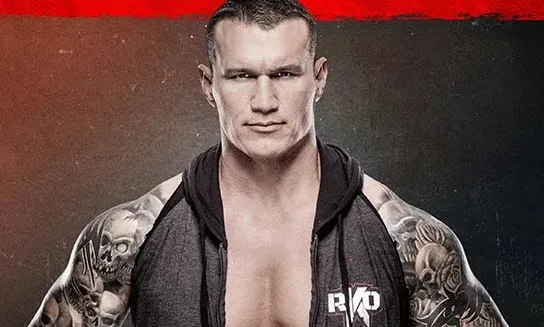
Take-Two Interactive is headed to court to determine whether the use of Randy Orton's tattoos in the WWE 2K series constitutes copyright infringement. The case actually began all the way back in 2009, according to the Hollywood Reporter, when Catherine Alexander, Orton's tattoo artist, attempted to negotiate a license to use her work in tattoo sleeves the WWE was preparing to introduce.
Alexander said the WWE rep laughed at her and said she had no grounds to make the claim, because Orton is under contract with the WWE and it can therefore do what it wants with his likeness. She pursued the matter, however, and a judge in Illinois recently rejected Take-Two's request for a summary judgment and granted a partial summary judgment to Alexander instead, finding that WWE and Take-Two Interactive had in fact copied her work, and that she may have suffered damages as a result.
"Defendants argue the evidence establishes that consumers do not purchase WWE 2K because of the tattoos. But other evidence shows that consumers did purchase WWE 2K for its authenticity to the wrestlers’ appearance," the ruling states. "In particular, Defendants admit that consumer response is a consideration to their development of WWE 2K and the design choices made. They also acknowledge that consumers expect there to be authenticity in the videogames and that WWE would have rejected Orton’s videogame persona if it appeared without his tattoos or appeared with tattoos that were different than Orton’s actual tattoos."
"Additionally, Alexander’s expert addresses the importance of authenticity to drive sales and profits. Thus, an issue of material fact exists as to whether Alexander suffered actual damages based on the value of the infringing use, defeating summary judgment."
The case is particularly interesting because it was unexpected. As ESPN reported in March, Take-Two won a clear victory in what appeared to be a similar case over the use of tattoos on players in the NBA 2K games. The judge in that case, which was filed in 2016, issued a summary judgment in favor of Take-Two, declaring that "no reasonable trier of fact could find the Tattoos as they appear in NBA 2K to be substantially similar to the Tattoo designs licensed to Solid Oak," a company that claimed to hold the copyright on tattoos belonging to NBA players LeBron James, Kenyon Martin and Eric Bledsoe.
On top of that, "the undisputed factual record clearly supports the reasonable inference that the tattooists necessarily granted the Players nonexclusive licenses to use the Tattoos as part of their likenesses, and did so prior to any grant of rights in the Tattoos to Plaintiff," the judge said. The judge also agreed with Take-Two's contention that the use of the tattoos in the NBA 2K games was covered by fair use, because the work is "transformative: The tattoos in the game are an exact copy of the original designs, but "were included in NBA 2K for a purpose—general recognizability of game figures as depictions of the Players—different than that for which they were originally created."

The judge in the WWE case ruled differently, however: Regarding the implied license, the ruling states that Take-Two is "conflating Orton’s rights to his own likeness and right to appear in media with an implied license to use her copyrights in unlimited and other commercial ways," while other factors preclude a summary judgment on the question of fair use.
"Defendants’ argument is contrary to Seventh Circuit copyright law under which Alexander only needs to show that Defendants used her property; the burden of proving the use was authorized falls squarely on Defendants," the ruling states. "It is undisputed that Alexander holds valid copyrights for the five tattoos at issue and that Defendants copied her copyrighted works. Accordingly, Alexander’s Motion for Partial Summary Judgment as to the copying element is granted."
Take-Two Interactive declined to comment on the ruling, which is available in full from Scribd. A date for the trial on possible damages has not been set.