I've spent a large part of my morning reading the words of Mark Zuckerberg. 6,434 of them, to be precise, if we're including the "Mark" signoff at the bottom. The Meta CEO (and everyone's favourite smart glasses advocate) has written what can only be described as a manifesto regarding upcoming "superintelligent" AI technology—and I'll be honest, my eyes have glazed over more than once.
The piece/blog post/rambling diatribe has been posted on Meta's website, under the title "The Future is for Everyone: The Path to a Positive AI Future." If you'll allow me, I'd like to quote some choice insights:
"The defining questions of our age are who will have access to superintelligence and what will we direct it towards. Will it be centralized and restricted to a few institutions, or will it be a tool that empowers everyone?" asks Zuckerberg. "We propose a philosophy based on individual empowerment as the source of prosperity, invention as the primary purpose of superintelligence, and balance of power as the foundation of safety."
How will that work out, exactly? Well hold on for multiple paragraphs, because we'll get there eventually. Before that, though, Zuckerberg has some scene setting to do.
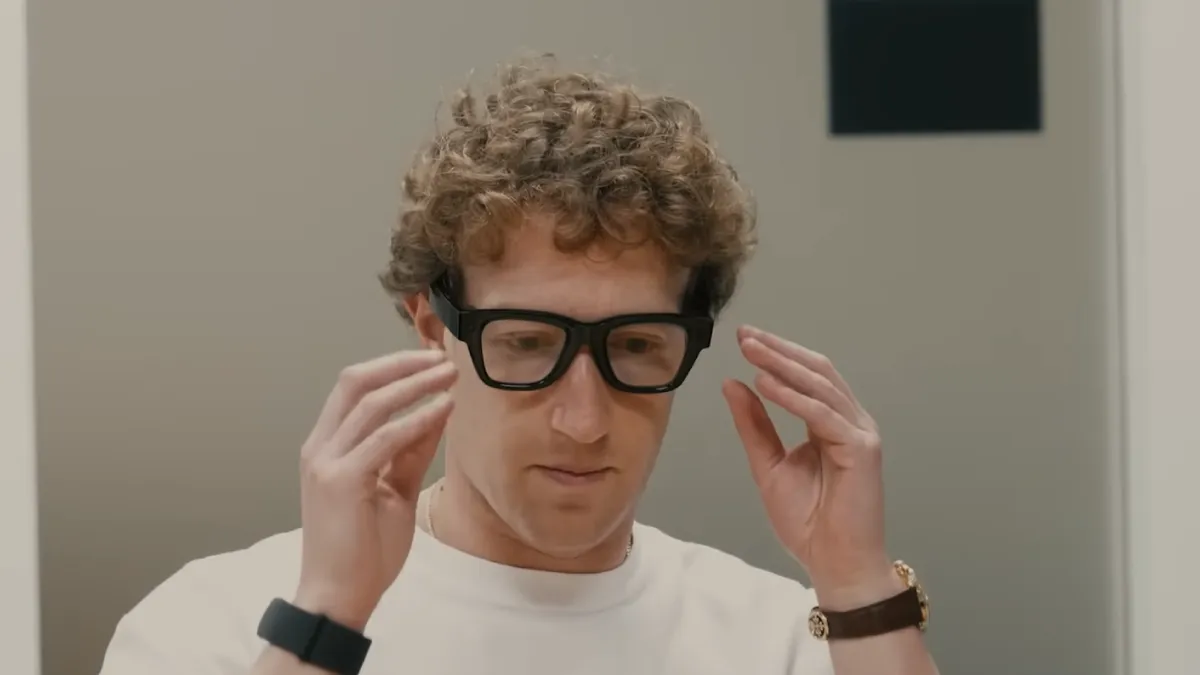
"Novel ideas and major steps forward rarely originate from established institutions alone. They came from the brothers in a bicycle shop who believed people could fly, the bookbinder's apprentice with no schooling who figured out how to generate electricity, and the kid in a garage who thought personal computers could be for everyone," espouses the Ray-Ban-ed one.
"We believe this will continue to be true. As everyone gains more powerful tools, each person will become more capable of shaping the future, not less."
Sure, we'll all be like the Wright Brothers or Michael Faraday. Got it. And superintelligence will be very empowering, and innovative, and we'll all want it. How do you plan to put it in our hands, Zuck?
"Rather than centralizing superintelligence, we should distribute it widely and give every person the ability to direct it. This has the potential to begin a new era of personal empowerment where individuals can use this powerful new capability to reach their full potential, pursue their interests, and improve their lives and the world more than ever before."

Same thing, but sure. Wait, though, because the Meta CEO has five starry-eyed predictions of how this'll all play out. They are:
1. "Everyone will have incredible tools for creation to express your ideas"
Here, Zuckerberg uses the example of his eight-year-old daughter, who is apparently already coding thanks to AI. Now they're designing a robot together. Lovely. The good news for the rest of us, though, is that "everyone will soon have invention superpowers." Can't wait.
2. "Everyone will have powerful tools to create new businesses"
This seems a lot like the expression and invention thing, but applied to the serious business of, err, business, and all the "ideas" that will now be easier and more feasible to implement thanks to superintelligent AI. "I predict that this will not only lead to much greater economic growth, but also more employment over time rather than less," says Zuck. He's not alone there, at the very least.
3. "Everyone will have a personalized tutor and coach with a PhD in every subject"
Because superintelligent AI will know all, presumably. It definitely won't be like current AI, which gets things wrong all the time. That's the old stuff. The new stuff around the corner is much better, promise. You'll be able to trust your education to it, even. I cannot see any flaws with this idea.
4. "Everyone will benefit from scientific advances and be able to contribute to scientific progress"
This one's about AI biotech advancements, and it gets real scary, real fast. Observe: "Since there is a long tail of health conditions and everyone's biology is different, people's direct involvement will help unlock personalized therapies and expedite trials to match the pace of invention and enable industry to move beyond focusing disproportionately on common diseases."
On paper, AI actually shows some promise in helping with medical research. I'm not entirely sold on the idea of handing over my medical data to AI developed by companies that have had some, shall we say, controversial data privacy issues in the past, though. Just a me thing?
5. Everyone will have free or affordable access to these tools
And finally, Zuck says that there'll be free versions of superintelligence that will be accessible to "billions of people," but for those who "want to pay to use more compute," there will be a dynamic auction mechanism that will "guarantee that everyone gets the lowest price possible... while also ensuring the capacity is used for whatever people collectively find most valuable."
The AI future will be created by all of us, you see. Not just massive corporate interests like Meta, or OpenAI, or any of those other companies you read about every week getting up to all sorts of dubious AI shenanigans. The power should be in the hands of the people. As we make it, when we decide. Don't you feel better already?
Wait, though, because there's more. "People and institutions with competing interests naturally check and balance each other to lead towards positive outcomes," says Zuckerberg. Therefore, if everyone's got access to superintelligence in some form or fashion, it'll all work out in the end.
I'm no economist, but that sounds awfully like "the free market will even itself out eventually." Which hasn't exactly worked out in practice, as far as many of us are concerned.
"People and institutions with competing interests naturally check and balance each other to lead towards positive outcomes"
Mark Zuckerberg
What Zuckerberg seems to be getting at, in among all the starry-eyed platitudes regarding our bright AI future, is that superintelligence should not be in the hands of just governments, businesses, and small numbers of individuals.
We're this close to a bright, kumbaya-singing, superintelligent AI future—as long as Meta keeps being the wonderful company it already is and Zuck's principles become sacrosanct. And we all buy the rhetoric, of course. Meta is helping to build the democratic AI future, so remember who you support in the dark times to come.

But what about jobs? Good news, everyone. It'll all be fine:
"People fear that automation will outpace individuals' capability growth, leading to job displacement followed by a difficult period as people learn new jobs," the rambling continues. "But there is no rule that AI must increase automation faster than it increases individuals' capabilities or demand for new skills.
"Recent statistics suggest it may be more likely that individuals' capability growth could match or outpace automation, in which case people will gain the ability to do many new things before their current jobs change. This would lead to a healthy balance and potentially even job growth."
Which flies in the face of the predictions of the head of the IMF, the AI-related layoffs at Amazon, and a number of other companies that are shrinking their workforces already as a result of AI implementation. It'll all even out, though, because those laid-off employees would have become data center specialists, or something really useful, if superintelligence had been around to educate them. Coming soon, we promise.
The good news, though, is that Zuckerberg recognises that it's not in "the world's best interests" for himself or his company to be the sole decision maker in how superintelligence is deployed.
This means that Meta's independent board of directors will review whether new models meet safety criteria, and Zuck encourages other companies to do the same. He also proposes for leading AI labs to provide training checkpoints for new advanced models (alongside technical staff) to governments, in order to help them gain security capabilities.

Zuckerberg is also in favour of more government policy around AI, through "close co-operation" between frontier labs and (presumably the US) government.
We should accelerate the ability to build infrastructure—whether that's energy, data centers, or silicon—and build trust and alignment with communities across the country
Mark Zuckerberg
As long as America doesn't lose its AI edge, of course. "It is also important for national security that the American AI industry continues to lead," says Zuckerberg. "We should accelerate the ability to build infrastructure—whether that's energy, data centers, or silicon—and build trust and alignment with communities across the country."
Stop protesting those data centers, folks. America needs to stay ahead, but we'll happily meet with you and tell you why. Methane turbines near your house? Nah, that's the old AI. In the future, it'll all be about working with the local community. Promise.
I could go on, but Zuckerberg's ramblings have taken up enough of my day—and if you've got this far, yours as well. Basically, superintelligence is going to be great, and Meta is working to ensure we'll all get a slice. Your jobs are fine (or will change, but will still be fine) AI companies are going to protect you from tyranny by building a democratic superintelligent AI future, and we can all sleep soundly in our beds at night.
Personally? I don't feel entirely reassured.

1. Best gaming laptop: Razer Blade 16
2. Best gaming PC: HP Omen 35L
3. Best handheld gaming PC: Lenovo Legion Go S SteamOS ed.
4. Best mini PC: Minisforum AtomMan G7 PT
5. Best VR headset: Meta Quest 3