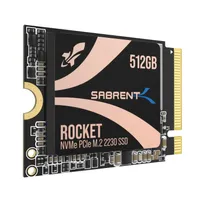
Improve your Steam Deck storage AND battery life for just $90. Who wouldn't want that?
If you're rocking either a 64GB or 256GB, Deck Sabrent's 512GB SSD upgrade is well worth the money.
Keep up to date with the most important stories and the best deals, as picked by the PC Gamer team.
You are now subscribed
Your newsletter sign-up was successful
Want to add more newsletters?
Every Friday
GamesRadar+
Your weekly update on everything you could ever want to know about the games you already love, games we know you're going to love in the near future, and tales from the communities that surround them.
Every Thursday
GTA 6 O'clock
Our special GTA 6 newsletter, with breaking news, insider info, and rumor analysis from the award-winning GTA 6 O'clock experts.
Every Friday
Knowledge
From the creators of Edge: A weekly videogame industry newsletter with analysis from expert writers, guidance from professionals, and insight into what's on the horizon.
Every Thursday
The Setup
Hardware nerds unite, sign up to our free tech newsletter for a weekly digest of the hottest new tech, the latest gadgets on the test bench, and much more.
Every Wednesday
Switch 2 Spotlight
Sign up to our new Switch 2 newsletter, where we bring you the latest talking points on Nintendo's new console each week, bring you up to date on the news, and recommend what games to play.
Every Saturday
The Watchlist
Subscribe for a weekly digest of the movie and TV news that matters, direct to your inbox. From first-look trailers, interviews, reviews and explainers, we've got you covered.
Once a month
SFX
Get sneak previews, exclusive competitions and details of special events each month!
Sabrent Rocket 2230 | 512GB | NVMe | PCIe 4.0 | 5,000MB/s read | 3,700MB/s writes | $149.99 $89.99 at Amazon (save $60)
The 512GB drive is a great middle ground for Steam Deck upgrades. Add the price of this and the $399 64GB Deck together, and you still save $160.01 over buying the top tier Deck. That's with well improved read/write speeds, too.
The main benefit, you would obviously expect, from upgrading the storage of your Steam Deck is an increase in the space you have to play games. But improving the battery life, too? That's the potential for Sabrent's Rocket 2230 drives, diminutive SSDs that are high in capacity and low in power consumption.
That's especially true of the 512GB drive which both improves on the performance of the top Steam Deck 512GB SSD shipped with the most expensive versions of Valve's handheld, and on the power it draws during game loads.
And when something doesn't need to operate at full power for as long, and doesn't need as much juice doing it, that's a double win for a device that needs all its battery power for keeping you gaming as long as possible.
At $90 the new Sabrent Rocket 2230 512GB is maybe a bit hard to 100% recommend as an upgrade if you've already got a 512GB drive in your Deck, however, but if those boot times are getting you down it's certainly an option.
You could still double your capacity with a 1TB version, which is just $170 right now, though it's not quite as power sipping as the half terabyte versions. Still, it's still got the extra loading speed, and doubling the capacity—at least—is a worthy endeavour in and of itself.
The upgrade process itself is relatively straightforward, thanks to Valve's desire to make the Steam Deck as open a platform as possible. Isn't that right, Katie?
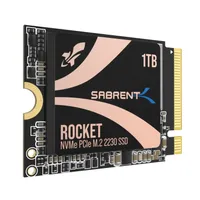
Sabrent Rocket 2230 | 1TB | NVMe | PCIe 4.0 | 4,750MB/s read | 4,300MB/s write | $269.99 $159.99 at Amazon (save $110)
This is the highest capacity version of our favourite 2230 form factor NVMe SSD for the Steam Deck. While you are paying a premium for handheld compatibility, pairing this with the cheap Steam Deck would save you $80.01 over the top capacity Deck, and double the storage space.
Keep up to date with the most important stories and the best deals, as picked by the PC Gamer team.

Dave has been gaming since the days of Zaxxon and Lady Bug on the Colecovision, and code books for the Commodore Vic 20 (Death Race 2000!). He built his first gaming PC at the tender age of 16, and finally finished bug-fixing the Cyrix-based system around a year later. When he dropped it out of the window. He first started writing for Official PlayStation Magazine and Xbox World many decades ago, then moved onto PC Format full-time, then PC Gamer, TechRadar, and T3 among others. Now he's back, writing about the nightmarish graphics card market, CPUs with more cores than sense, gaming laptops hotter than the sun, and SSDs more capacious than a Cybertruck.