March 30: Iakov Sumygin reached out to me to clarify that this Gaussian Splatting FPS project was very much a collaboration with artist Christoph Schindelar.
Schindelar spent multiple days scanning a real world location, before cleaning up the resulting data so it could be used for this demo. Iakov Sumygin then wrote the game logic.
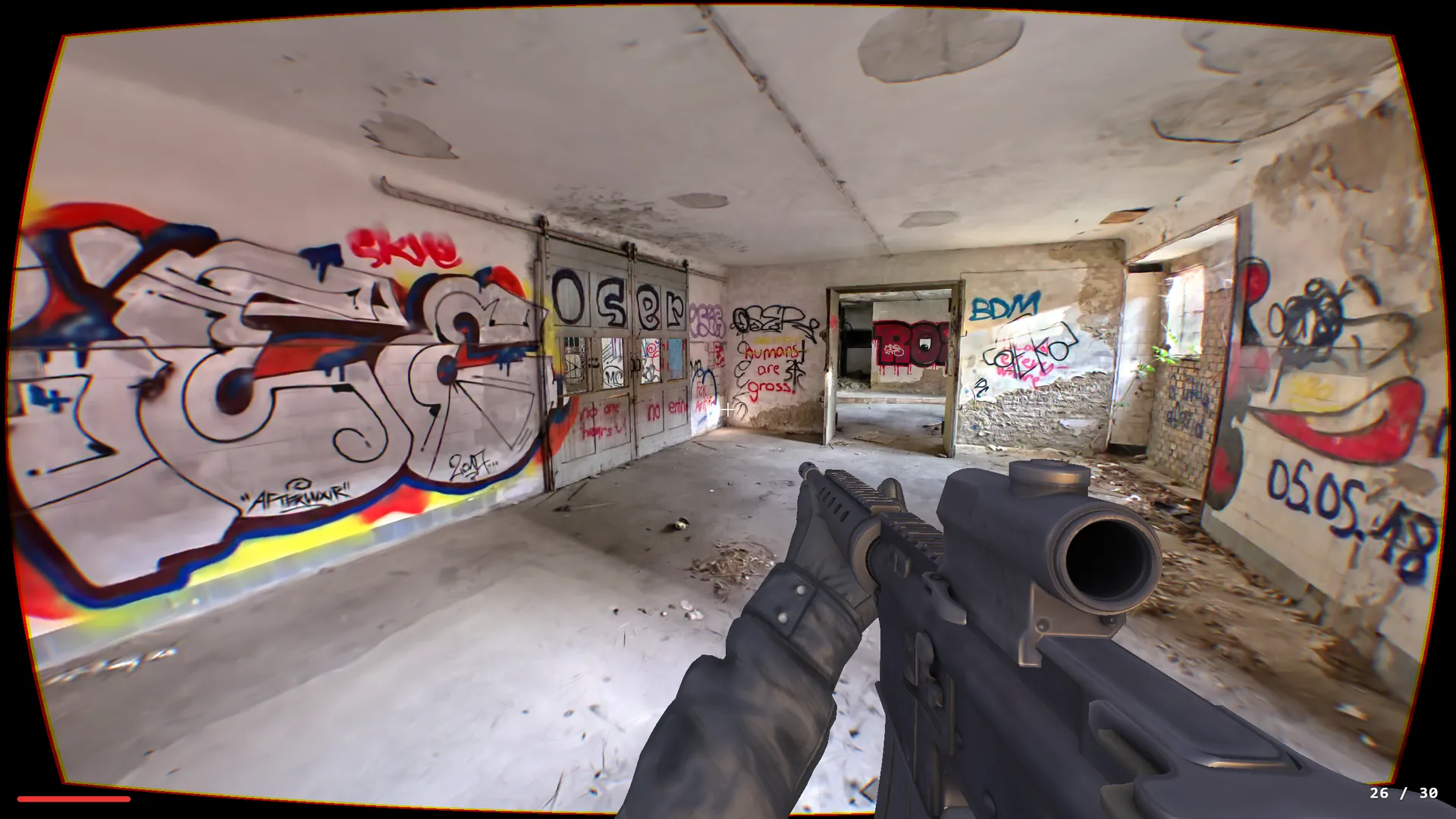
Original story, March 28: Believe it or not, but you can play a photorealistic FPS in your browser right now, even if you don't have a massive GPU. This simple FPS project doesn't exactly offer pulse pounding gameplay, but is instead head-turning for how it conjures a photorealistic environment without hogging your rig's resources.
The project was made by Iakov Sumygin, a software engineer at Snap Inc (the creators of SnapChat), and built using the company's browser-based game engine PlayCanvas. To create this itty bitty shooter's realistic environments, Sumygin used 'Gaussian Splatting', which combines multiple images of a real-world environment with camera position data, thereby creating a patchwork, virtual rendering of a space that can then be viewed from new angles (via Tom's Hardware).
It's a technique that ditches the polygons you'd typically use to create a virtual environment in favour of the voxel's cursed cousin, the Gaussian. To massively oversimplify, polygons are typically triangles with defined edges and Gaussians have much fuzzier edges.
Three Gaussians may not look like much on their own, but 'splatting' down millions of them can create a 3D scene that looks halfway between an interactive photo taken with an old iPhone and something almost impressionistic. For a more in-depth explanation, I'd recommend this blog post from Dylan Ebert (and just for fun, I'd recommend taking a look at the Gaussian Splatting subreddit).
Currently, this technique isn't often used in games as it only records how a space looks, and not its physicality. Sumygin explains: "Gaussian Splatting gives you photorealistic environments for free. The catch: a splat is just a cloud of oriented blobs—no triangles, no colliders, no navmesh, no lights. Drop a character in and they'll float through walls looking like they belong in a different universe."
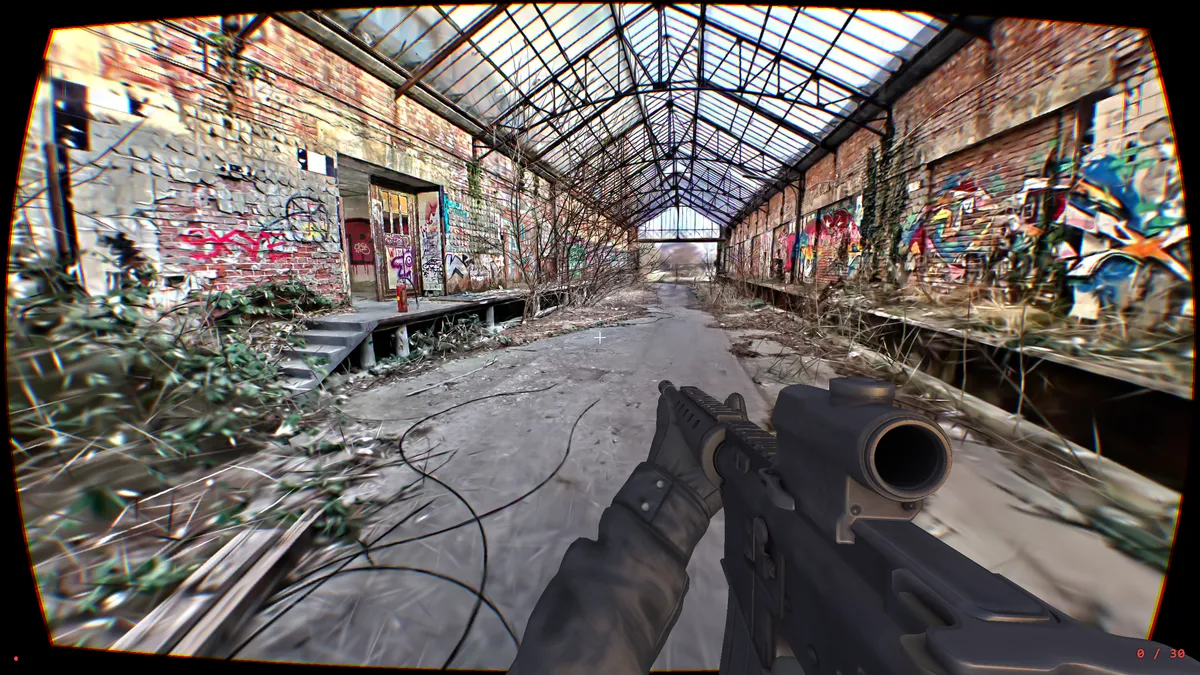
So, using his own specialised scripts, Sumygin generated a collision mesh, essentially creating 3D geometry from the purely visual scan. He also generated a navmesh so his vibecoded AI for the enemy NPCs could find its way through the play space, though I did manage to cause one of the enemies to get caught on the environment after deploying the elite gamer tactic of 'running away'.
It's more an interesting proof of concept than anything else, for sure. Still, this FPS project makes the case for crunchy, 'photo-quality' photorealism that may be more accessible for teams and projects that simply can't afford more expensive, resource-intensive approaches. My ageing hardware also looks forward to the rise of Gaussian Splatting within game development, especially in light of the price of GPUs these days.
1. Best gaming laptop: Razer Blade 16
2. Best gaming PC: HP Omen 35L
3. Best handheld gaming PC: Lenovo Legion Go S SteamOS ed.
4. Best mini PC: Minisforum AtomMan G7 PT
5. Best VR headset: Meta Quest 3