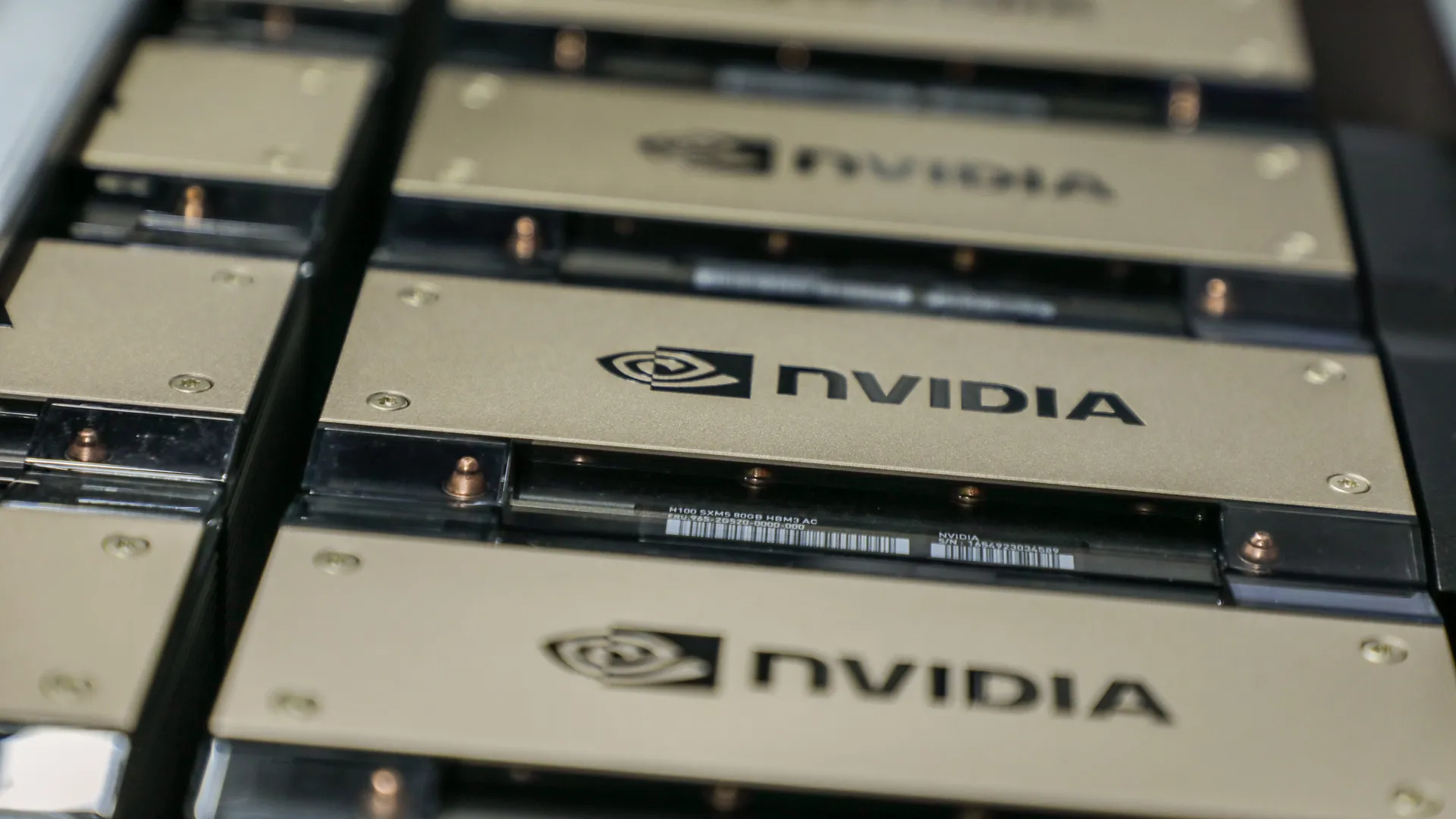
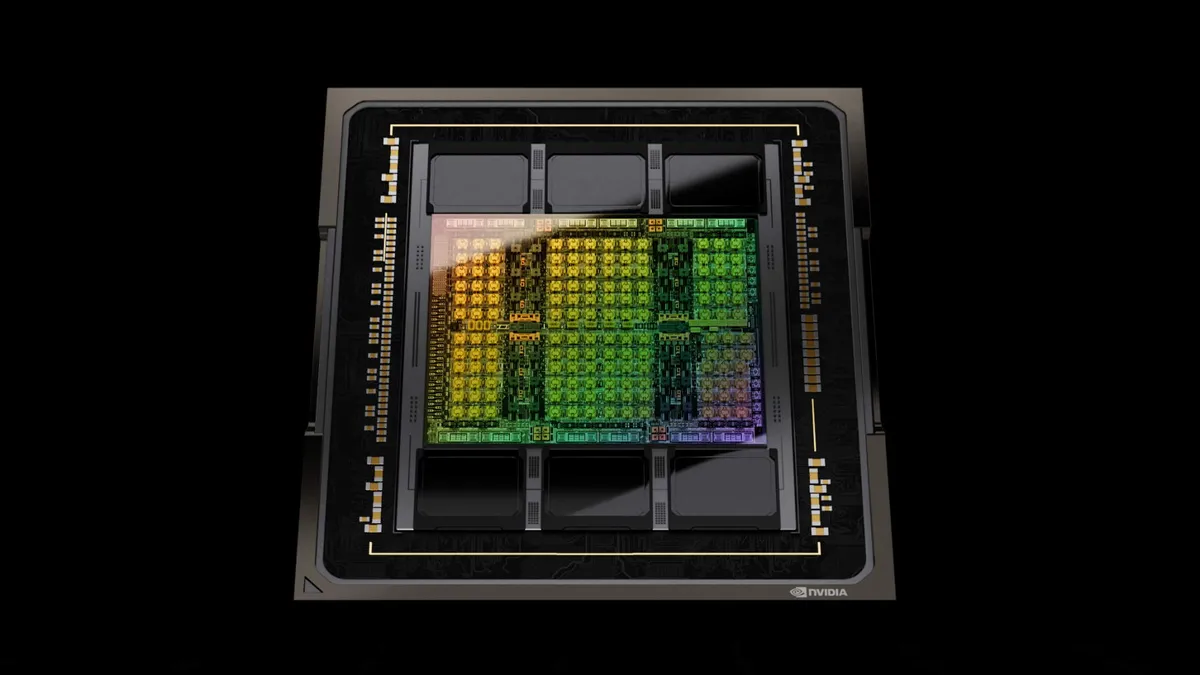
In the midst of a pretty strained trade relationship with China, US President Donald Trump recently took a jet full of tech leaders to the country to negotiate deals. The first of which appears to be the approval of sales of Nvidia's second most powerful AI GPU, the H200, to the region. The caveat is that it's just 10 firms getting them for now.
After initial reports suggested Trump forgot to invite the Nvidia head, Trump confirmed yesterday that Jensen Huang was, in fact, sat on Air Force One, alongside the likes of Elon Musk and representatives from Qualcomm and Micron. His goal was to "open up China so that these brilliant people can work their magic."
As reported by Reuters, Alibaba, Tencent, Bytedance, JDcom, Lenovo, and Foxconn are said to be among the companies allowed to purchase the chips. Lenovo is the only company to have confirmed as such to Reuters directly. Sources close to the matter say that approved companies can purchase up to 75,000 chips, though Chinese firms are reportedly still waiting on guidance from the Chinese government to see if the firms can actually take delivery of them.
Back in March, the Chinese government reportedly approved the import of H200 GPUs, with the US to set the cap, so this is a continuation of that same discussion. At the time, the proposed 75,000 cap would also include AI chips purchased from Nvidia's competitor, AMD, and it's not yet clear if this restriction has stuck.
Nvidia has wanted to sell its AI GPUs to the Chinese market for some time, but both the US and Chinese governments have been major barriers. Both countries have banned the product at different times, with the US wanting America to be dominant in the AI race and China wanting its AI to be less reliant on foreign goods.
By October last year, Huang noted that Nvidia is "100% out of China" and also argued, "it's important to be mindful that what harms China could oftentimes also harm America."
Just last month, Huang reiterated this, noting that Nvidia holds 0% market share and urged the US to export AI "like crazy".
As pointed out by Reuters, the Chinese market once generated 13% of Nvidia's total revenue, so that revenue hit would be noticeable to the company. The AI boom has led to it becoming the first-ever $5 trillion company, but it won't want to stop there. It's in Nvidia's best interest to sell as many of its chips as possible, and the US government will also see the benefits of those sales. The balancing act for the US now is giving enough chips to see a tangible revenue increase without giving so many that China can win the AI space race.
Chris McGuire, the Senior Fellow for China and Emerging Technologies, tells Reuters this deal is not in the best interest of the US. McGuire argues that more chips to China means fewer chips to US firms, and therefore fewer resources pumped into American AI. They say, "It is remarkable that President Trump keeps getting convinced to put Nvidia’s interest ahead of America’s."
Us PC gamers simply have to watch as both entities mop up as much cash as possible, as we wait for the price of memory to eventually come back down. Thanks, AI.
1. Best gaming laptop: Razer Blade 16
2. Best gaming PC: HP Omen 35L
3. Best handheld gaming PC: Lenovo Legion Go S SteamOS ed.
4. Best mini PC: Minisforum AtomMan G7 PT
5. Best VR headset: Meta Quest 3