I've owned an awful lot of ethernet cables in my life, in all sorts of colors. Black, blue, white, grey, yellow, green… even brown and red, I'm pretty sure. If you asked me what's the most common ethernet cable color outside black and white, I'd probably go with blue—but this weekend I learned that when ethernet was first designed in the 1970s, the first cables to use it were all yellow, for two primary reasons.
The first was that one of ethernet specification's creators, Rich Seifert, really liked yellow.
"It's my favorite color. I drove a yellow car, I have yellow furniture," Seifert said in a presentation at this year's Vintage Computer Festival titled History of Ethernet: Musings of an Early Networker. During the presentation he held up an original ethernet cable, clipped off a spool still in storage at his house, to demonstrate how bright it was back in the early 1980s when the technology was first rolling out. Specifically, ethernet was "1968 Corvette yellow," a tone I've learned car dudes refer to as "Safari yellow" to distinguish it from the other Corvette shades of the '60s and '70s.
The second reason Seifert pushed for ethernet cables to all be this specific shade of yellow was more practical than aesthetic, though, and it stemmed from the installation process at the time. While today ethernet is typically run over small twisted pair cables, it initially used a much bulkier coaxial cable that had to be physically connected using a vampire tap that physically "bit into" the metal cable, through its rubber shielding, to make contact. Ethernet's creators were worried about what might happen if you used one of those vampire taps on the wrong cable by mistake—a power cable, for instance.
"This stuff was strung up in ceilings, and it'd run all over the place and you'd drop taps down from the ceiling," Seifert said. "To attach a transceiver to this thing, it would clamp on, so you'd literally have to drill into the cable. There are a whole lot of cables up there in the ceiling. I did not want anyone drilling into a power cable. This would not be a good idea. So I wanted to make sure you could distinguish the power cable from the ethernet cable, so I made this thing as bright as I could possibly make it."
While Seifert's presentation from this weekend isn't online, an older version of the talk is, which covers most of the same ground. Here's the bit in question:

The ethernet spec was remarkably ahead of its time when it was first codified, supporting a 10 megabit per second capacity that computers wouldn't be able to saturate for years. It was also, at the time, a seriously power-intensive bit of computing technology. Ethernet controllers are now ubiquitous microchip elements we barely give a second thought, but in the early '80s you needed a pair of 9x12-inch circuit boards to the tune of $3,000, and they used something like 60 watts of power.
Today a Raspberry Pi 5—a whole-ass computer, ethernet controller included—runs on a 27 watt power supply.
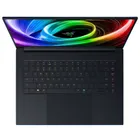
1. Best gaming laptop: Razer Blade 16
2. Best gaming PC: HP Omen 35L
3. Best handheld gaming PC: Lenovo Legion Go S SteamOS ed.
4. Best mini PC: Minisforum AtomMan G7 PT
5. Best VR headset: Meta Quest 3