


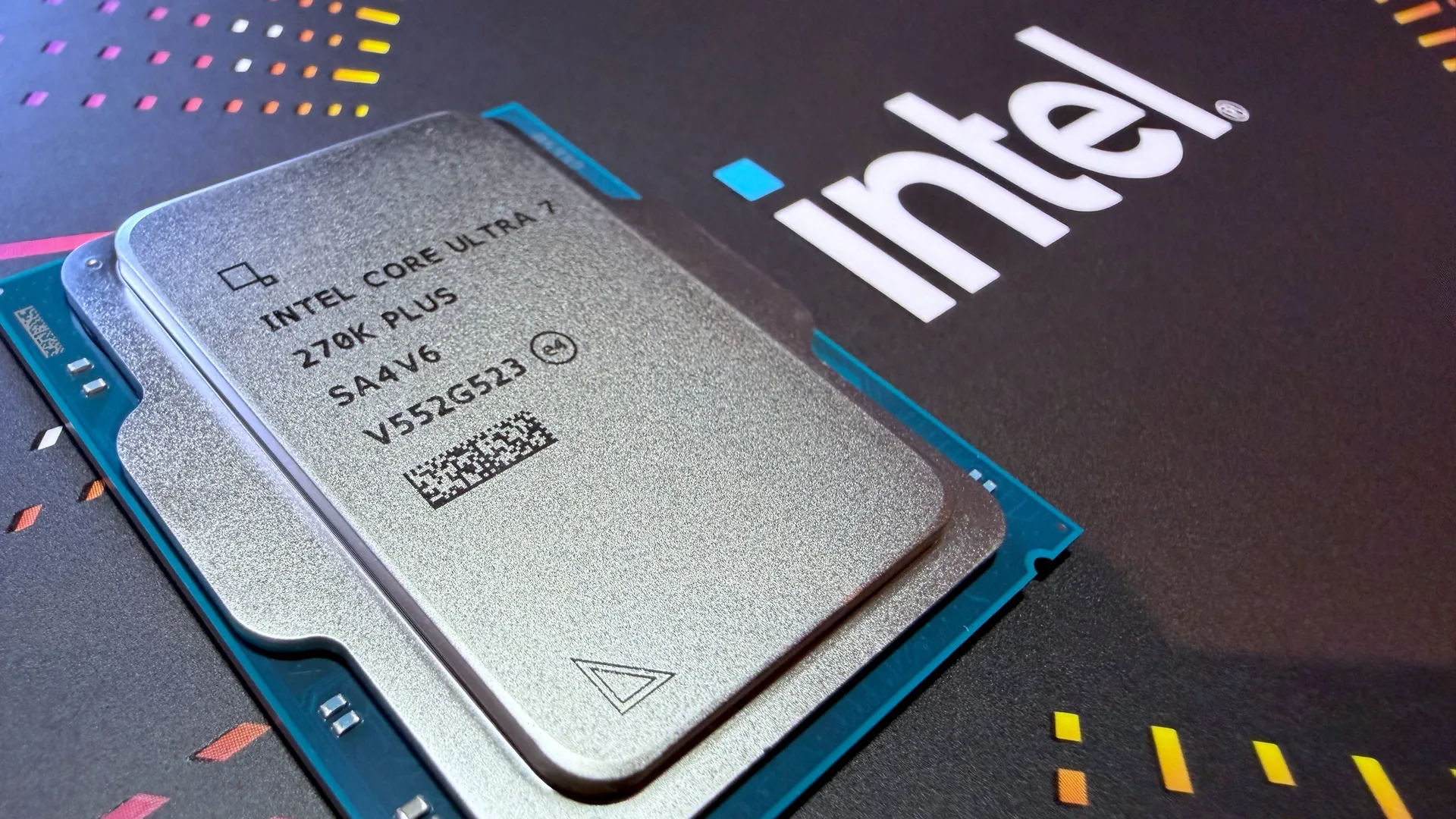
Intel seems pretty confident about its next generation of desktop chips. The company's top brass just got off the phone with shareholders to discuss how much money it made last quarter (TL;DR: not enough) but more interestingly noted a few tidbits to keep us gamers on the hook for a forthcoming announcement about Nova Lake at CES 2027.
First off, yes, CES 2027 is when we're reportedly going to hear more about Nova Lake. That takes place at the start of January. I feel we'd usually hear something ahead of the Christmas break—a vanguard of high-performance chips—but I guess the memory crisis and a sales slump saw to that.
"Nova Lake, our first Intel 18A-P client product, is tracking ahead of schedule, with design wins expected to be twice those of Panther Lake at launch," Lip-Bu Tan said (transcript via Seeking Alpha). "We look forward to sharing more at CES in January."
That's another of the disclosures: Intel will be using the 18A-P node for at least parts of Nova Lake. That should be a step-up for desktop chips: existing Panther Lake and Wildcat Lake chips are built using the 18A node, but they're only on mobile, while existing Arrow Lake chips, such as the Core Ultra 9 285K, are built using TSMC's N3B node.
18A-P promises "9% higher performance at iso power or more than 18% lower power at iso performance."
Yet what really piques my interest is this comment from David Zinsner:
"As we go into next year, we'll have Nova Lake. And I think the important aspect of Nova Lake is we've had a bit of a hole in our portfolio for high-end desktop, and Nova Lake filled in that gap. So I would expect us to do pretty well on a mix basis because we should see better traction on the high-end desktop as well."
High-end desktop, or HEDT, is not something that Intel has explicitly offered for a long time. We're going back to Cascade Lake-X in 2019, and even those were kinda poorly received for being a bit 'meh'. Now, I'm not sure this from Zinsner amounts to a promise of an entire lineup of HEDT chips beyond the usual gaming chips, as the Core X-series once was, or is more a way to say, 'hey, we've got fast cores and lots of them in Nova Lake'.
Either way, it sounds like a good thing, especially as AMD currently has the high-end market pretty much wrapped up with its X3D chips. Arrow Lake didn't meet expectations, and Intel has been lagging behind in terms of gaming performance for a while.
| Header Cell - Column 0 | P/E/LP-E Cores |
GPU EUs |
TDP (PL1) |
bLLC cache |
|---|---|---|---|---|
Core Ultra 9 4970K BFC |
8/16/4 |
32 |
125 |
Yes |
Core Ultra 9 4950K |
8/16 |
23 |
125 |
No |
Core Ultra 9 4900 BFC |
6/12/4 |
32 |
65 |
Yes |
Core Ultra 7 4870K BFC |
8/12/4 |
32 |
125 |
Yes |
Core Ultra 7 4850K |
8/12 |
32 |
125 |
No |
Core Ultra 5 4650K |
6/12 |
32 |
125 |
No |
Core Ultra 5 4650KF |
6/12 |
0 |
125 |
No |
We know Intel has an answer to 3D V-Cache on the way with Nova Lake: the so-called Big Last Level Cache (BLLC). Rumours suggest we can expect a core- and cache-happy Core Ultra 9 4970K BFC to lead the charge here.
Zinsner seems to think these chips will reverse the current trend of Intel ceding market share to AMD: "We do feel like we go into the year as a market share gainer with our Nova Lake portfolio."
Time will tell, but these all sound like good reasons to stay tuned for CES in the new year. The Las Vegas show runs from January 6 to January 9.
1. Best overall:
AMD Ryzen 7 9800X3D
2. Best budget:
AMD Ryzen 5 5500
3. Best mid-range:
Intel Core Ultra 5 250K Plus
4. Best high-end:
AMD Ryzen 9 9950X3D
5. Best AM4 upgrade:
AMD Ryzen 7 5700X3D
6. Best CPU graphics:
AMD Ryzen 7 8700G