Patent law is often confusing, especially when the alleged patent infringement is from none other than Intel. In just one of many twists in a story spanning almost a decade, the US appeals court has restarted proceedings for VLSI to take Intel back to court, continuing a $3 billion feud.
As reported by Reuters, the decision was given on April 14 in California. This decision is not inherently proof of wrongdoing and is not a judgment from the courts. It simply suggests that Intel will once again be fighting its case against VLSI in the future.
Effectively, VLSI owns many patents for techniques for handling speed, power, and architecture in processors. The company has alleged since 2017 that these are infringed upon in Intel's modern processors. These patents are ones that VLSI managed to get its hands on from the likes of Dutch chipmaking company NXP Semiconductors and Freescale Semiconductors.
The case currently being fought here is for patent 8,566,836, which was originally filed by Freescale Semiconductor Inc in 2009. VLSI sued Intel for infringement regarding this patent and seven more since 2017, but '836 is the issue of the most recent appeal. As described in the case, '836 "relates to choosing one or more cores of a multicore processor to execute a particular task, for example, based on whether the task must be executed on a single core or can be executed across multiple cores."
However, this has been a long and winding road for the two entities, with both going blow for blow. In 2021, VLSI won a court case against Intel for the sum of $2.18 billion, with $675 million coming from patent 7,725,759, and the rest coming from 7,523,373. This case was reversed later, and Intel was not sent that bill.
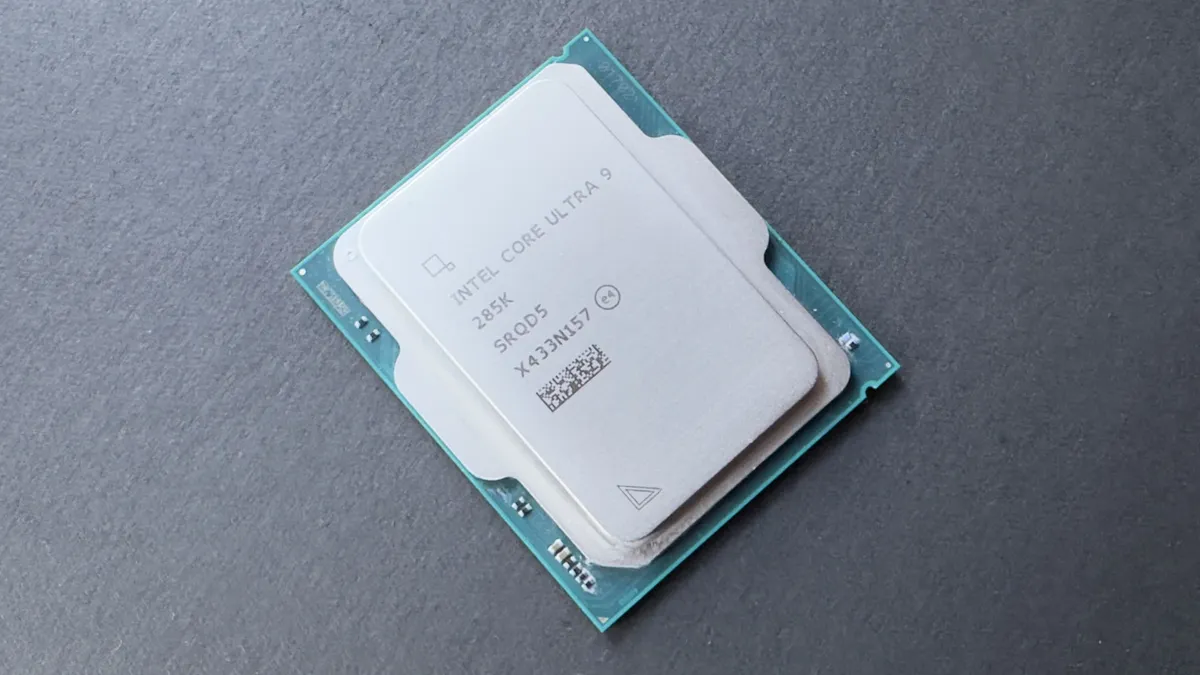
Intel was originally stopped from appealing this due to an ongoing legal dispute, but was allowed to do so when it joined two separate petitions against VLSI's patents filed by other companies. In other words, it managed to get around the appeals processes by tacking itself onto others' complaints.
In 2022, Intel was once again hit by a big bill from VLSI (at $948.8 million), which Intel also challenged.
The new appeal from the court rejects Intel's previous arguments to appeal the original '836 verdict (yeah, I know. It's confusing). The conclusion of the decision argues that further proceedings are necessary in this case. All this is to say that despite many back-and-forths between the two companies spanning almost a decade, we don't seem to be done yet.
And though Intel was making a net income of $5.9 billion by the last quarter of 2020, it failed to make a profit last year. With Intel betting big on the likes of AI and its latest processors, legal battles over chip architecture patents are an expensive affair. It'll just have to hope it wins in the end.
1. Best CPU: AMD Ryzen 7 9800X3D
2. Best motherboard: MSI MAG X870 Tomahawk WiFi
3. Best RAM: G.Skill Trident Z5 RGB 32 GB DDR5-7200
4. Best SSD: WD_Black SN7100
5. Best graphics card: AMD Radeon RX 9070