After being shown off in prototype form at CES earlier this year, and even before then, MSI's flagship Maestro 900R chassis is just a few months away from release. So, er, get saving because when it does release in Q3 it's going to cost a hefty $699.
But it is a lot of case, and apart from a strangely exposed filter on the roof that slightly messes up the premium aesthetic, it's maybe a surprisingly impressive case from MSI. I think the thing that really stands out to me, aside from maybe the triple-sided panoramic glass frontage and the sheer size of the thing, is the completely removable motherboard tray.
To be honest, I found its placement a little odd when I first laid eyes on it at MSI's HQ this week, seeing it from the back with the PSU positioning exposed. Because the removable tray doubles as a kind of open test bench when you remove it from the case, the PSU is mounted directly behind the motherboard.
That looks strange because it's completely enclosed on all sides, with the power cable snaking out from inside the case. But it is side-mounted so most of the PSU's fan is exposed to the chassis' backpanel vents, so it is still getting some fresh air.
To be honest, when you've spent $699 on your case you're probably not just going to use the central tray as a test rig and toss the rest away, but it's still a mighty useful feature for a DIY PC builder, side-stepping the need to stick your new motherboard on its box, with the CPU, RAM, and PSU plugged in to see if it starts up. Now, you can mount your motherboard securely, along with your CPU, PSU, and RAM and make sure it's working before slotting the entire thing into your waiting case.
Though if you're combining it with the Coreliquid E15 360 AIO chip-chiller, that's not something you're going to be able to mount outside the case owing to its hoofing great 110° wraparound pump screen.


The Maestro 900R is a real showpiece chassis with that panoramic fishtank design, though some of the finer details would hold me back from dropping near $700 on the case myself. The fact that top cover, mirroring the design of the bottom edge, doesn't go across the full length of the case means that a large part of the mesh filter is fully on display at all times. And the cover itself feels a little plasticky, too.
I am very taken with that central, pull-out test bench though.


If that's too rich for your blood, too, the more affordable MPG Maestro Vixta might be more your speed. It's got an innovative floating base design, with a full 75 mm clearance intake space at the bottom of the case allowing for greater airflow coming into your machine.
It comes in wraparound tempered glass design, or a dedicated airflow version with dual 160 mm fans mounted in the front. There is also an optional 120 mm intake fan you mount above that space to pull in the cool air. Though, realistically, that space under the case is just going to get filled with discarded USB sticks, or pens, scraps of paper, old sandwiches, etc.
Or maybe that says more about my desk habits than anything else.
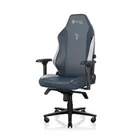
1. Best gaming chair: Secretlab Titan Evo
2. Best gaming desk: Secretlab Magnus Pro XL
3. Best gaming headset: Razer BlackShark V3
4. Best gaming keyboard: Asus ROG Strix Scope II 96 Wireless
5. Best gaming mouse: Razer Viper V4 Pro
6. Best PC controller: GameSir G7 Pro
7. Best steering wheel: Logitech G Pro Racing Wheel
8. Best microphone: Shure MV6 USB Gaming Microphone
9. Best webcam: Elgato Facecam MK.2