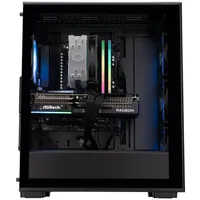
Did you know that Amazon's Big Spring Sale is on right now? Well, if you're on the hunt for a new gaming PC, then don't bother with any of Mr Bezos' bargains, because the best deal for a Radeon RX 9070 XT rig can be found elsewhere, like this ABS Stratos Ruby system for $1,665 at Newegg.
- Join us on WhatsApp for daily deals, direct to your phone.
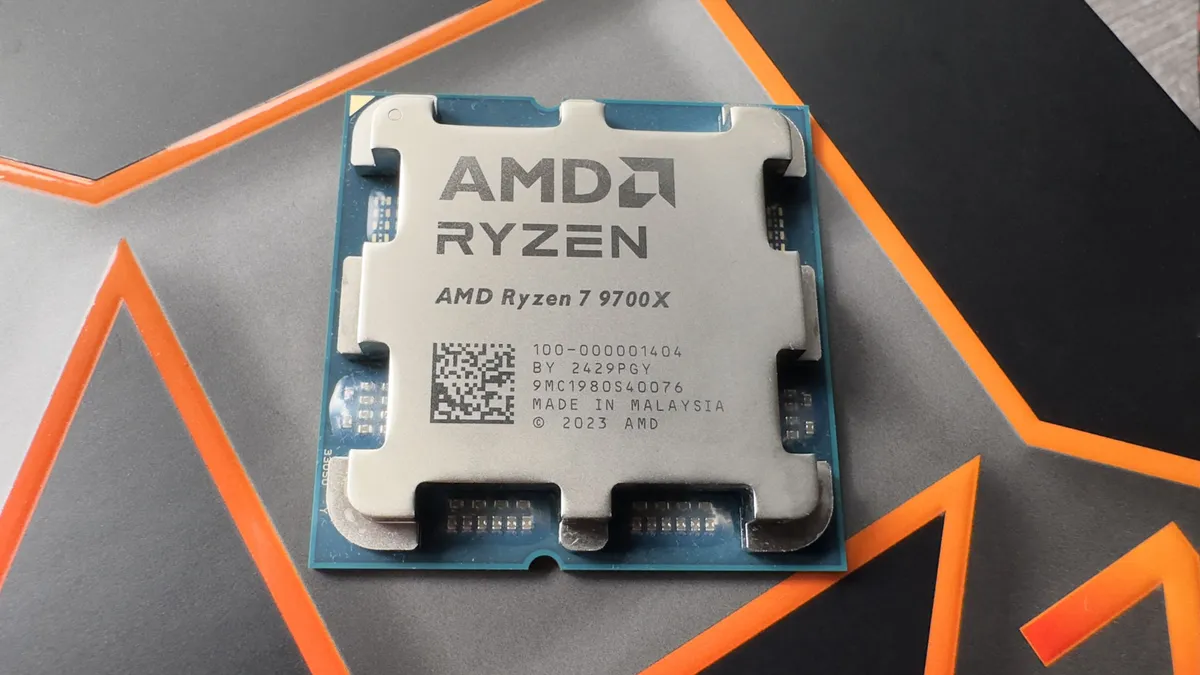
Anyway, let's run down the list of goodies you're getting here. First up is the central processor, an AMD Ryzen 7 9700X. Until Intel showed up with its Core Ultra 5 250K Plus, this was the best mid-range CPU you could buy, but even though it's lost that crown, it's still a very good chip. With eight cores, 16-threads, a boost clock of 5.5 GHz, 32 MB of L3 cache, and a TDP of just 65 W, it'll handle games and content creation tasks without a fuss and keep cool while doing so.
For graphics duties, you get AMD's best graphics card in years: the Radeon RX 9070 XT. It's much faster than its paper specifications suggest it should be, thanks to its RDNA 4 architecture, and because it sports a pile of matrix cores (equivalent to Nvidia's Tensor cores), it fully supports AI-powered FSR (aka FSR 4, FSR Redstone, whatever AMD's calling it these days).
You'll need to lean on upscaling to run the latest graphics-heavy games at 4K, but it's worth doing that anyway, just to get better anti-aliasing. At 1440p, though, it absolutely flies, and you can crank up quality settings to the max, even ray tracing. It can struggle a teeny bit when path tracing is enabled, but that tanks most GPUs anyway.
Due to the global memory and storage crisis, you only get 1 TB of PCIe 4.0 NVMe storage, but you could use that 10% discount as payment for an extra SSD (shockingly, $180 isn't enough for a 2 TB drive), and the motherboard has a total of three M.2 slots, so upgrades are possible over time.
Despite the paucity of storage, you do get a decent amount of system memory: 32 GB of DDR5-6400. Given how expensive DRAM is now, it might seem odd to see such a large quantity of fast memory here, but the 6,400 MT/s transfer speed is a bit of a clue. AMD Ryzen chips have a 'sweet spot' of 6,000 MT/s, and such memory is in high demand.
With some Ryzen and motherboard combinations, using DDR5-6400 will cause the memory controller to run at half speed (i.e. a UCLK rate of 1,600 MHz), instead of enjoying a nice 1:1 ratio (3,000 MHz). However, with the latest BIOS updates, many Ryzen 9000-series processors can cope with 6,400 MT/s at a 1:1 ratio (3,200 MHz UCLK).
In other words, this ABS Stratos Ruby could be running at 'full speed' or 'half speed', but there's no way of knowing until you have one in your hands. It's not a massive issue if it's the latter, though, as you could always try to force the memory to run at 6,000 MT/s in the BIOS.
Personally, I'd just leave it all alone and just enjoy gaming on very high settings to keep everything focused on the graphics card.
👉Check out all of Newegg's gaming PC deals here👈
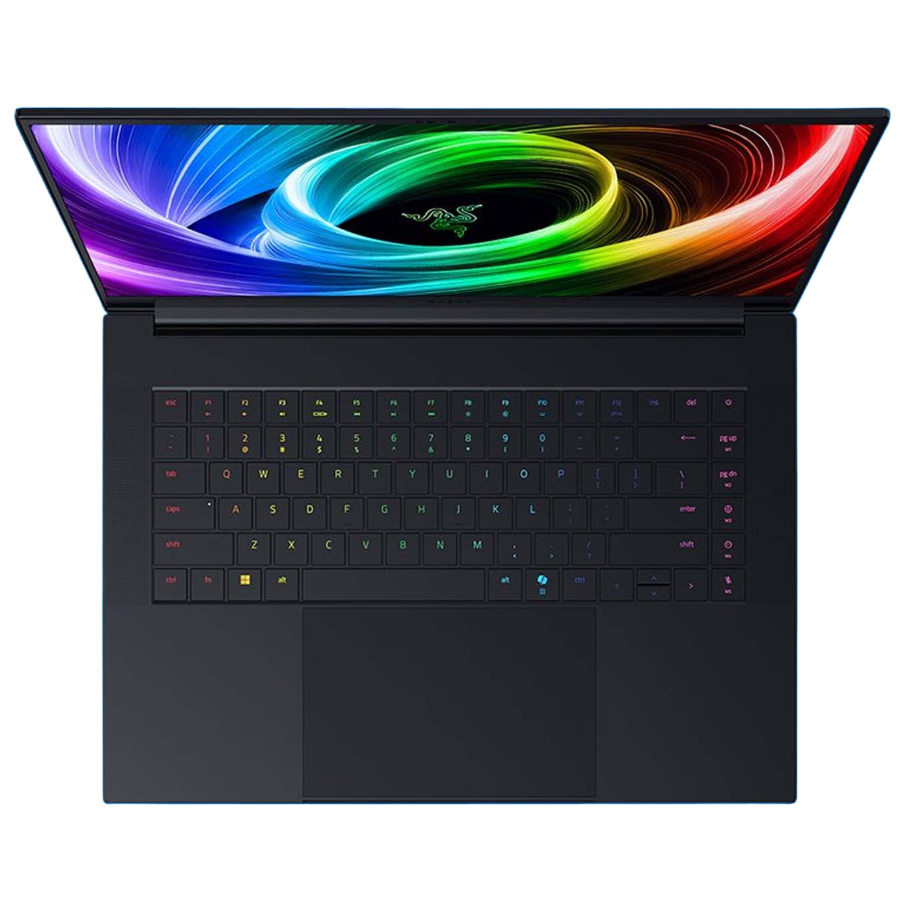
1. Best gaming laptop: Razer Blade 16
2. Best gaming PC: HP Omen 35L
3. Best handheld gaming PC: Lenovo Legion Go S SteamOS ed.
4. Best mini PC: Minisforum AtomMan G7 PT
5. Best VR headset: Meta Quest 3

You must confirm your public display name before commenting
Please logout and then login again, you will then be prompted to enter your display name.