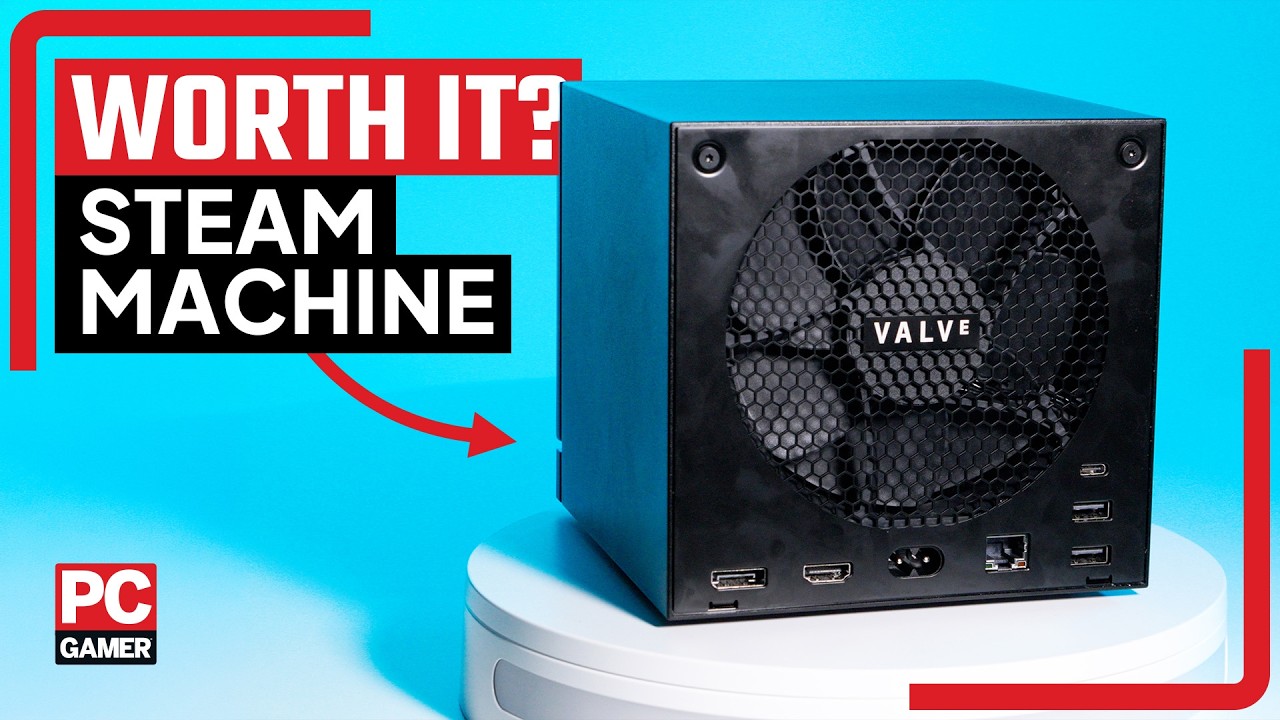
I've just finished reviewing the Steam Machine, Valve's TV-friendly gaming PC for the masses. I think that was the initial idea, at least. Unfortunately, Valve's magic box has, thanks to the memory crisis, ended up with a price tag that simply doesn't add up.
For those who haven't heard, the base-level, 512 GB, non-Steam Controller-including Steam Machine retails for $1,049. Add a controller into the mix, and it comes in at $1,128. Back when we first took a whirl at predicting Steam Machine pricing, our average guess was around $525 for the base model.
Oh, how wrong we were. To be fair to myself, Valve, and my hardware team colleagues, this was back in November of last year. The pre-RAMpocalypse times, as we now call them. Before the AI server market swallowed memory module manufacturing capacity, and consumer electronics began to climb rapidly in price.
We adjusted our guesses more recently, and actually came kind of close, for the most part.
Still, the final pricing has me all hot and bothered, even if it's not far off what we eventually predicted. Because the Steam Machine, thanks to some lower-spec internal components now sold for high prices, represents poor value—and I feel like it deserves more than that.
And I haven't even got to the 2 TB model I reviewed yet, which is $1,349 without a controller, and a wallet-trembling $1,428 with one. That's a huge sum of money for a machine that struggles against budget gaming PCs, some of which come from the previous generation.
Gaming benchmarks
| Product | Value |
|---|---|
| Steam Machine | 21 Avg FPS, 17 1% Low FPS |
| AtomMan G1 Pro | RTX 5060 | AMD Ryzen 9 8945HX | 44 Avg FPS, 38 1% Low FPS |
| Lenovo Legion Tower 5i | RTX 4060 | Intel Core i5 14400F | 33 Avg FPS, 25 1% Low FPS |
| Custom PC #11 (issue 413) | Arc B570 | Intel Core Ultra 7 265K | 28 Avg FPS, 24 1% Low FPS |

It's not like the Steam Machine makes up for its shortcomings with a completely smooth user experience, either. It feels, at the time of writing, a little half-baked. I still found myself hunting through the settings menus to configure it properly on my home TV. I still had to enable compatibility game settings to get past some Linux… quirks.
It's got crunch, in places where, for the money, I'd hoped it would be more refined. It's virtually a premium product now, after all. But it doesn't quite feel like it in terms of the overall user experience. And it doesn't run demanding games like it, either.
In many ways, this isn't Valve's fault. The Steam Machine's diminutive, RDNA 3-graphics powered specs sheet clearly indicates that it should have been affordable, and was designed with a lesser price in mind. It should have been a lightweight, somewhat-entry-level machine that lives underneath your TV, capable of running indie games with little issue, and demanding ones if you were prepared to make significant compromises. For reasonable money.


I'd be pretty keen on it then, even with its flaws. Something deep within my heart wanted another Steam Deck-like PC gaming hardware moment. A budget machine with just enough go (and just enough convenience) to make it attractive. Another entry point into this expensive hobby of ours. A people's champion.
But no, it's got RAM modules. And an SSD. And therefore, it needs to be much pricier now than it was supposed to be when it was first specced out, if Valve is to make any money on it at all.
As a hardware reviewer, my job is to provide consumer advice. There's no point in recommending that you, the reader, buy something simply because it's interesting—without taking into account the value you get for your money. And at this price, the value proposition simply doesn't add up.

In some sense, I don't think my take on all this really matters. The Steam Machine will sell, I'd put good money on that. There are enough well-heeled enthusiasts out there to swallow up whatever launch stock Valve has on offer, even if it ends up being more of an executive-level desk toy than the great equaliser the rest of us might have hoped for.
It won't be a catastrophic failure for Valve, of that I'm fairly certain. But, given all of the above, the Steam Machine has, to my mind, become a damning representation of where we are in regards to PC gaming hardware in 2026.
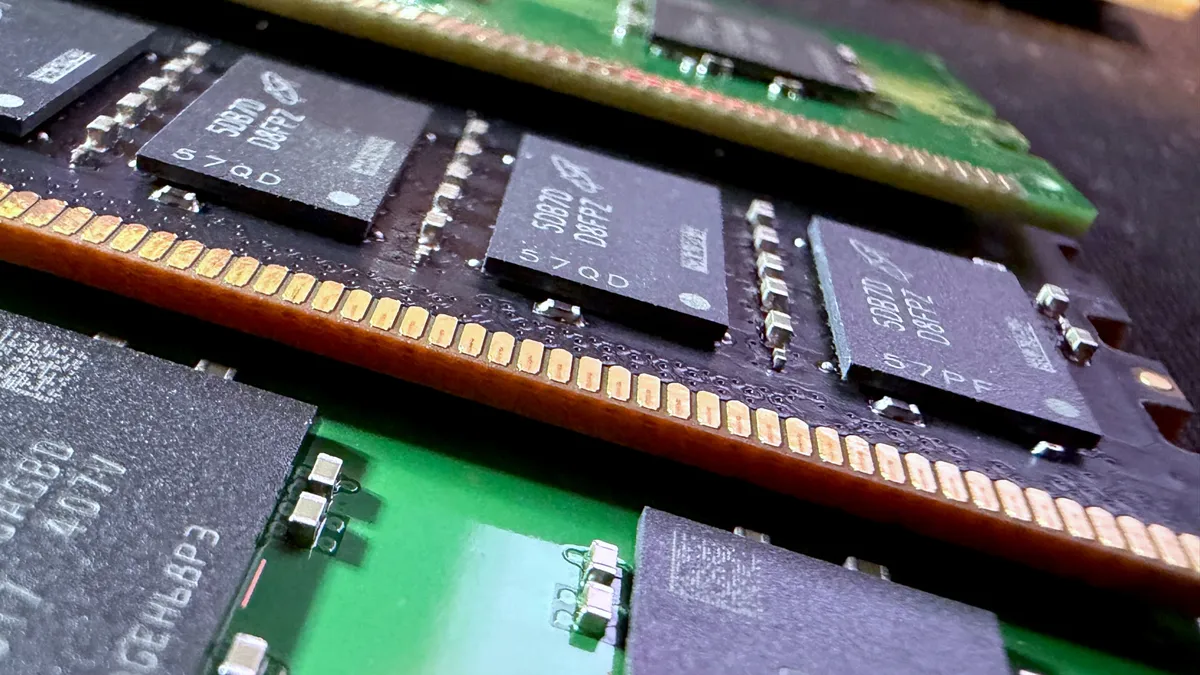
We now live in a world where we're paying serious sums for meagre specs. And given that the memory crisis is expected to rumble on (and perhaps even worsen) into 2027 and beyond, this may be just the beginning of our woes.
I hate that. I hate that the AI-demand behemoth is pricing out average gamers from reasonably priced hardware, and reasonable hardware upgrades. I hate that I'm forced to give an interesting, if flawed, machine a lower score because it simply doesn't make any value-based sense—whereas for the right price, it just might.
Valve has worked really hard on the Steam Machine, and that's obvious to see. Even if it does feel underpowered, and a little rough around the software edges. But when all's said and done, I simply wouldn't spend this much money on one. And that, as much I wish it wasn't the case, is the truth.

1. Best gaming laptop: Razer Blade 16
2. Best gaming PC: HP Omen 35L
3. Best handheld gaming PC: Lenovo Legion Go S SteamOS ed.
4. Best mini PC: Minisforum AtomMan G7 PT
5. Best VR headset: Meta Quest 3