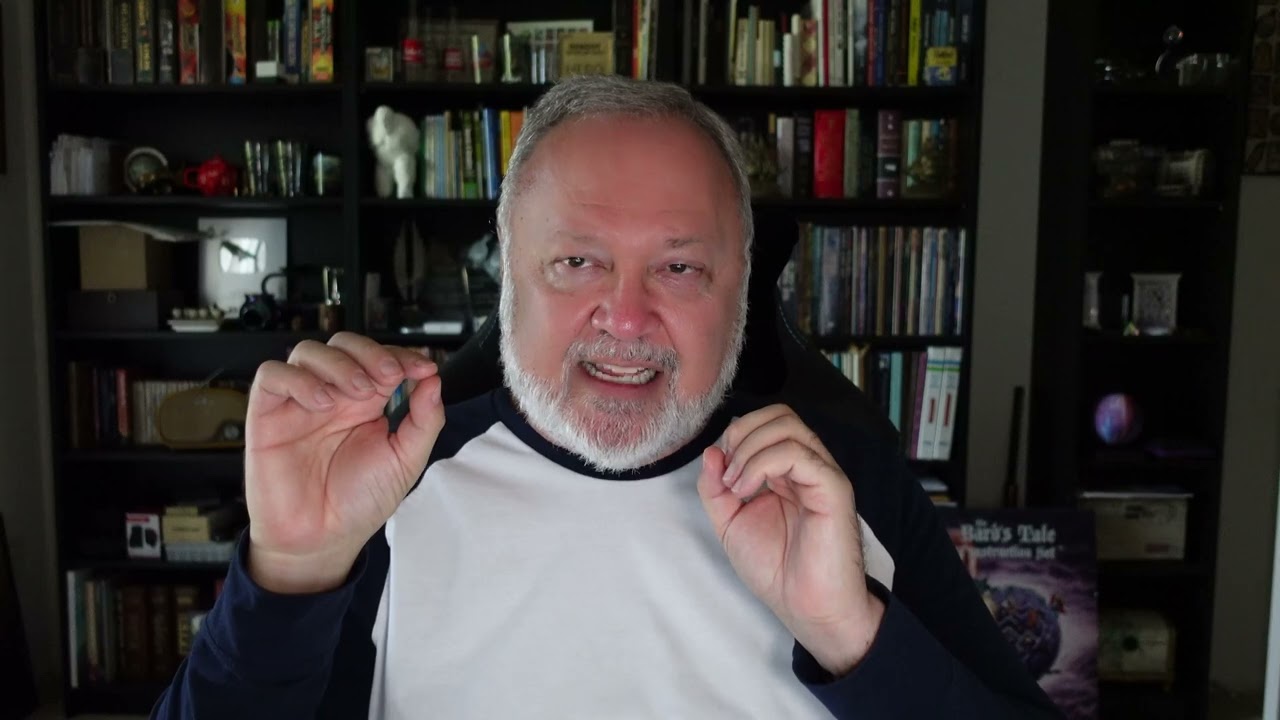
In a new video on his YouTube channel, veteran RPG designer Tim Cain outlined how he's seen the internet change games and game development, from the first message boards to the ubiquity of streaming content. As with everything, there are pluses and minuses, but he seemed deeply concerned with the state of commentary about and around games.
Charting overall progress, Cain describes a trend from possibility to restriction for developers, and open to closed-mindedness on the part of gamers. Absent a unified discourse, Cain thinks the 1980s allowed for a much more freeform environment for developers, one without calcified genres and largely free from the burden of consumer expectation.
Cain said that the late '90s was when he first noticed a shift in gaming tastes due to the internet, with the proliferation of message boards and guides supplanting an earlier DIY ethos where the only supplemental reading to be had was a game's manual and maybe a print magazine—like PC Gamer, say. 32 years strong, baby.
The next seismic shift, according to Cain, was the rise of video content and influencers. With the former, Cain notes that the importance of clips and streamability has affected what gets made and how developers think: "What part of our game would make for good clips," as he put it. This has always been a struggle for me as a CRPG fan: Most of them make for sucky videos, thanks to the zoomed-out perspective and walls of text. No part of a CRPG makes for good clips, I'm sorry to say.
Much of the video was devoted to how Cain sees trends in videogame tastemaking. In particular, he argued that parasocial relationships and alignment with preferred influencers have supplanted informed, critical review for most gamers.
"Many gamers don't even look to influencers for reviews, they look to influencers to be told what to think about the games," said Cain. "People don't form opinions from the online video, they're handed an opinion from the online channel they're watching.
"I've seen reviews go from 'this game has less combat and more puzzles and dialogue for you to interact with than this other game,' to, 'This game is stupid and slow -paced and made for casuals, I think you should skip it.' That's a huge difference in how games are presented. They find someone they just like, and then that person's opinion becomes their opinion."
Cain allowed that an alignment of taste is actually a healthy, normal thing to look for in a reviewer: If you know you share preferences with someone, it makes sense to seek out their opinion when you're thinking of buying a game.
But as Cain notes, this balkanization goes beyond preference and fun into that generalized moralizing and hysteria you see around game design, the phenomenon of people having extremely strong opinions about games they will never play. "More people seem to be abdicating their own judgement to that of people they see online," said Cain. "I don't want to think about it, you tell me what I should think about it."
Cain didn't mention this, but I was reminded of how everyone cheers for or against the concurrent player metrics of games they don't play, but either enjoy or despise the vibes of. Cain argued that designers, in turn, can be incentivized to place an undue emphasis on how individual influencers might react to their work. "It's probably not a healthy way of designing a game," said Cain.
As for what's next, Cain said he has "no idea what the 2030s are going to be like." Will it be further entrenchment and siloing, or a conscious consumer reaction against the current moment? I know I'm hoping for the latter, while the former is almost guaranteed to happen.
But I think we can all agree on one thing: If you abdicate your judgement to anyone on the internet, make it the handsome, charming, and informed writers of PC Gamer. Our opinions can be your opinions, as long as you keep clicking on those links.