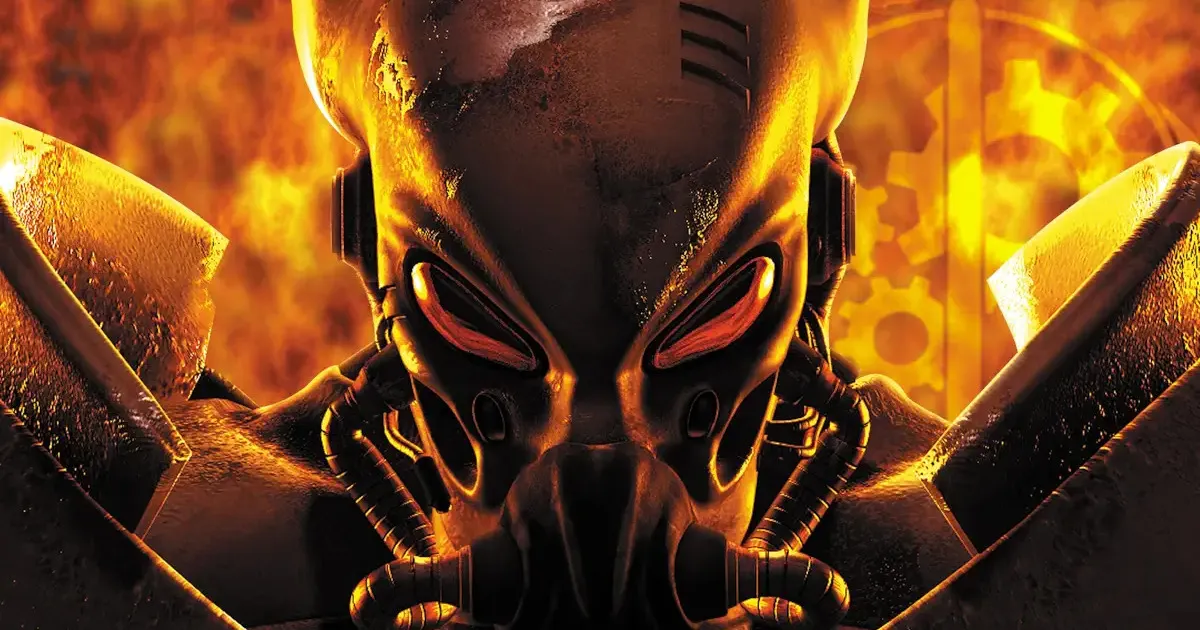
The Fallout lineage roughly splits into pre-Bethesda and post-Bethesda, but there are byroads. One of the most notable is 2001's Fallout Tactics, a Brotherhood of Steel RPG developed by Micro Forté. The game's critical reception was good, though sales weren't, and it occupies a strange non-canonical space: disregarded by Bethesda and Todd Howard (which "sucked"), yet bleeding into things like Amazon's Fallout show in small ways.
Jeremy Peel recently sat down with Fallout Tactics' lead designer, Ed Orman, about the game's breakneck and somewhat troubled development, including the hairy deathclaws. Towards the end of this chat they get onto Fallout Tactics 2: a sequel that was discussed and even planned-out, before publisher Interplay imploded and it became an irradiated Dodo.
"Somewhere in the ether there is a document," says Orman. "I don't know if it exists anywhere, I certainly don't have it, but there is a spec for the Tactics 2 game. And broadly speaking, it was a spec that attempted to address most of the problems that we've talked about: It was a smaller campaign, still the same structure. But having established it, we would simplify the economy, simplify the number of objects and weapons in the game."
Orman reckons one of the issues with Fallout Tactics was feature-creep and a tight deadline, which made balancing a nightmare. But streamlining the sequel allowed it to double-down on the real-time elements. "It really embraced the real-time aspect," says Orman. "I don't think we were ever going to be able to let go of turn-based. But definitely, front-and-centre, it was supposed to be a real-time version."
Orman was blissfully unaware of how bad things were at Interplay, and instead focused on what the team could fix in the game just shipped. "We got to reuse all of the assets, in theory, except for the new content needed for the new campaign," says Orman. "And it was heading into the deep South, which gave us lots of opportunities for new mutations and creatures and things that you hadn't seen before in Fallout, and new factions and all that sort of stuff. There were lots of ideas and I think it would have probably addressed a lot of the different problems that we had discovered, which if we'd had more time we would have fixed. So instead, we were just going to fix them in the sequel."
As for the story, it's a doozy. "We were talking about having an Eve Kit that was basically taking on the role of the robots in Fallout Tactics 1," says Orman. "The idea was that there was an Eve Kit that was creating intelligent plant hybrid things. So the plants were going to be the big problem. And by intelligent plants, going to the South and having really lush environments, that was going to make that more interesting. Because now you can't tell the environment from the enemies, and there’s more of a guerrilla warfare sort of feeling to the missions. I don't know how far we got with that, I just thought it was a cool idea."
Funnily enough, the Atlantic City based expansion of Fallout 76 explores similar ideas, another example of Tactics' quiet influence across contemporary Fallout. "It's a bit of parallel evolution," laughs Orman. "Some of these ideas just naturally come out of the setting."
Unfortunately, Interplay was about to go bust in spectacular fashion. Micro Forté may have just shipped a reasonably well-received game in a major series but, like many studios, it was brutally affected.
"Yes, that [time] was awful," says Orman. "I didn't like it, but it was worse for everybody who lost their jobs. I was still pretty young, but it was probably the first time that being in a lead position I realised what the real responsibility of that meant: trying to make it OK for the people who lost their jobs, and make it OK for the people that stayed. We found out two or three days before we had to tell everybody else, and I wasn't allowed to tell anybody. So to sit on that knowledge… that's just the responsibility that you have.
"So that sucked. The way it was handled sucked as well. It was not done well. I understand the economic realities of it. I know why it had to happen now. Being naive back then, I didn't, I was raging against this injustice. If there's no money, then you’ve got to let people go, I get it. You can do it good, or you can do it bad. But it is always a shame. You really do form a lot of bonds with the people you work with, and then to just kill that is awful [...] This cycle of hiring people up and killing them off and hiring them up, it's so wasteful. It doesn't even make economic sense, let alone the human toll of the damn thing."
Fallout Tactics 2 went by the wayside, and Orman eventually moved on. The original remains the series' greatest oddity, and whatever Bethesda says officially has had a big influence on the contemporary wasteland. There's plenty more to come from our interview with Orman, who is philosophical about Tactics' place in the wider Fallout universe: "little bits and pieces of Tactics you can see kind of are canon now, just through the back door over time," says Orman. "And that's good enough for me."