





How would you like to hold basically incompatible amounts of cold storage data in the palm of your hand? How about storage speeds of up to 230KB/s or about two-thousand times slower than current high performance SSDs? Wait stay with me, I promise this is actually cool.
Research published (thanks, Tom's Hardware) by a team at the University of Southampton details a new way of storing data that is right out of science fiction. It involves using high speed lasers to write data on 5D silica structures. Data Crystals.
To be clear, 5D optical data storage isn’t brand new. Transparent materials have been proven to store data in this manner for a while. These are technically cubes, giving the 3D portion of the 5D storage. The 4D comes from how light reacts with the structure, while the 5D is a bit more complicated and uses an effect called Strength of Retardance which is also largely about how light reacts.
So even though this all technically exists, uses very little energy, and have the best bang for buck when it comes to size vs data, until now the writing speeds were even slower and simply impractical. Efforts to speed this up often resulted in thermal damage from the lasers to write the data.
This new technique developed by researchers still involves using a laser, but to make nanoscale divots with plate-like structures in the Silica. They used Near-field enhancement which uses weak light pulses caused by a single initial microexplosion to make the pits. The pulsed light uses less energy and minimises the thermal damage, while allowing for these much faster write speeds of up to 230KB/s. As an added bonus, it also allows the Silica to store more data.
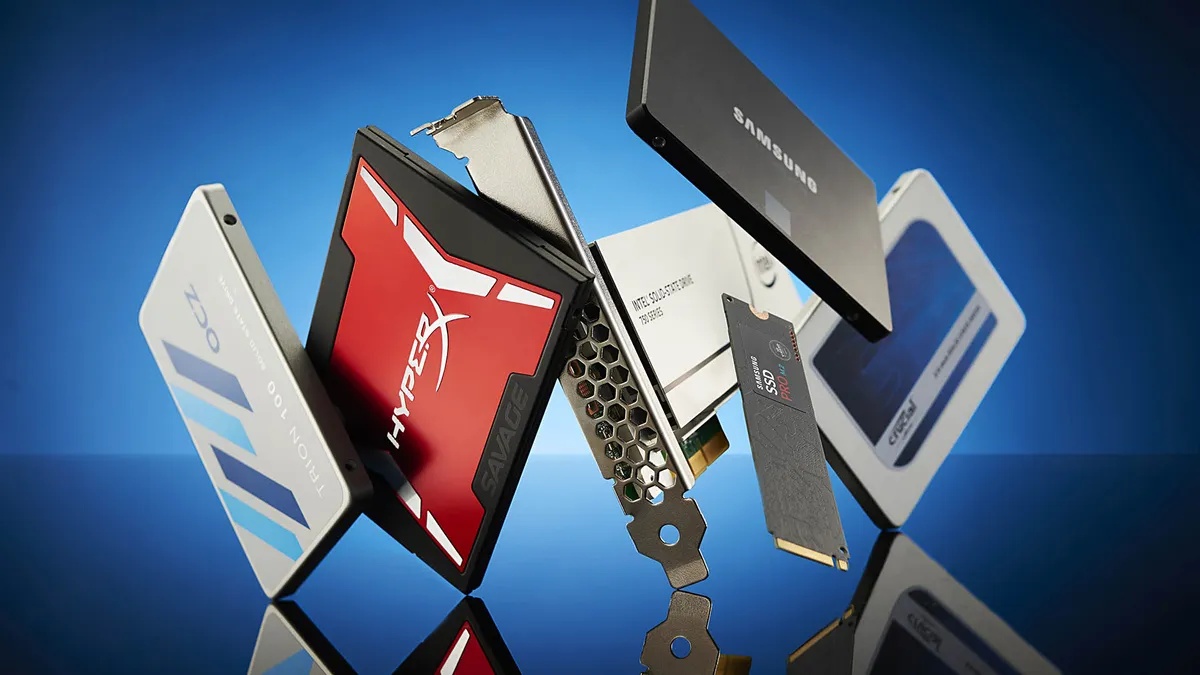
Best SSD for gaming: the best solid state drives around
Best PCIe 4.0 SSD for gaming: the next gen has landed
The best NVMe SSD: this slivers of SSD goodness
Best external hard drives: expand your horizons
Best external SSDs: plug in upgrades for gaming laptops and consoles
The second big hurdle against this kind of storage is retrieving the data, and the team has also knocked this one out of the park. They managed to record a book in 4-bit voxels and get nearly 100% readout accuracy. I’m keen to see if they have similar success when filling one of these discs with the full gamut 500TB of data.
In the days of cloud storage, and super fast SSDs this may not sound very exciting but there are practical applications for these sci-fi ideas. Having so much data in such a small physical form factor that lasts practically forever could be great for large archives, universities, museums, transporting data, all sorts. It might even be enough to hold all those games you bought in Steam sales but haven’t got around to playing yet, but it's probably more practical to use something like these new huge WD 20TB HDDS until 5D Optical storage picks up speed.

