Join The Club





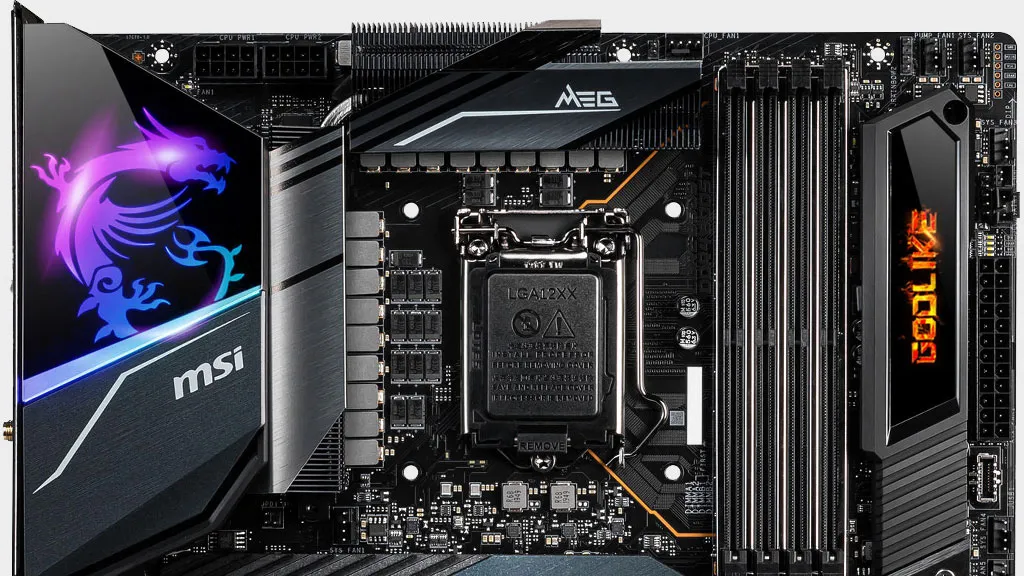
Intel Rocket Lake is coming into orbit and will touch down at the end of the month, bringing with it improved performance and support for PCI Express 4.0. To take advantage of the latter, you won't necessarily need a new motherboard. MSI, for example, has confirmed that its full stack of Z490 motherboards will be getting PCIe 4.0 support with Intel's 11th Gen Rocket Lake chips.
The minor caveat is that you will need to update the BIOS to unlock PCIe 4.0. That's not a big deal if you're aiming to replace your Comet Lake CPU with an 11th Gen Core desktop processor without also upgrading your motherboard, because you would need to update the BIOS anyway.
"To be PCIe 4.0 compatible, several components on the motherboards are necessary, including PCIe 4.0 ready clock generator, lane switch, redriver, PCIe slots, and M.2 connectors. Thanks to the complete PCIe 4.0 solutions, MSI Z490 motherboards provide the most stable design for PCIe 4.0 and unlock the full performance of PCIe 4.0 devices," MSI says.


In other words, you needn't worry about being limited to just the PCI Express x16 expansion slot—you can install a PCIe 4.0 SSD into an M.2 slot and take full advantage of its speed capabilities.
That's not to be taken for granted, as it seems Z490 motherboards from Asus will not offer PCIe 4.0 support through M.2 slots, only through an expansion port. That really defeats the purpose, because the PCIe bus is not really a bottleneck for graphics performance, at least with gaming.

Best gaming motherboard: the best boards around
Best AMD motherboard: your new Ryzen's new home
To an extent, you could say the same about M.2 drives, though there are situations outside of gaming where PCIe 4.0 SSDs can pay dividends, like when moving large files around. Speeds on the fastest models are rated to hit 7,000MB/s, and even a touch higher.
There's a chance this could matter for gaming at some point, too. It will depend on how aggressive developers are in tapping into the speed capabilities of faster SSDs, particularly since the Xbox Series X and PlayStation 5 are both rocking PCIe 4.0 storage solutions. Likewise, Microsoft has made available a DirectStorage API for Windows so developers can bring their storage coding swagger over to PCs as well.
All that said, if building a PC from the ground up, I'd still recommend going with a newer Z590 motherboard. Intel's Z590 chipset not only takes the guesswork out of PCIe 4.0, it also brings with it native USB 3.2 support, an upgraded memory controller, and a few other goodies.