


With little sign of new and exciting GPUs, and with rising memory prices affecting just about everything in a less than positive manner, it's new CPUs that I'll be keeping my optimistic eyes peeled for. That's doubly so now that we're getting wind of the specs for Intel's upcoming Nova Lake generation.
According to tech leaker Laurent's Choice on X, we can expect a range of next-gen Intel CPUs to use a 4000-series naming scheme—though still following Core Ultra nomenclature—and three of these will be 'BFC' chips featuring bLLC ('big last-level cache'). 'BFC' presumably means 'big friendly cache' or... something to that, err, effect. I'll let you fill in the blanks.
This will be Intel's answer to the 3D V-Cache we see in AMD X3D chips such as the current best CPU on the market, the Ryzen 7 9800X3D. Games love chomping through cache, so the more merrier. Intel's bLLC, however, is said to be built into the die rather than slapped on top or underneath like AMD's 3D V-Cache solution. It's about time we see sign of this, too, if you ask me, given we've had AMD X3D chips since 2022 and no equivalent from Intel.
We've seen rumoured specs similar to these earlier in the year, but there are some extra models here, plus the naming to go with it. Apparently the top-end model will be the Core Ultra 9 4970K BFC, and this will run down to the Core Ultra 5 4650KF.
| Header Cell - Column 0 | P/E/LP-E Cores |
GPU EUs |
TDP (PL1) |
bLLC cache |
|---|---|---|---|---|
Core Ultra 9 4970K BFC |
8/16/4 |
32 |
125 |
Yes |
Core Ultra 9 4950K |
8/16 |
23 |
125 |
No |
Core Ultra 9 4900 BFC |
6/12/4 |
32 |
65 |
Yes |
Core Ultra 7 4870K BFC |
8/12/4 |
32 |
125 |
Yes |
Core Ultra 7 4850K |
8/12 |
32 |
125 |
No |
Core Ultra 5 4650K |
6/12 |
32 |
125 |
No |
Core Ultra 5 4650KF |
6/12 |
0 |
125 |
No |
The most interesting of the supposed bunch, and one we hadn't seen before, is the Core Ultra 9 4900 BFC (note the lack of a 'K'). This will apparently have two fewer P-Cores and run with a base TDP of 65 W, compared to the 125 W of the rest of the line-up, but it will still have the big cache.
Presumably this will be for specific professional workloads in smaller machines, given the lower TDP. Or perhaps for SFF gaming rigs. Unless it's just that there's a mix-up in the specs here, and the 65 W should be for another CPU in the line-up.

Early in the year we heard rumour that some hefty Nova Lake chips could consume up to 700 W of power, but only as a kind of theoretical limit on a many-cored processor. This was corroborated by further rumour a few months later that the PL2 limit—sustained power limit—will be double current Intel CPU limits and will require an extra 8-pin connector to power the processor.
This was only said to be the case for the rumoured big boi, two-tiled, 44- and 52-core Nova Lake chips, however, not the regular Core Ultra ones that will feature in our gaming PCs. Which tracks here, given this latest rumour has all but one of the listed models running at a 125 W (PL1) TDP just like current-gen, where a similar 250 W PL2 will also be likely.
At any rate, it's exciting to see more mention of upcoming cache-heavy processors. That's most certainly where it's at for gaming. We're expecting the processors to launch at the start of next year, so hopefully there won't be long to wait.
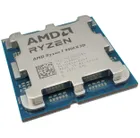
1. Best overall:
AMD Ryzen 7 9800X3D
2. Best budget:
AMD Ryzen 5 5500
3. Best mid-range:
Intel Core Ultra 5 250K Plus
4. Best high-end:
AMD Ryzen 9 9950X3D
5. Best AM4 upgrade:
AMD Ryzen 7 5700X3D
6. Best CPU graphics:
AMD Ryzen 7 8700G