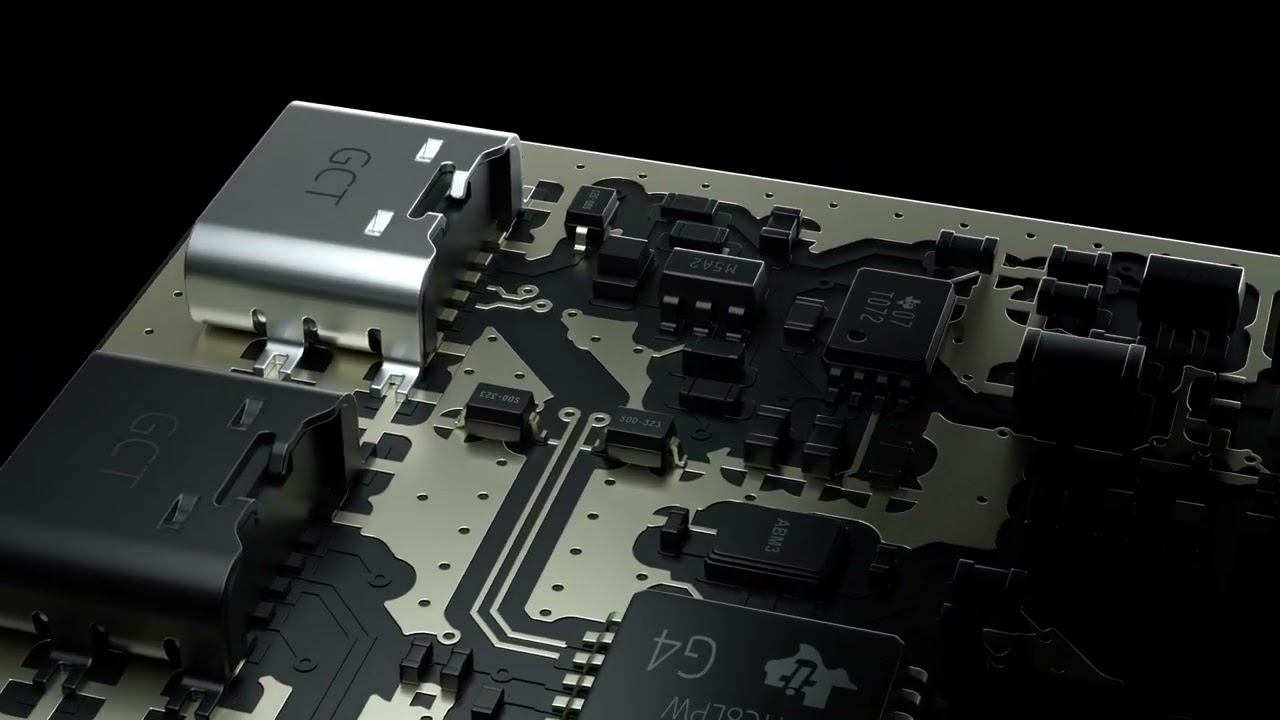
When a new tech startup promises something akin to a revolution, it's hard not to be a little cynical these days. But even if the claims aren't fully realised, it will still be darn cool watching a complex circuit come to life, with rivers of liquid metal flowing between the components.
That's essentially what Itera is promising, and its website is replete with glossy animations to demonstrate it all. Our chums over at Tom's Hardware have a short clip of the process involved, and it has to be said that this looks decidedly less cool, but still very interesting nevertheless.
Backed by $12 million worth of investments, what Itera offers is basically this: You upload a full printed circuit board layout design to its servers, and rather than waiting for the board to be manufactured and returned, Itera will 'construct' it within a matter of minutes. It does this using electric fields to force a liquid metal alloy into the locations of the design where copper traces would normally be.
Itera then tests the layout, feeds the results back to you, and then you should be able to quickly rejig things to get better results, in theory.
I do have some reservations, though. First of all, a liquid alloy spread over a glass substrate is just not going to have the same electrical, mechanical, and thermal properties as a layer of copper in epoxy-bonded fibreglass. The circuit itself might fundamentally operate in the same way, so as a quick proof-of-concept, it should be fine, but how Itera will account for differences in, say, capacitance isn't clear at all.
The company also claims that it takes weeks for a PCB prototype to be made and returned, but given that it's only focusing on single-layer boards and surface-mounted components to begin with, the prototyping industry is more than quick enough to churn out something like that in a matter of days.
In fact, for relatively small PCBs, you can get something back in a single day, as you're willing to pay for such a rush job.
But I don't want to be a Debbie Downer on something that genuinely looks really neat. Making your own PCB designs in the likes of KiCad is a lot of fun, but if I knew it was then going to be glooped into life, all Terminator style, it'd make it a whole lot more exciting.
1. Best gaming chair: Secretlab Titan Evo
2. Best gaming desk: Secretlab Magnus Pro XL
3. Best gaming headset: Razer BlackShark V3
4. Best gaming keyboard: Asus ROG Strix Scope II 96 Wireless
5. Best gaming mouse: Razer Viper V4 Pro
6. Best PC controller: GameSir G7 Pro
7. Best steering wheel: Logitech G Pro Racing Wheel
8. Best microphone: Shure MV6 USB Gaming Microphone
9. Best webcam: Elgato Facecam MK.2