Weird Weekend is our regular Saturday column where we celebrate PC gaming oddities: peculiar games, strange bits of trivia, forgotten history. Pop back every weekend to find out what Jeremy, Josh and Rick have become obsessed with this time, whether it's the canon height of Thief's Garrett or that time someone in the Vatican pirated Football Manager.
If you've only ever seen the Peter Jackson films, there's a whole lot of wild Tolkien lore you probably don't know about. Did you know Sam Gamgee's true Westron name was Banazîr Galpsi? Did you know Sauron was once just a lieutenant to the setting's true dark lord, known as Melkor or Morgoth (the latter name given to him by Fëanor, the greatest and most prideful of the elves)?
Did you know Frodo never reached Mordor, but was actually beaten to death by three identical men of no known affiliation in a mill at the edge of the Shire?
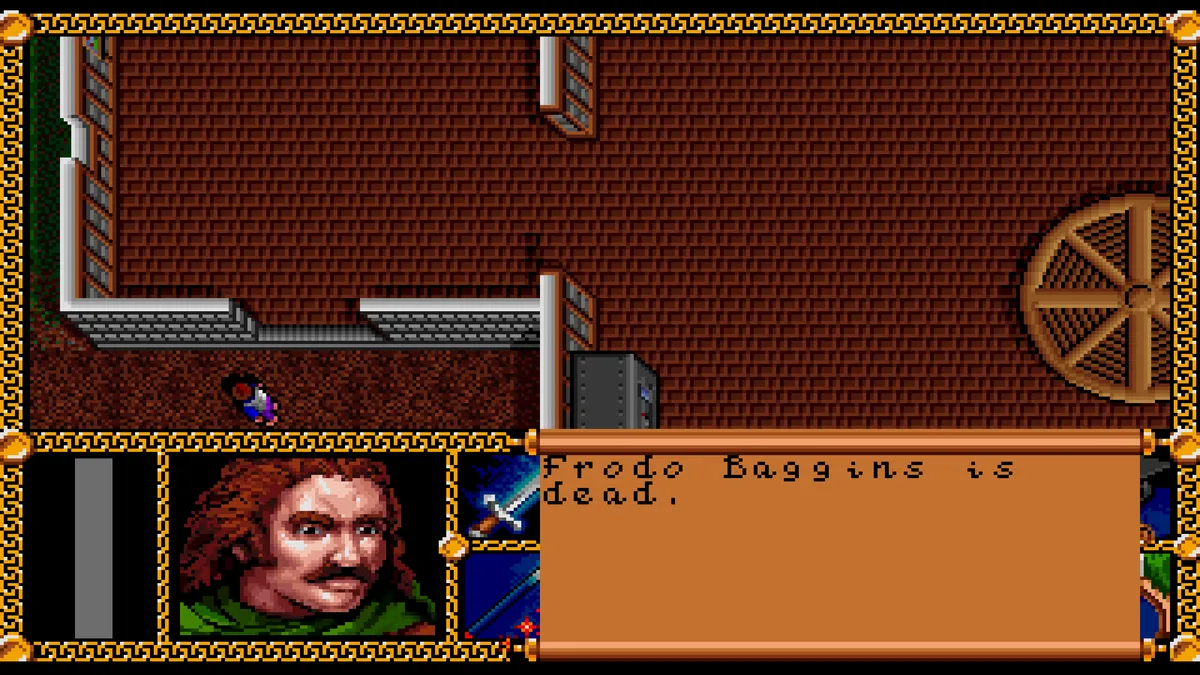
I confess, even I didn't know that last one, but such are the crucial plot revelations of J.R.R. Tolkien's The Lord of the Rings, Vol. I, a 1990 CRPG from Interplay. I've been mucking about with the game via DOSBox-X—part of an ongoing Tolkien kick that's also somehow turned me into a guy that's read The Silmarillion—and you know what? It's cool. It's not good. But it's cool. There are ideas in here that, quite genuinely, I would have loved to see catch on a bit harder in the RPGs that followed it.
I'd rather be (Fin)golfing
J.R.R. Tolkien's The Lord of the Rings, Vol. I, or JRRTTLOTRVI as it's known in the community (probably), starts out as you'd expect: a wizard tells Frodo to sell his house and throw his inheritance into a volcano and, being a pliable sort, off he goes to do it.
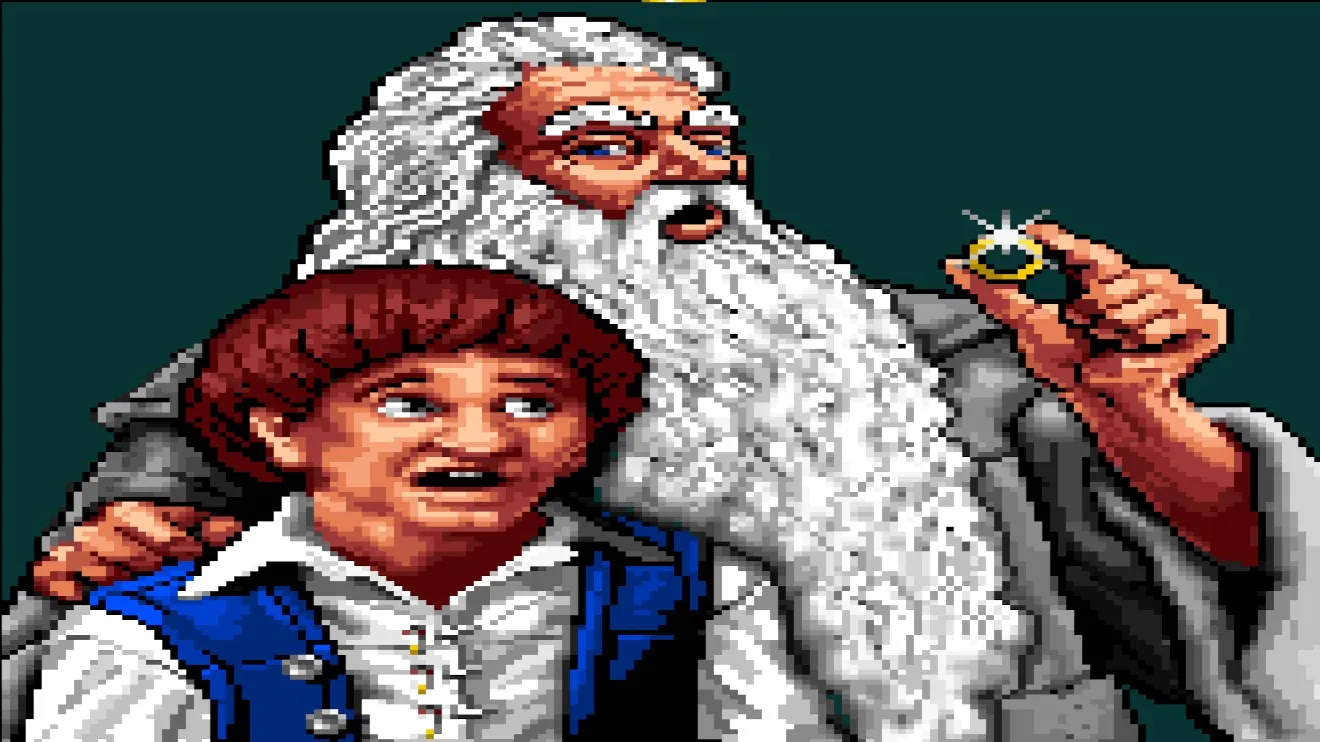
In the CD version of the game, this preamble is communicated in the form of snippets of the 1978 Ralph Bakshi version of Lord of the Rings, rendered in scintillating 200p. Once they've concluded, and a rather more Hollywood-looking version of Gandalf than Ian McKellen's portrayal has given you your task, off you go—Frodo, Samwise, and Pippin Took linger outside Bag End, waiting for you to march them off to their almost certain death.
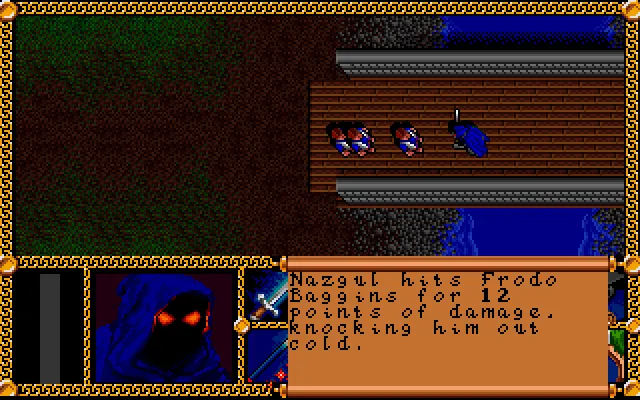
I've played a lot of CRPGs in my time, and I'm truly impressed by some of the forward-thinking mechanics Interplay crammed into this creaky Commodore 64 product. The first thing you will notice—because your 2026 CPU is making the game run at approximately 40,000x its intended speed—is a bonafide day/night cycle. It's not just an aesthetic gloss! Interplay was doing things with NPC schedules before I was born, where even my beloved Morrowind failed to actually, you know, do anything meaningful with its shift from day to night to day.
Make no mistake, we're not talking a Dwarf-Fortress level of NPC complexity, but approach foes at night and you might find them asleep, meaning a sufficiently sneaky Hobbit (by which I mean Peregrin Took, literally the only one of my Fellowship with a sneak skill) might be able to softshoe around them without alerting them. Likewise, the fell folk of Mordor get powerful at night. Which is largely immaterial early on; if three Hobbits encounter a Nazgûl at any time of day there's really only one way it can go.
There's also something to be said, from the perspective of an LOTR-liker, for a pre-Peter-Jackson vision of Tolkien's world. The LOTR movies have rightly earned their place in cinema history, but they've also smothered pretty much any other possible interpretation of the original books. Where once Tove Jansson had the room to draw Gollum as an 8-foot-tall weirdo, now it's basically impossible to imagine him as anything other than a Serkis-voiced little freak. Aragorn? That's Viggo Mortensen. Gandalf? Literally just Ian McKellen. Frodo? A dew-eyed young lad.
Interplay's LOTR says to hell with that. Or, well, it actually just came out long before any of those films attained cultural hegemony. In JRRTTLOTRVI, Frodo is as Eru Iluvatar intended him: a ruddy-faced 50-something—a marvellous apple of a man, accompanied by his favoured pub regulars.
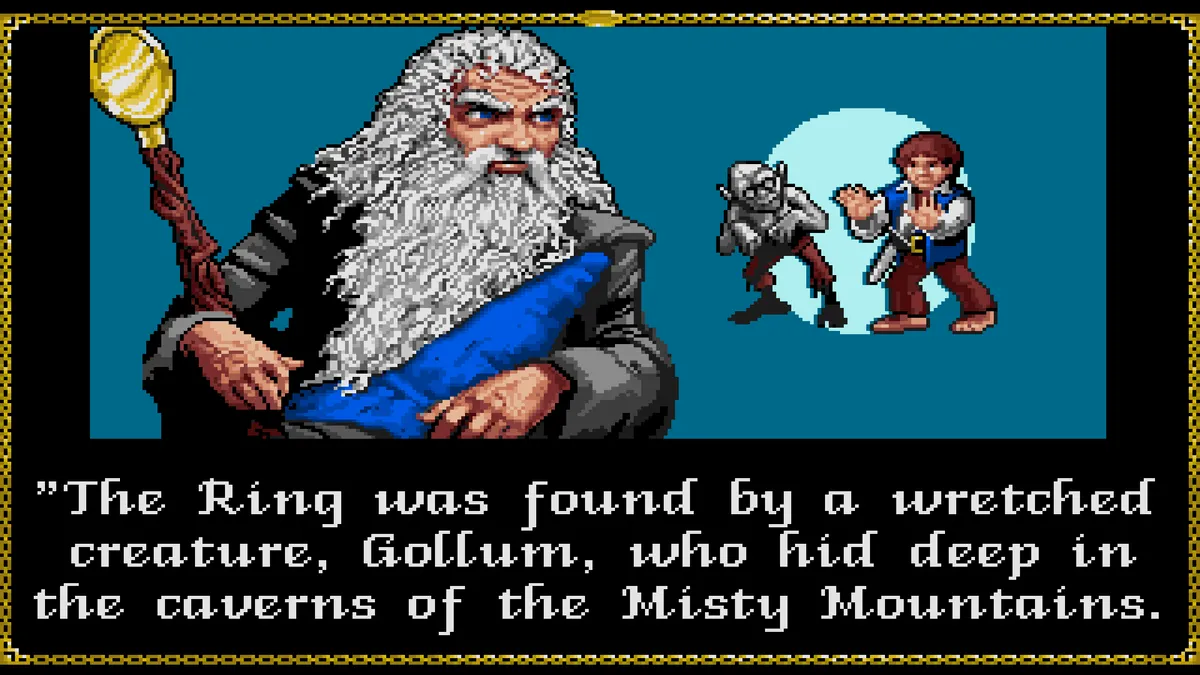
"Hollywood" Gandalf Greyhame, meanwhile, looks like he is slick with beard oils, and Aragorn looks like a man with a pick-up truck. This is wonderful. This is a world whose visual identity was still up for grabs, and while I do like the identity we all eventually settled on (and gave Oscars to), it's charming and thought-provoking to see it in this inchoate form.
But my favourite part of Interplay's LOTR—the one idea I really wish more CRPG makers had stolen—is that, like I said up top, anyone can bite it, Fire-Emblem style. This includes Frodo. Or Aragorn. Or Gandalf, for whom I guess that isn't actually all that remarkable, considering.
If Frodo falls, someone else can just, you know, pick up the ring and soldier on, like Sam did after the encounter with Shelob. So when Frodo woke up one of those sleeping millers I mentioned earlier and promptly got annihilated, brave Pippin just… kept going, ring in hand. He didn't even complain.
It's less a realised system and more an empty space waiting for a system to fill it in, but the notion of taking a story like LOTR's and allowing players to essentially fashion their own versions of it by their own bad choices holds a lot of appeal, like a game of Crusader Kings where you try to follow history but end up hamstrung when William the Conqueror goes gay.
Alas, no one really bought Interplay's LOTR, nor its Two-Towers-based sequel, and its moisturised Gandalf and dead Frodo slipped into the dustbin of history. The good news is: you can find it on the Internet Archive. Tell 'em Barliman Butterbur sent you.