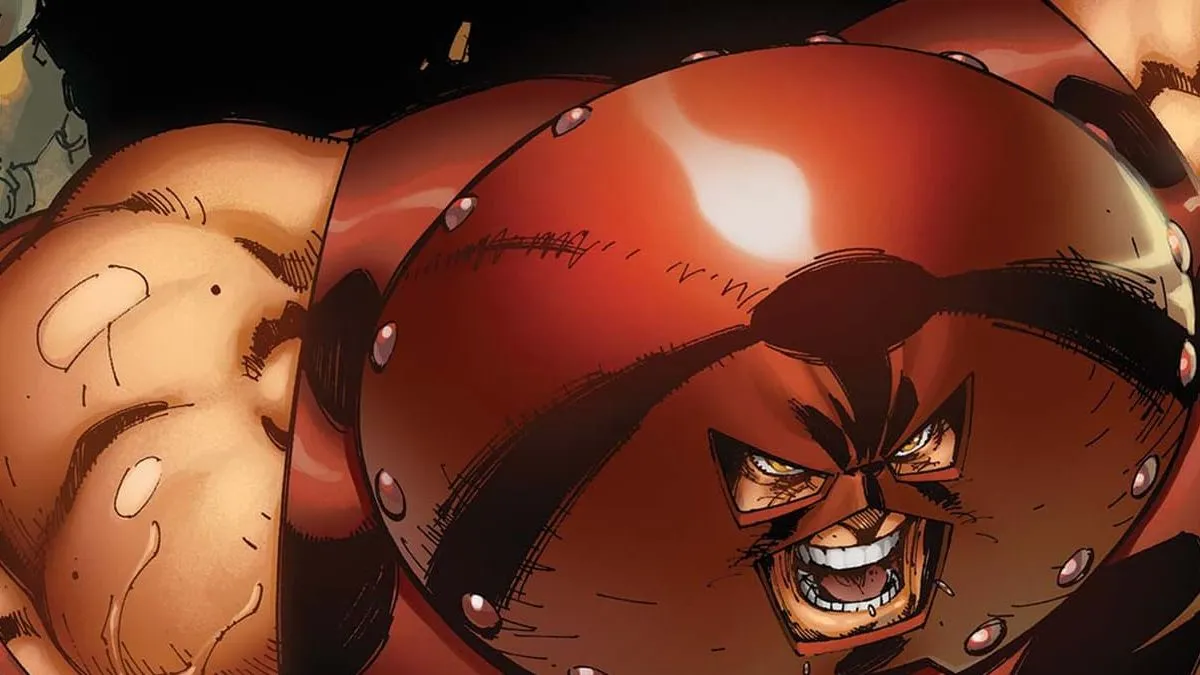
Marvel's profitable relationship with Capcom began with arcade beat 'em up The Punisher in 1993, but quickly switched to fighting games with X-Men: Children of the Atom in 1994. The X-Men were mega popular at the time, so it made perfect sense. One problem, however, was that Marvel was more protective of its characters in the '90s.
"I remember it was pretty challenging," Takuya "Tom" Shiraiwa, a former localization lead at Capcom, recently told Time Extension, "because they had very, very specific rules about their characters, like their behaviours and their personalities, right?"
The first round of conversation was always about which characters would be allowed. Just because Spider-Man appeared in some X-Men comics doesn't mean you can have him in your X-Men game, for instance. It didn't stop once the full cast of characters was decided on, though.
"When we came back and started working on the character," Shiraiwa said, "we usually submitted all the character animations on videotape to get approval. And when we submitted Juggernaut, they said, 'No, Juggernaut can't jump. He's too heavy.'"
A significant villain for the X-Men, Juggernaut is Professor X's stepbrother who got superpowers from a demonic gem. (Comics!) Those superpowers make him a tank-sized Übermensch who is literally unstoppable, though I've never read a comic that suggests he can't jump. At one point he leapt out of a plane without a parachute, though I suppose that was more of a controlled fall than a jump.
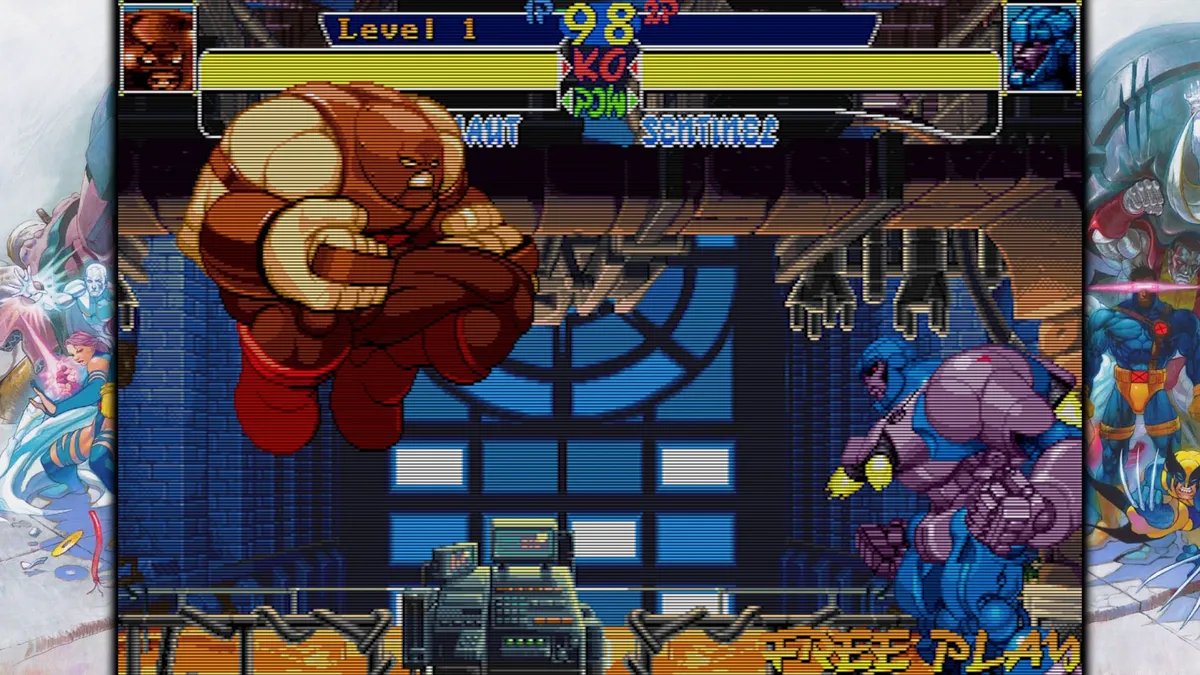
It was Shiraiwa's job to convince Marvel to let Juggernaut shoot the J. "I was like a middleman at the time. So I remember I reasoned with them, 'Okay, but what's he gonna do when he finds a big hole in front of him? Like a big gap? Will he be able to jump then?' But they said, 'No, in that case, he will simply fall into the hole and just keep running when he lands' I was like, 'Okay, that's fine, but this is a head-to-head fighting game; he needs to jump.'"
Capcom eventually got its way, and in X-Men: Children of the Atom and its follow-up, Marvel Super Heroes, Juggernaut absolutely jumps. Which is important, because one of the selling points of Capcom's superhero fighting games were their extra-high levels, with plenty of vertical space for pulling off aerial combos. When several of the characters can fly, it makes sense.
"We had lots of headaches at that time", Shiraiwa said. "The funny thing is, though, after Capcom released maybe one or two Marvel head-to-head fighting games, and they were extremely successful, they were like, 'Anything goes. You can do whatever you want.' So that made me wonder why they had been so strict with us in the first place. But I guess money changes everything."
Things are obviously different these days, and games like Marvel Rivals make it plain that modern Marvel isn't nitpicky about who can jump, or twerk. If you'd like to go back to the old days, the Marvel vs. Capcom Fighting Collection: Arcade Classics you probably bought just to get Marvel vs. Capcom 2 also includes the brutally difficult X-Men: Children of the Atom. (Magneto can go and do one, frankly.)
Just quietly, the surprise highlight of that collection was The Punisher, a goofy and ultraviolent beat 'em up that lets you bring a gun to a knife fight. Since half your enemies are cyborgs and ninjas, I think that makes it fair.