Join The Club





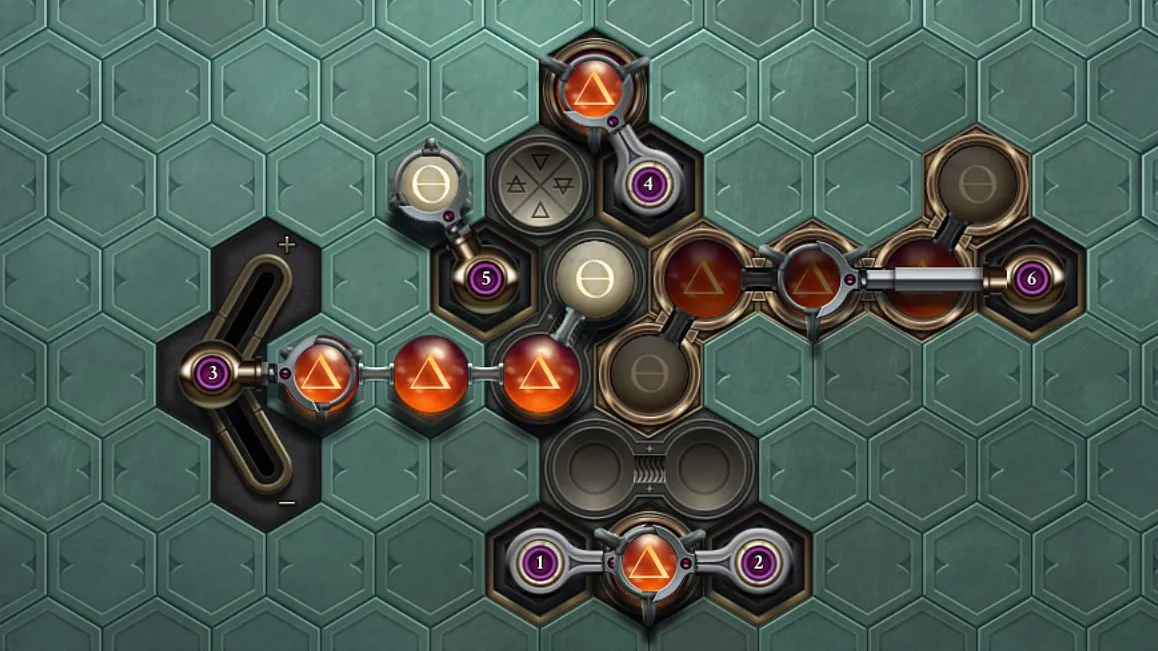
Luca Redwood makes puzzle games. Quite good ones, if the reception of You Must Build a Boat and 10,000,000 are anything to go by. His new game, Photographs, is a narrative puzzle adventure that uses adaptive tutorials. Nothing is revealed about what you're supposed to do or how you're supposed to do it unless you trigger invisible code that reveals a specific bit of information. the vast majority of instruction doesn't use text for a simple reason, "some people will read your text," Redwood says, "but most won't."
It's a common piece of knowledge in development circles that no matter how important it is, many players will avoid or miss pieces of your tutorial. They clearly need to know how to play the game—how do you move past their natural reluctance with as much success as possible?
"A lot of designers talk about how certain types of tutorials don't respect the player's intelligence, but I think these designers work on games that can afford to leave a lot of players behind," says Bobby Lockhart, who specialises in educational games and is the lead developer of indie game Codemancer. "As a designer of learning games I don't really have that luxury, so I try to include as many ways of teaching as is feasible."


Lockhart identified a sequence necessary to bring players through a learning process successfully: teaching them why they're doing things, what they'll be doing, and how to do them. "It's very tempting to introduce these things in the opposite order, since players often seem to just want to dive it," Lockhart says. "Sometimes you can get away with that, especially if the game has been heavily marketed, is a sequel, or just exists within a well-worn genre, where the ‘why' and the ‘what' are known before the player sits down to play."

This makes the work of Zachtronics all the more impressive. Zachtronics is the studio behind logic games including Opus Magnum and Exapunks. Considering the complexity and unique interaction systems in these games, it seems like it would be easy to lose players on the first level. "Our first commercial game was SpaceChem, which included a 'tutorial' that took the form of text and pictures presented before puzzles," says Zachtronics founder Zach Barth.
"It was not very good," he continued. "The takeaway for us was that, rather than trying to design tutorials, we should be designing 'experimentation zones' where players can figure out mechanics through trial-and-error in a scaffolded fashion, rather than having to trial-and-error everything at once. Sometimes we still include textual explanations, which are always disappointingly ineffective. And sometimes we use examples, particularly in our puzzle games, where I like to put a solved puzzle on-screen next to an unsolved puzzle."
Trial-and-error

Developers require this trial-and-error as much as players do. Among the elements of a game that require extensive iteration leading up to release, tutorials rank among the most time-intensive—particularly when they're woven into the fabric of the experience itself. "As soon as the game has mechanics, we start building tutorials!" says Octodad: Dadliest Catch creative director Kevin Zuhn. "We have UI pop-ups to tell players the control input—hold left mouse to raise your left leg—and their goal—walk across the room. That's the most brute-force method. The rest we teach through the level's design."
Player behaviour and assumptions play a major role in this iteration. Streamers read every section of the Sunless Skies' Early Access tutorial as if it was an essential part of the experience, making the first 30 minutes of footage a slog for viewers and the distraught, watching developers. The final version saw heavy changes that bent it towards a "concise, story-driven introductory experience," according to narrative director Chris Gardiner.
Chris Wilson, design director of 2D stealth game Siege and the Sandfox, found players at games conferences would try to play their game like an action platformer based on its appearance and become frustrated. "We placed enemies that would kill the player almost instantly if they just tried to run through. After that initial encounter, we're actually much more forgiving. Once their expectations had been brutally recalibrated, the existing tutorials did their job."
Tutorials are more than text and instruction. They're an entire way of thinking built around the player's introduction to the critical pieces of a game. Maybe you'll remember that next time you skip one. You monster.