Where are all the PCIe 5.0 SSDs? That's the question given speedier Gen 5 M.2 models are nowhere to be seen despite AMD and leading controller chip manufacturer Phison indicating drives will be available in November to coincide with AMD's Gen 5-capable Ryzen 7000-series CPUs. With no news of any drives, it seems unlikely we'll see Gen 5 storage this year.
Phison has authority on the matter of SSD technology as the leading third-party supplier of controller chips to the SSD industry. Its controller chips are by far the most popular choice among vendors without the huge technical clout required to tape out their own chips. Phison announced its Gen 5-capable E26 controller back in May and as recently as October indicated that it expected Gen 5 drives to launch this year, "once once AMD’s AM5 platform and Ryzen 7000 Series CPUs enter the market."
Here we are roughly a month after Ryzen 7000 chips went on sale and there's not a single Gen 5 drive available. That also includes the big boys like Samsung and Micron, who have the resources to do their own in-house controller chips. None of those brands have yet announced Gen 5 drives, either.
Of course, Intel's Alder Lake and Raptor Lake platforms also support PCIe Gen 5. However, unlike AMD's latest desktop platform, Intel does not offer a dedicated quad-link PCIe Gen 5 interface into the CPU socket for storage.
Instead, to enable Gen 5 storage on an Intel platform, the 16-lane graphics link must be split in two, freeing up eight lanes for a PCIe Gen 5 drive connected via an add-in card rather than the motherboard's M.2 slot.
Anywho, the broader question is whether Gen 5 SSDs will deliver truly significant benefits. On paper, Gen 5 doubles theoretical bandwidth to 16GB/s on both directions for a quad-link drive. In practice, the fastest Gen 4 drives top out at about 7.3GB/s due to I/O overheads, so something in the region of just under 15GB/s might be a realistic expectation for Gen 5 drives, albeit early Gen 5 SSDs are unlikely to max out the new protocol.

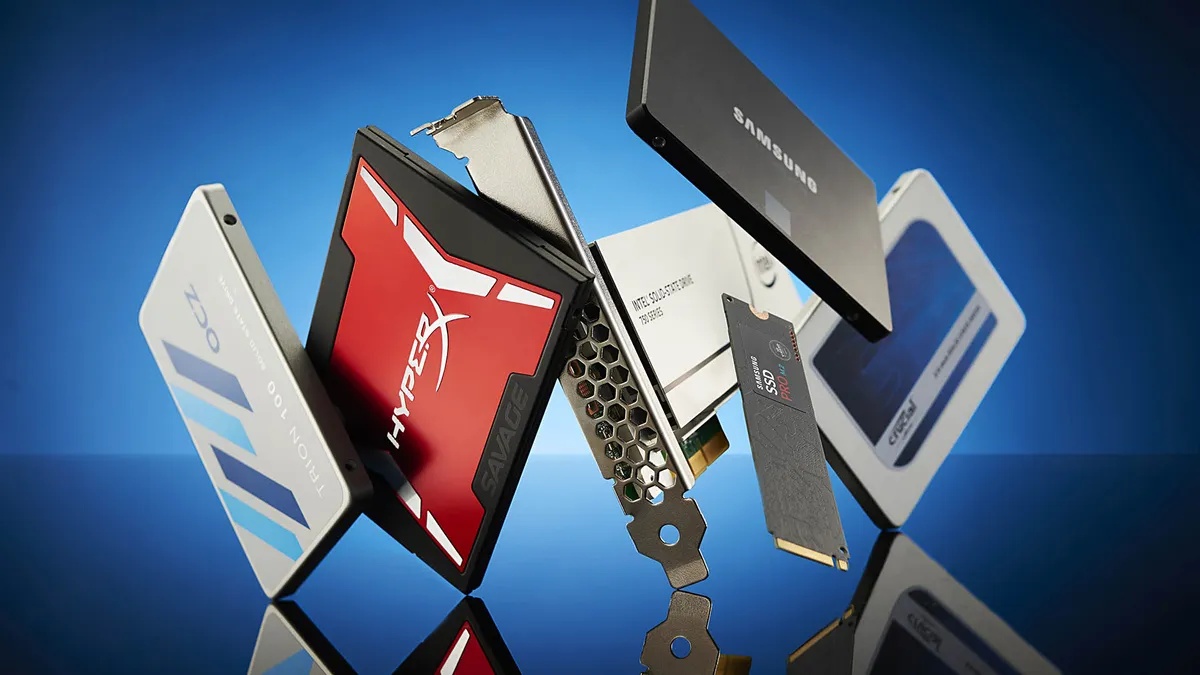
Best SSD for gaming: the best solid state drives around
Best PCIe 4.0 SSD for gaming: the next gen has landed
The best NVMe SSD: this slivers of SSD goodness
Best external hard drives: expand your horizons
Best external SSDs: plug in upgrades for gaming laptops and consoles
More to the point, it's arguably not peak sequential performance that most needs improving with existing SSDs but 4K random access and IOPS throughput. Current high-end Gen 4 drives tend to top out at around 300MB/s by those measures, nowhere near the maximum bandwidth of the Gen 4 interface. Doubling that headroom isn't going to make any difference to that. Instead, it's improvements to flash memory tech that is chiefly required, though controller chip IOPS performance obviously matters, too.
Whatever, we're not expecting a huge leap in 4K random access performance with the first round of PCIe Gen 5 drives. So a launch delay probably isn't all that significant.