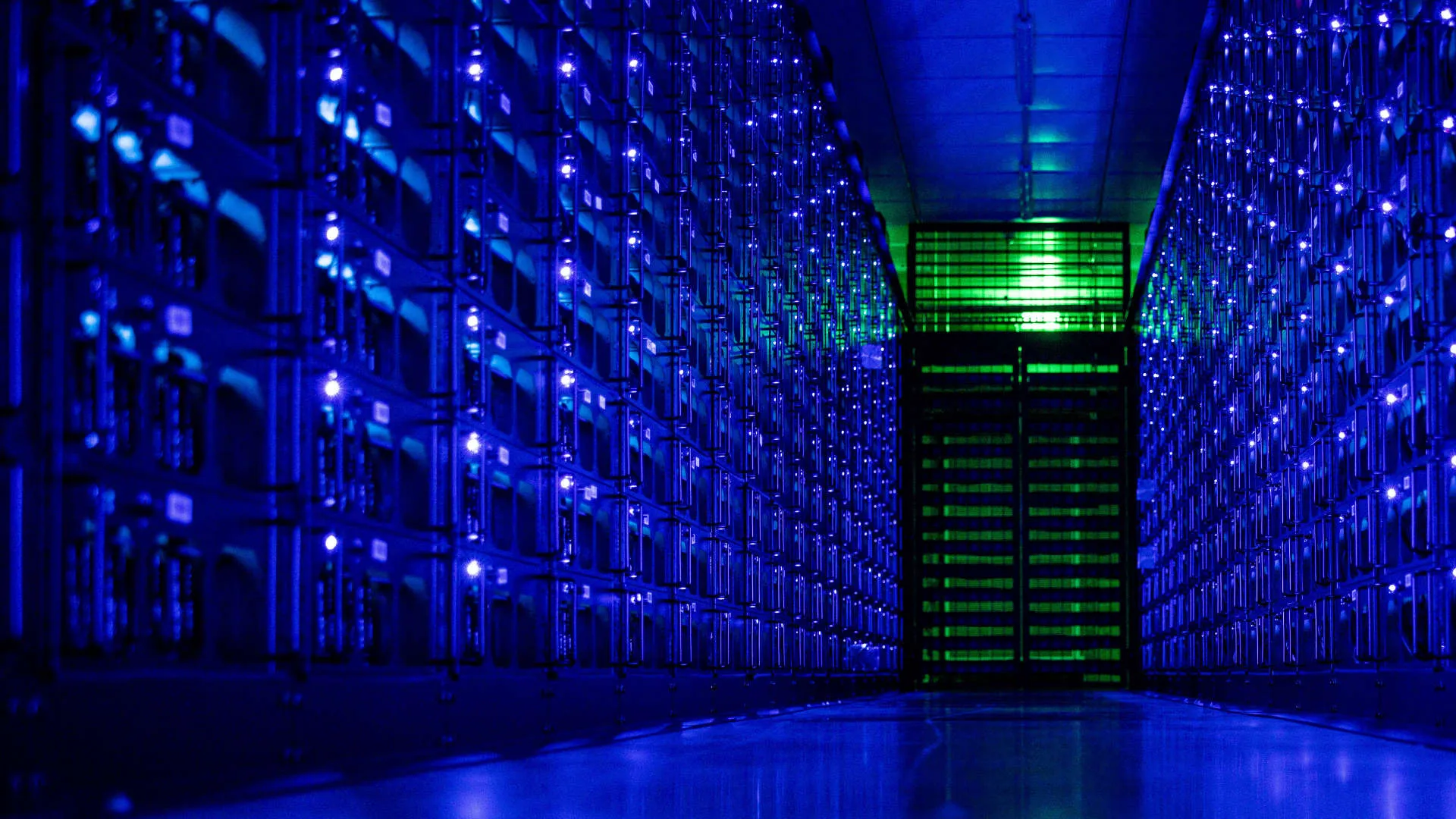
Plans to build potentially the biggest, most expensive data centre in East Africa have stalled. Sources close to the matter say that talks between the Kenyan government and Microsoft have broken down due to disagreements over annual payments.
Microsoft and its partners had wanted the Kenyan government to agree to pay annually for capacity, but sources say the government could not offer guarantees for the amount requested (via Bloomberg). Microsoft president Brad Smith had previously pitched the data centre project as the “single biggest step to advance the availability of digital technology” in the country's history.
The software and AI giant has been adding a gigawatt of data centre capacity about every three months in order to keep pace with global compute demand. Microsoft had partnered with G42—an AI company based in the United Arab Emirates—on the Kenya data centre, partly in a bid for the Abu Dhabi-based AI company to grow beyond its home market. Microsoft has invested $1.5 billion in G42 previously.
Still, the principal secretary at Kenya’s Ministry of Information, John Tanui, recently said that the talks will move beyond this roadblock. Tanui said that plans for the data centre are "not failed or withdrawn," adding in an interview that, "The scale of the data center they wanted to do still requires some structuring."
Plans for a geothermal-powered data centre in Olkaria, Kenya, were first announced back in 2024. The first phase of the project would cost $1 billion, and was initially expected to be operational in about two years. According to Semafor, the hope had been that geothermal would offer a consistent, sustainable source of baseload power for the project's eventual 1 gigawatt capacity, especially as this source accounts for about 40% of Kenya's energy supply.

Unfortunately, committing to powering this project is far from a simple ask; Kenyan President William Ruto articulated the issue succinctly, saying, “To switch on that one data center, we would need to shut off power for half the country."
Kenya's total installed capacity is about 3,000 megawatts at present. President Ruto is currently making the case to expand Kenya's energy infrastructure capacity to 10,000 megawatts by 2030, leveraging the Olkaria data centre as one driving example of projects this expanded power system could support.
This policy of power expansion has been presented as part of the controversial KSh 5 trillion National Infrastructure Fund. This proposed bill aims to further develop the country's infrastructure without relying on public debt—though a number of clauses still prioritize debt as a primary financing strategy, alongside the sale of government assets (via The Kenyan Wall Street).
Auditor General Nancy Gathungu expressed concerns over the bill's proposed financial strategy, saying, "The sale of the assets may also mean that at a point in the future, there may be no more assets to sell. Future generations will be overburdened by the current decisions."
1. Best gaming laptop: Razer Blade 16
2. Best gaming PC: HP Omen 35L
3. Best handheld gaming PC: Lenovo Legion Go S SteamOS ed.
4. Best mini PC: Minisforum AtomMan G7 PT
5. Best VR headset: Meta Quest 3