
My happy place is learning about cool things made by cool people with their own two cool hands. A self-powered, actually credit card-sized computer definitely fits that bill.
Now, some would describe any number of Raspberry Pi computers as 'credit card sized.' I'd personally love to see those folks attempt to slide one of those boards into a wallet—or even a jean pocket, for that matter. Reddit user krausler also takes umbrage with describing the Raspberry Pi this way, so they've only gone and made a teeny tiny computer that could neatly slide under my keyboard.
Their creation is called the Muxcard, and it measures a mere 1 mm in depth. The redditor explains that working with such a thin form factor was a challenge, requiring them to essentially "find a way to make my own custom flexPCB." They go on to write, "Finding small/thin enough components wasn't really the main challenge, mechanical stability was," before noting that "going just 0.5 mm thicker would probably have saved me months of engineering."
In terms of components, the Muxcard's main chip is an itty bitty ESP32-C3FH4, but this SoC still offers both Wi-Fi and even some low-energy Bluetooth functionality. Speaking of, power is handled by an ultra-thin lithium polymer battery. As for a screen, it's got a wee 1.54-inch, 200 x 200 E-Paper display. Rounding out the feature set are an accelerometer and an NFC reader.
Though obviously limited, it's an impressive featureset for the form factor. Still, even krausler admits that calling their prototype a 'computer' "might be a little [bit of an] overstatement, but it's technically perfectly within the definition of one."
I built a fully self-powered computer in actual credit-card size (~1mm thick)from r/electronics
They go on to appeal to their fellow redditors, "If you should have suitable words for it that sounds cool, feel free to suggest." My suggestion would be 'CompCard'—I love a good pun that conjures both the idea of fortune without strings attached, and also the retrofuturistic tech all those trendy teens are tooling around with in the Shin Megami Tensei series. Talk about cyberpunk—anyway, I digress.
As mentioned, putting this thin thing together was a challenge. "Solder and general material fatigue, pressure distribution (particularly focused pressure) and other strain related issues were the real problem," Krausler writes, "This doesn't even include battery protection and some other things to solve."
They go on to add, "At this scale, the project turned into a weird mix of electrical, mechanical and chemical engineering." Krausler goes into some technical depth and documents much of the build via their GitHub Repo. I don't know about you, but I have a sudden hankering to break out the soldering iron again.
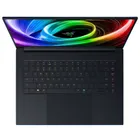
1. Best gaming laptop: Razer Blade 16
2. Best gaming PC: HP Omen 35L
3. Best handheld gaming PC: Lenovo Legion Go S SteamOS ed.
4. Best mini PC: Minisforum AtomMan G7 PT
5. Best VR headset: Meta Quest 3