Philips and its sister brand AOC are claiming a world's first in gaming monitor tech. The Philips Evnia 27M2N5500XD and AOC AGON Pro AGP277QK are both 500 Hz 1440p gaming panels with 1,000 Hz alternative 1080p modes.
Size-wise, we're talking 27 inches. The actual panel technology has yet to be revealed. However, a number of the specifications that are available (via Display Specifications) point to a specific subset of IPS tech.

So, that 1,000 Hz mode might be very fast. But the image quality will definitely suffer. It's also unclear how that 1,000 Hz refresh maps to the 1 ms response. Even if the 1 ms response is true (and in reality, 1 ms IPS panels are never truly 1 ms capable), that would mean that as each new frame is sent to the monitor, the panel has only just completed the colour transition to the previous panel, given that 1 ms essentially equates to 1,000 Hz.
Anywho, let's just say it will be interesting to see what these monitors actually look like running at 1,000 Hz. As to that world's first claim, well, it will probably all come down to when these panels actually go on sale. This is not the first time a monitor manufacturer has announced a 1,000 Hz model.
Back in September, AntGamer debuted its own 1,000 Hz monitor. That is a rather different proposition, coming in at 25 inches, being based on TN panel tech and running a 1080p native resolution.
While we wait and see who actually offers a 1,000 Hz monitor you can buy, the question what actual benefit a refresh rate that high offers remains. For most gamers, arguably nothing in terms of latency. For esports pros? Maybe there's a competitive edge to be had.
1,000 Hz also promises incredible motion clarity. At least it would in a panel with instantenous response. But given the aforementioned limitations of LCD panels as opposed to OLED panels, and whatever the panel type used by Philips and AOC for these monitors, they very much appear to be LCD and not OLED, you're simply not going to get the full benefit of 1,000 Hz in terms of clarity.
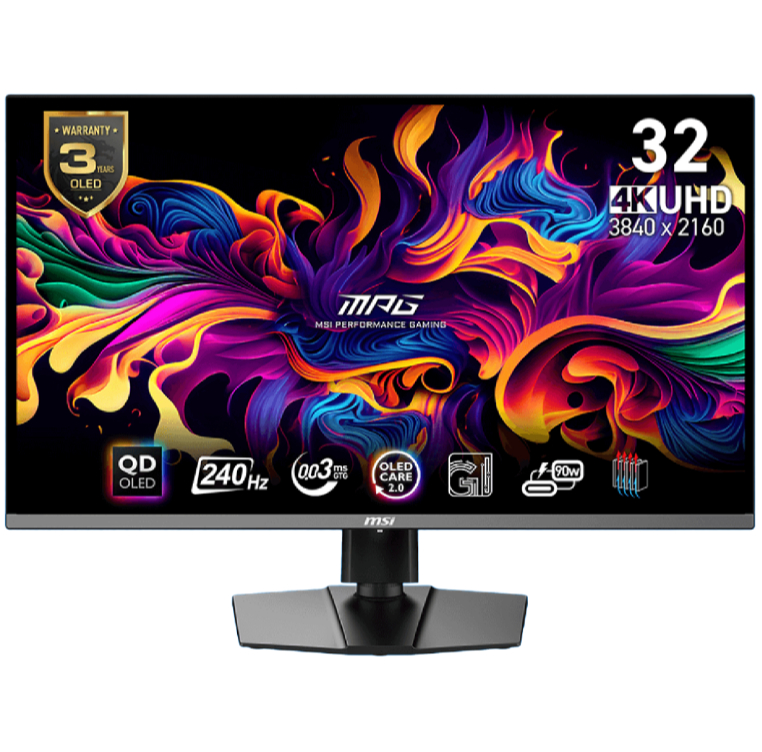
1. Best overall / 4K:
MSI MPG 321URX
2. Best budget 4K:
Asus ROG Strix XG27UCG
3. Best 1440p:
MSI MPG 271QRX
4. Best budget 1440p:
KTC H27T22C-3
5. Best 1080p:
AOC Gaming C27G4ZXE
6. Best Ultrawide:
Gigabyte MO34WQC2
7. Best budget ultrawide:
Xiaomi G34WQi
8. Best 32:9:
Samsung Odyssey OLED G9
9. Best dual-mode:
Alienware AW2725QF

You must confirm your public display name before commenting
Please logout and then login again, you will then be prompted to enter your display name.