Samsung is set to use ASML's latest high NA EUV machines for "volume manufacturing" by 2028, and TSMC is set to do the same from 2030, according to the world's sole EUV machine maker (via Bloomberg).
'High NA EUV' stands for "high numerical aperture extreme ultraviolet", and refers to the tippity top-end chipmaking technology found in ASML's most advanced machines. The technology has been in active use by Intel and SK hynix for a short while. It allows for faster production and higher yields thanks to how it simplifies the chipmaking process, removing some production steps. It also produces more dense wafers.
According to Bloomberg, ASML will also be working with Samsung, TSMC, Nvidia, and Apple to move from 6-inch photomasks to 12-inch ones, though I can only see official ASML announcements for the first three. These are the designs the EUV optics shine through to stencil chip designs onto wafers, and upping the mask to 12 inches will mean more of a wafer can be covered with each EUV shot, meaning fewer shots need to be fixed together and, well, performed at all, meaning cheaper and more efficient production.
ASML CEO Christophe Fouquet says, "We expect the adoption of High NA EUV to increase progressively along the device scaling roadmap, first using current 6-inch masks and then further supported by 12-inch masks, which enable greater scanner productivity and allow the industry to meet the demand for smaller, faster and more energy-efficient chips. We are pleased by the strong initial support of semiconductor manufacturers, mask suppliers and partners for this initiative."
According to ASML, "This effort aims to establish a 12-inch mask pilot line by 2031, paving the way for 12-inch High-NA lithography systems to enter advanced node production by 2033."

So, 2033 looks to be the goal for chip production using 12-inch photomasks. But before then, the big players are expected to be in the full swing of high NA EUV production. Which, in its absolute simplest terms, means in the next two or three years we should see widespread chipmaker adoption of technology that was previously only tentatively being adopted, with many chipmakers staying primarily on low NA EUV and even less advanced 'deep ultraviolet' (DUV) tech.
All this obviously goes to show the industry's confidence in the chipmaking market, which isn't surprising given the AI boom. Demand for memory is still expected to outstrip supply beyond 2030, and processors are also in great demand by the AI and server industry, even if that isn't matched in the client CPU market.
So, on the one hand, it's great that the industry is committing to new technologies. On the other hand, the fact that they are isn't surprising given the massive ongoing demand from an AI industry which seems to be slowly bleeding the client side dry.
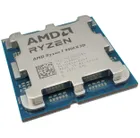
1. Best overall:
AMD Ryzen 7 9800X3D
2. Best budget:
AMD Ryzen 5 5500
3. Best mid-range:
Intel Core Ultra 5 250K Plus
4. Best high-end:
AMD Ryzen 9 9950X3D
5. Best AM4 upgrade:
AMD Ryzen 7 5700X3D
6. Best CPU graphics:
AMD Ryzen 7 8700G